短裤
This lecture explores the absolute sovereignty of Allah, contrasting it with earthly kingship where power is often susceptible to corruption. It highlights that Allah’s authority is unchecked by any external force, but is governed by His perfect wisdom. The discussion draws parallels with the story of Pharaoh in Surah Momin, illustrating how even a self-proclaimed god faced limitations due to internal dissent and the inherent flaws of absolute power. The lecture emphasizes that Allah’s absolute authority is balanced not by external checks, but by His complete and perfect wisdom, ensuring just and equitable decisions.

64
This lecture emphasizes that ultimate authority and governance rest solely with God. It asserts that God does not share His power with any individual, ruler, nation, or humanity as a whole. The universe and the earth belong to God, and His will must prevail. This principle of divine sovereignty is absolute and unwavering, rejecting any form of shared authority or human intervention in matters of governance.
332
This lecture explores a stanza from the poem 'Sam-e-Hayat,' interpreting its metaphorical connection between the rhythm of a military funeral procession and the beating of one’s own heart as a measure of time approaching death. The speaker explains that each beat of the drum in the funeral procession brings the coffin closer to the grave, mirroring how each heartbeat brings an individual closer to their final destination. The poem's imagery highlights the transient nature of life and the inevitability of death, urging reflection on mortality.
83
Every individual is a vicegerent of God on Earth. Establishing divine governance begins with self-governance. Humans are entrusted with physical and intellectual capabilities as a divine deposit. The ‘self’—whether termed ego, soul, or *ruh*—is the actual vicegerent on this body, responsible for aligning one's existence, emotions, desires, and aspirations with God’s commands. This personal implementation of divine principles is the foundational requirement of vicegerency for every person.
218
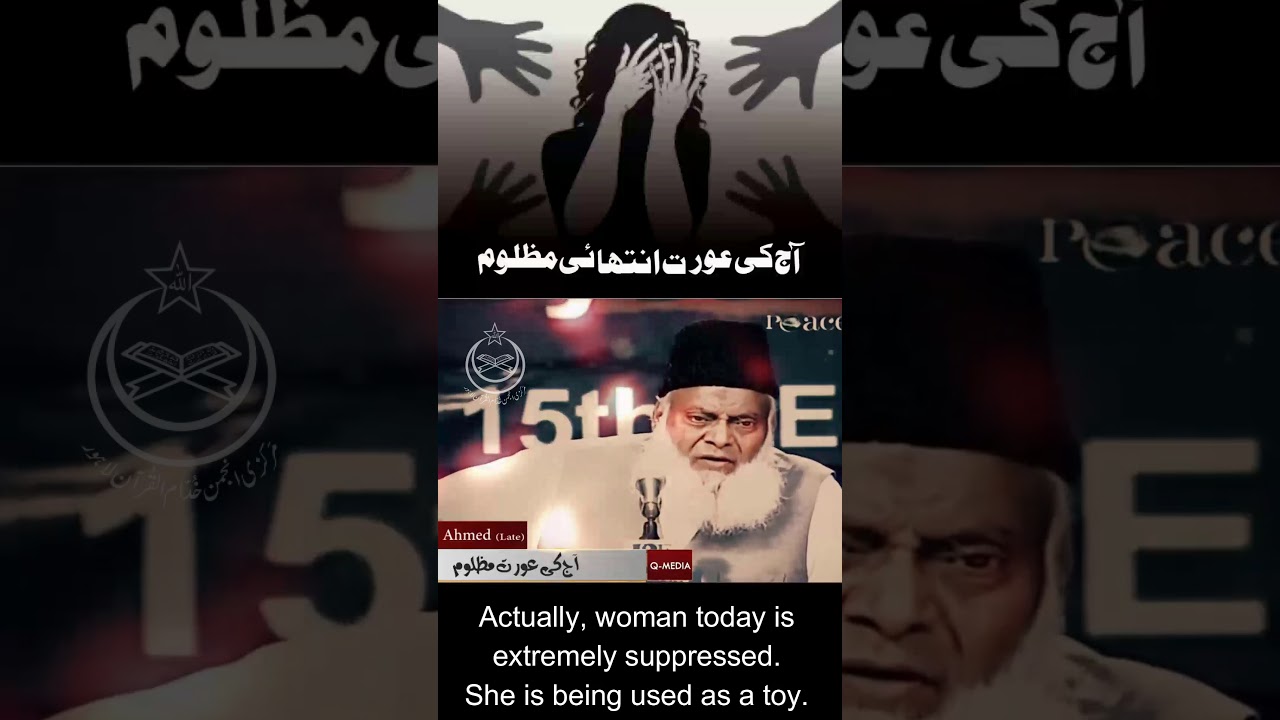
This lecture discusses the plight of women, particularly in Western societies, highlighting the burdens they bear – pregnancy, childbirth, and financial responsibility. It critiques the objectification of women and questions the values of Western civilization, suggesting a concerning trend of exploitation and disregard for their dignity. The speaker emphasizes the need to understand and respect women's true worth and role in society.
98
Dr. Israr Ahmad unequivocally states that the 20th century’s greatest Islamic thinker was a lover of God and a herald of the revival of the Muslim community. He wasn’t merely aware of this revival, but actively foretold it, specifically predicting the resurgence of the Hashemite lineage. He proclaimed the imminent arrival of a book for the pure community, and a great leader from the Hashemite lineage. He was, therefore, both a scholar and a prophet of this revival, and most importantly, a beacon of the second Islamic era.
49
