Shorts
Every Muslim, regardless of location or majority/minority status, has fundamental duties transcending time and space. These encompass complete devotion and obedience to God, fueled by love. Beyond personal worship, believers are obligated to actively invite others to the faith, promoting good and forbidding evil. The highest level of responsibility is establishing religion as a complete system of life, fostering a just and righteous society. This lecture details the levels of religious obligation for every believer.

75

This lecture explores the limits of human knowledge and emphasizes the absolute knowledge of Allah. It highlights that no soul knows what it will earn tomorrow or where it will die. The text illustrates this with the example of someone traveling and unexpectedly passing away, contrasting it with those who live for years in one place. It reinforces that Allah is the All-Knowing, the All-Aware, and that He alone possesses complete knowledge of the unseen and future events. The discussion centers on the concept that everything is within Allah’s knowledge, including what is in the wombs and the circumstances of death.
44
Dr. Israr Ahmad discusses the perceived freedoms within a society that fundamentally contradicts Islamic principles. He argues that true freedom, as defined by Islam, is absent when societal structures are built upon interest-based systems and disregard Islamic law. The lecture highlights a disconnect between ritualistic religious observance – worship, beliefs, ceremonies like births, weddings, and funerals – and the implementation of Islam as a comprehensive way of life. He asserts that even those hostile to Islam offer freedoms that are denied to Muslims due to the absence of an Islamic system. The core argument is that Islam, as a complete code of conduct, has been relegated to mere ritual in the minds of the vast majority of the populace.
68
This lecture discusses the permissibility of a mutual aid system (Imdad Bahawi) specifically for financing Hajj pilgrimage or fulfilling other needs. The system involves contributions from members, and a lottery or similar method determines the order in which members receive funds. It's explained that this is not considered interest-based, as members are simply pooling their resources and receiving funds back in a predetermined order. The lecture highlights the benefit of receiving a lump sum of money, enabling recipients to pursue business ventures or fulfill essential needs.
57
This lecture explores the concept of spiritual and emotional healing as presented in the Quran, specifically referencing verses from Surah Yunus. It identifies the root causes of spiritual ailments – including disbelief, polytheism, arrogance, envy, and excessive attachment to worldly possessions like wealth, status, children, and life itself. The lecture emphasizes that these attachments are instigated by Satan and are the source of inner turmoil. It posits that true healing comes through recognizing and detaching from these harmful inclinations, leading to inner peace and spiritual well-being.
48
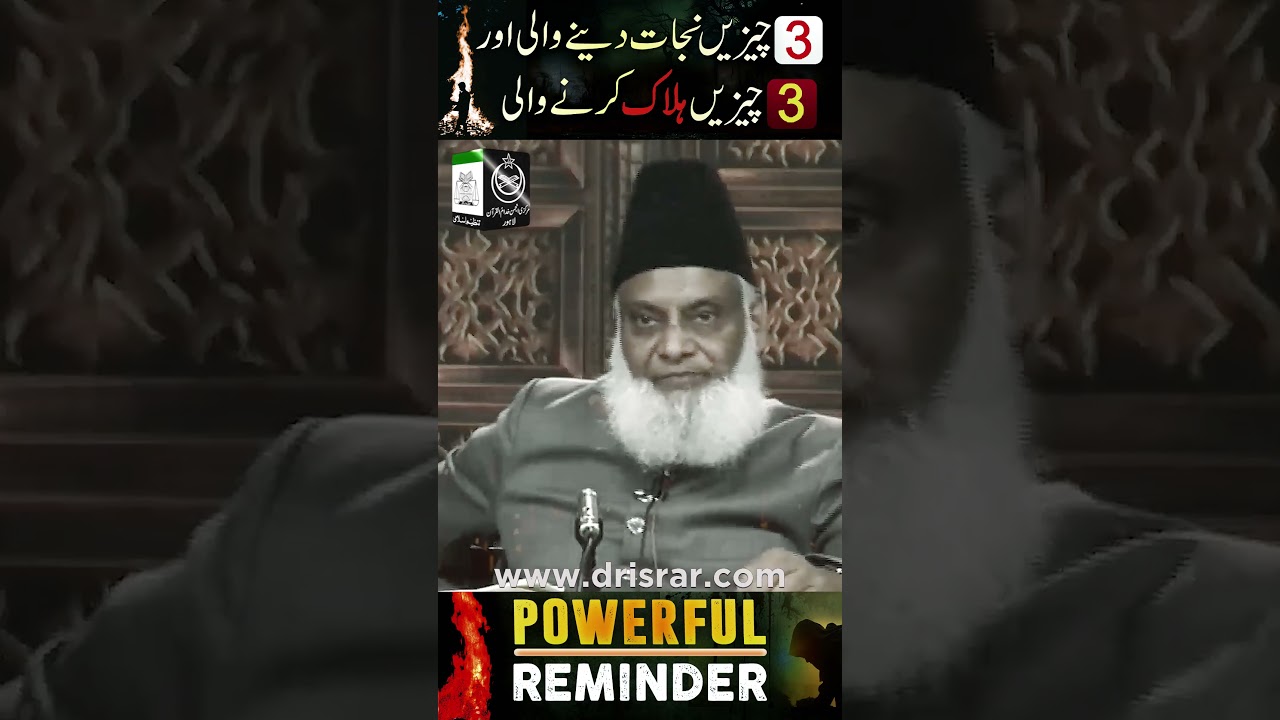
This lecture details three elements that lead to salvation and three that lead to destruction. Salvation is achieved through fear of God in both private and public, speaking the truth regardless of anger or pleasure, and fulfilling one’s obligations. Destruction stems from following one's desires, excessive love of wealth, and self-admiration. The most destructive of these is a bloated ego and considering oneself superior.
43
