Shorts
This lecture explains that I'tikaf represents the culmination of the month of Ramadan, a peak spiritual experience. It’s a period of complete devotion where individuals disconnect from worldly routines and dedicate themselves entirely to worship. This disconnection isn’t merely physical; it’s a complete turning of the soul towards God, severing ties with everything else. I'tikaf signifies a total focus on the Divine, an all-encompassing surrender, and a complete disconnection from all distractions. It’s the highest point of spiritual intensity achieved during Ramadan.

86
Dr. Israr Ahmad explains the importance of performing the movements of prayer (Salat) correctly and with complete attention. He highlights that rushing through the postures – especially transitions between standing, bowing (Ruku), prostration (Sujud), and sitting – constitutes a deficiency in prayer. Complete upright posture after rising from each movement is crucial, ensuring a moment of stillness (Qawmah) before proceeding. This meticulous adherence to the rituals, coupled with appropriate supplications during the sitting position, constitutes a truly accepted prayer.
69
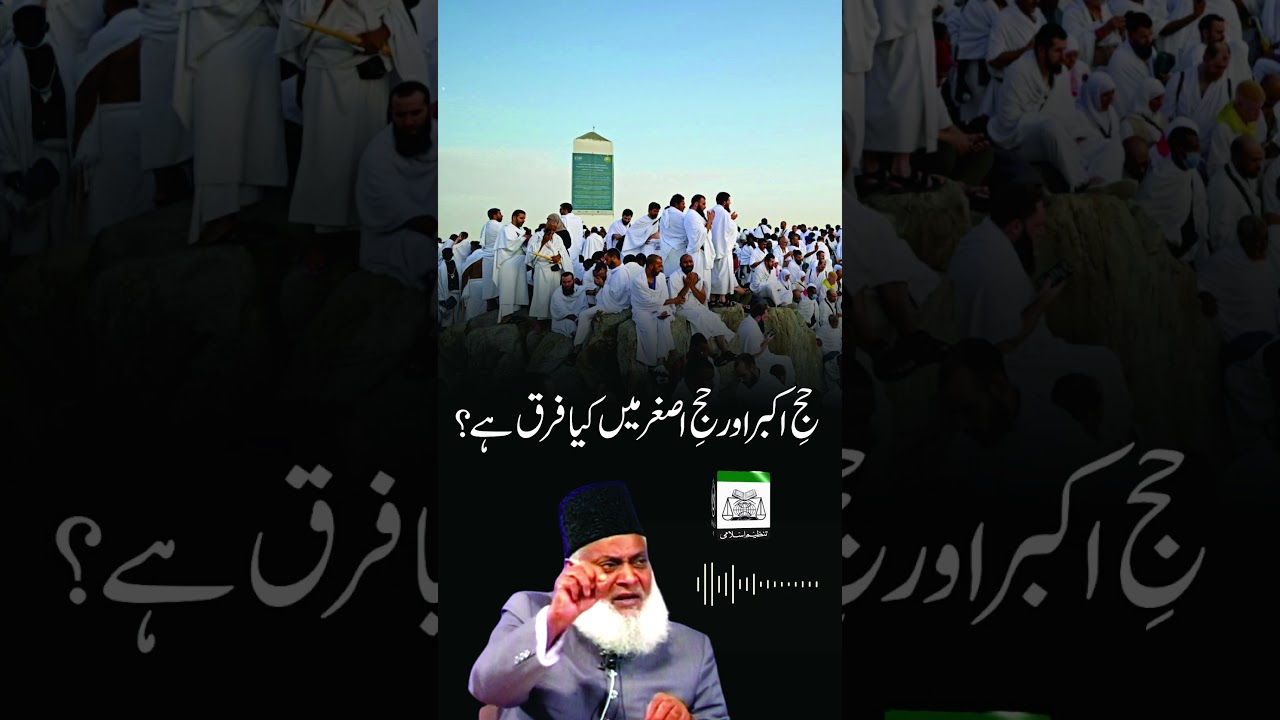
The common misconception that performing Hajj on a Friday is ‘Hajj Akbar’ is inaccurate. Originally, Arabs designated ‘Hajj Asghar’ for Umrah and ‘Hajj Akbar’ for the complete Hajj pilgrimage. The core meaning of ‘Hajj’ is intentional travel or journeying. Therefore, traveling for Umrah also constituted a ‘Hajj,’ albeit a lesser one. The Hajj performed during the designated days in Mecca is considered ‘Hajj Akbar.’ There is no additional merit to performing Hajj specifically on a Friday.
111
The lecture discusses the true meaning of *hijrat* (migration) as defined by the Prophet Muhammad (peace be upon him). It emphasizes that genuine migration isn't merely physical relocation, but abandoning everything displeasing to God. This includes renouncing interest-based transactions, making firm decisions to adhere to righteous conduct, prioritizing modesty and honor within the home, and consistently striving for moral and spiritual purification. The speaker underscores the importance of immediate action and resolute commitment to these principles as the essence of true migration.
99
This lecture discusses the presidential system of governance, drawing parallels between it and the Khilafat system. It highlights the president’s autonomy from the legislature, emphasizing the ability to appoint ministers based on competence rather than congressional membership. The speaker argues that expertise in foreign policy and finance are crucial qualifications, and that even if unelected, a qualified individual's skills should be utilized for the nation's benefit. The discussion positions the presidential system as closer to the Khilafat system compared to a parliamentary one.
64
This lecture emphasizes the immense potential within humanity, created by God, and the inherent power residing within each individual. It argues that humans are unknowingly squandering their abilities by focusing solely on worldly pursuits. The speaker posits that if this innate power were directed towards recognizing and realizing the oneness of God, a profound transformation would occur, ultimately revealing divine glory. The core message stresses the importance of self-awareness and utilizing one’s capabilities for spiritual growth and the realization of God’s presence.
57
