Shorts

The text highlights a unique distinction granted to Prophet Muhammad (peace be upon him). The Quran uses specific phrasing – “Rasool Allah” – exclusively for him, while other prophets are described with various roles like witness, herald, example, caller, messenger, teacher, trainer, and helper. This emphasizes his singular status as the final messenger of God.

97
This lecture emphasizes that true faith (iman) is distinct from deeds (amal/actions). Worldly recognition as a leader, warrior, scholar, or philanthropist holds no weight on the Day of Judgement. Accountability rests solely on the sincerity of one’s faith and the quality of their deeds. The speaker warns that even those celebrated in the world may face severe consequences in the afterlife if their actions did not align with genuine belief. Ultimately, worldly achievements are irrelevant; only a righteous heart and sincere devotion to God matter.
66
This lecture emphasizes the religious obligation of every Muslim to strive for the establishment of the Caliphate system. It asserts that failing to do so constitutes a contradiction of faith and a disregard for divine law. The speaker criticizes a narrow focus on material possessions and worldly concerns, arguing that a true Muslim’s life should be dedicated to this essential struggle, regardless of whether their efforts are recognized or accepted by others. The lecture draws a parallel to the tireless work of past prophets, highlighting that persistent effort is key to success, even in the face of rejection.
64
Dr. Israr Ahmad comprehensively explains the profound concept of *tazkiya* (self-purification) as outlined in the Quran. He breaks down the process into four essential stages: purification of thought (*tathir-e-fikr*), purification of the *nafs* (lower self), purification of the heart (*tasfiya-e-qalb*), and illumination of the soul (*tajalliy-e-ruh*). He emphasizes that true progress requires removing obstacles to spiritual growth, addressing both internal and external influences. The lecture highlights the Quran as the primary tool for *tazkiya*, detailing how it affects the intellect, the heart, and the soul. Dr. Ahmad draws parallels between the Quran's wisdom and the purification process, explaining how its verses resonate with the human spirit. He concludes by referencing the teachings of Iqbal and Hadith, further illustrating the importance of confronting and reforming the inner self, and how the Quran can transform an individual’s life.
172
This lecture explores the concept of aligning one’s life entirely with the will of God. It emphasizes that true devotion involves surrendering all aspects of existence – prayer, sacrifice, life, and death – to the divine. The speaker argues that when life is dedicated to God, it transcends earthly pursuits and becomes a source of spiritual strength. Material means and worldly endeavors should become secondary to this divine connection, and individuals should strive for a life of complete submission and purpose. The ultimate goal is to have one's heart filled with reverence for God.
38
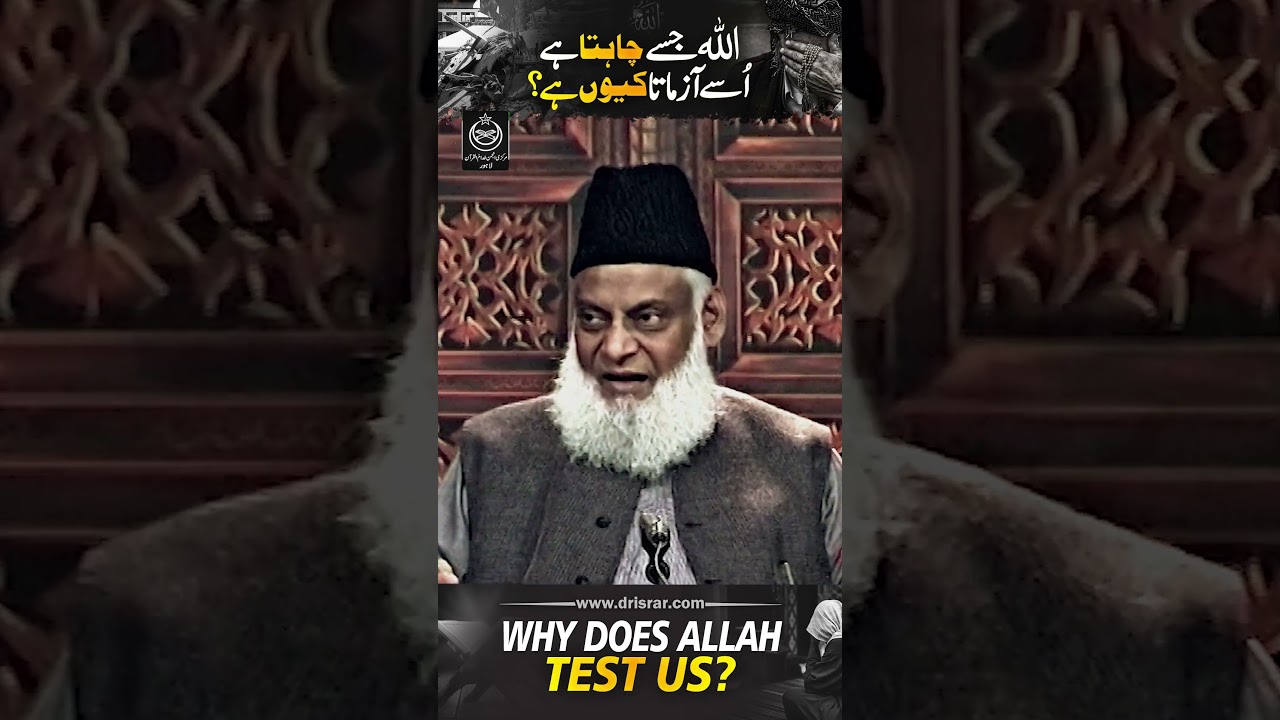
This lecture explores the concept of trials and tribulations as a test of one’s faith. It explains that difficulties and hardships are not merely punishments, but crucial tests to reveal the purity of belief. Just as gold is tested by fire to determine its authenticity, individuals are tested through adversity to expose genuine faith from mere claims. The lecture emphasizes that true believers are revealed through their resilience and steadfastness in the face of hardship, while those with insincere beliefs are exposed. The core message is that trials refine faith and distinguish the sincere from the hypocritical.
48
