Shorts
This lecture emphasizes the significance of fulfilling commitments within societal and Islamic frameworks. Agreements, whether formal contracts like employment or social contracts like marriage, establish mutual obligations and trust. The speaker highlights that upholding one's promise is a fundamental aspect of faith, as individuals will be held accountable by God for their commitments. Every agreement is witnessed by God, and failure to fulfill a promise is considered a serious matter. The lecture underscores that maintaining integrity and fulfilling promises is essential for a righteous life.

32

The soul is the center of our existence, distinct from the body. While the body originates from the earth, remains for a time, and ultimately returns to it, the soul is eternal and originates from, and returns to, God. Death involves the separation of the soul from the body; the soul itself does not die but transitions. The act of ‘ قبض’ (taking/receiving) relates to the body, not the soul. The soul’s journey is one of return to its divine source, a concept encapsulated in the phrase ‘Inna lillahi wa ilayhi raji’un.’
58
Iqbal critically analyzed modern ideologies, identifying inherent dangers within them. He particularly opposed nationalism (wataniyat) as a political concept, viewing it as a new form of idolatry that overshadows faith. He contrasted the spiritual unity of Islam with the divisive nature of national identities. Iqbal saw secularism and nationalism as major threats—forms of shirk (polytheism) and kufr (disbelief)—and materialism as the defining characteristic of contemporary civilization. He argued that true strength lies in adhering to the principles of Tawhid (Oneness of God) and embracing Islam as a complete way of life.
70
This lecture emphasizes the immense potential within humanity, created by God, and the inherent power residing within each individual. It argues that humans are unknowingly squandering their abilities by focusing solely on worldly pursuits. The speaker posits that if this innate power were directed towards recognizing and realizing the oneness of God, a profound transformation would occur, ultimately revealing divine glory. The core message stresses the importance of self-awareness and utilizing one’s capabilities for spiritual growth and the realization of God’s presence.
50
This lecture discusses the underlying unity of the African continent, despite its diverse cultures, languages, and physical appearances. The speaker highlights a shared spiritual resonance, symbolized by the continuous recitation of ‘Labbaik Allahumma Labbaik’ during pilgrimage, indicating a common faith and devotion. The continuous arrival of pilgrim groups exemplifies this widespread spiritual connection, creating a powerful, unifying presence across the land. The lecture emphasizes that this spiritual unity transcends geographical and cultural boundaries.
52
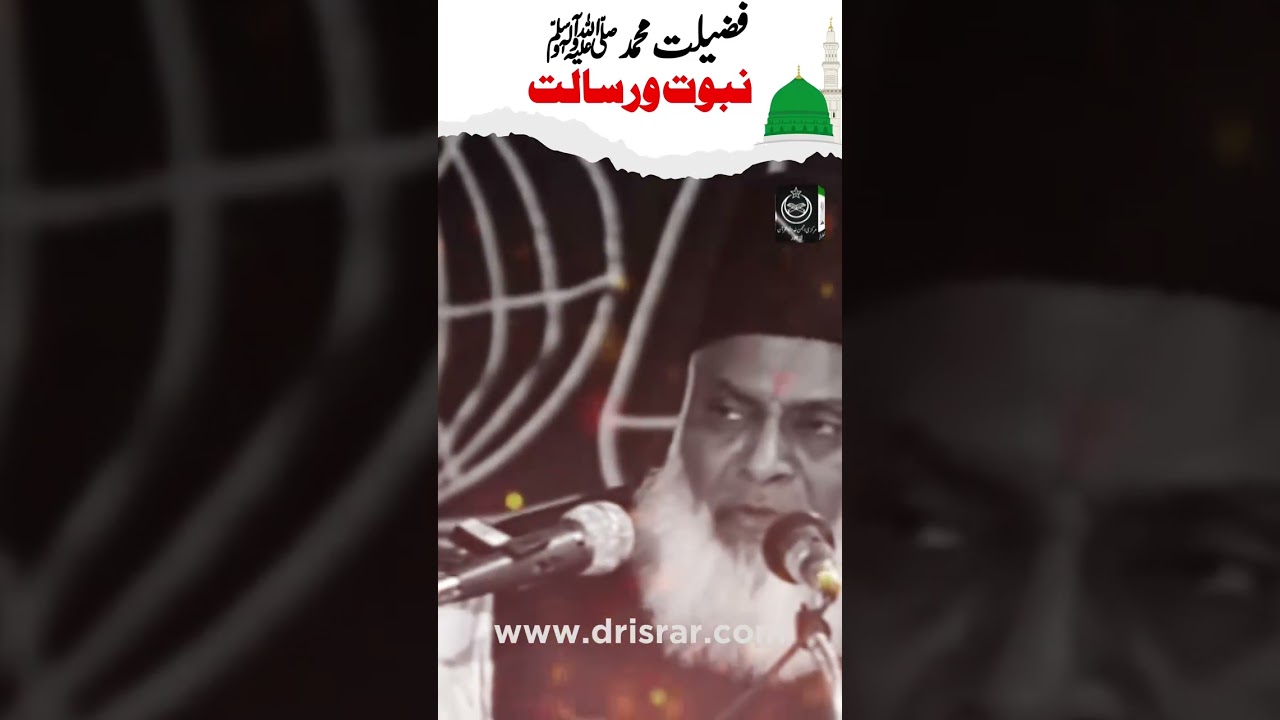
Prophethood and Messengership progressed gradually, reaching their peak and culminating in completion. This fulfillment of the mission and perfection of prophecy forms the foundation of Muhammad’s excellence. The greatest manifestation of the completion of Messengership is that no other messenger achieved the dominance of God’s religion through their call, propagation, organization, struggle, and striving—except Muhammad, the Messenger of God. Every prophet was a caller, a proclaimer, a teacher, and a guide. However, Muhammad, the Messenger of God, was not merely a caller, a proclaimer, a witness, a bearer of glad tidings, an exemplar, or a caller to God, but the one who actually established God’s religion.
43
