Shorts
This lecture emphasizes the transient nature of worldly life and the eternal significance of the Hereafter. It asserts that true life resides in the afterlife, urging listeners to prioritize preparation for it. The speaker highlights the fragility of existence, reminding viewers that death can occur unexpectedly. The discussion focuses on the importance of dedicating one's life to fulfilling either worldly needs or earning rewards for the afterlife, condemning actions devoid of these purposes as detrimental to faith. Ultimately, the message underscores the necessity of having unwavering belief in the ultimate reality of the afterlife.

105
Dr. Israr Ahmad explains that all trials and tribulations, whether on a large scale like natural disasters or personal misfortunes, are part of Allah’s preordained plan, recorded in His knowledge. He emphasizes that nothing happens by chance; everything occurs with Allah’s permission and is within His complete knowledge of past, present, and future. Acceptance of this truth, rather than grief or blame, is the key to peace and resilience. The speaker illustrates this with the story of a Sufi saint who accepted being struck by a stone as a decree from Allah. True understanding means recognizing Allah’s hand in all events and trusting in His wisdom, even when experiencing hardship.
85
True blessings lie not in possessions like health, wealth, or children, but in the guidance that accompanies them. Without divine direction, these are merely transient comforts. The greatest blessing is the Quran, the source of ultimate guidance and true well-being. Guidance transforms all aspects of life into genuine blessings, while its absence renders even apparent advantages meaningless. The essence of a fulfilling life rests on seeking and adhering to divine direction.
306

This lecture explores the concept of spiritual and emotional healing as presented in the Quran, specifically referencing verses from Surah Yunus. It identifies the root causes of spiritual ailments – including disbelief, polytheism, arrogance, envy, and excessive attachment to worldly possessions like wealth, status, children, and life itself. The lecture emphasizes that these attachments are instigated by Satan and are the source of inner turmoil. It posits that true healing comes through recognizing and detaching from these harmful inclinations, leading to inner peace and spiritual well-being.
48
Dr. Israr Ahmad discusses the stark contrast between the beauty of the Quran and the current state of the Muslim community. He highlights the internal contradictions that hinder Islam’s appeal and advocates for reclaiming lost members of the Muslim *ummah* before attempting to proselytize others. He emphasizes the need for self-correction and internal reform, arguing that a focus on reviving the faith within the community is paramount. The lecture questions whether the current portrayal of Muslims attracts people to Islam or repels them, and stresses the importance of addressing internal issues before outward propagation.
48
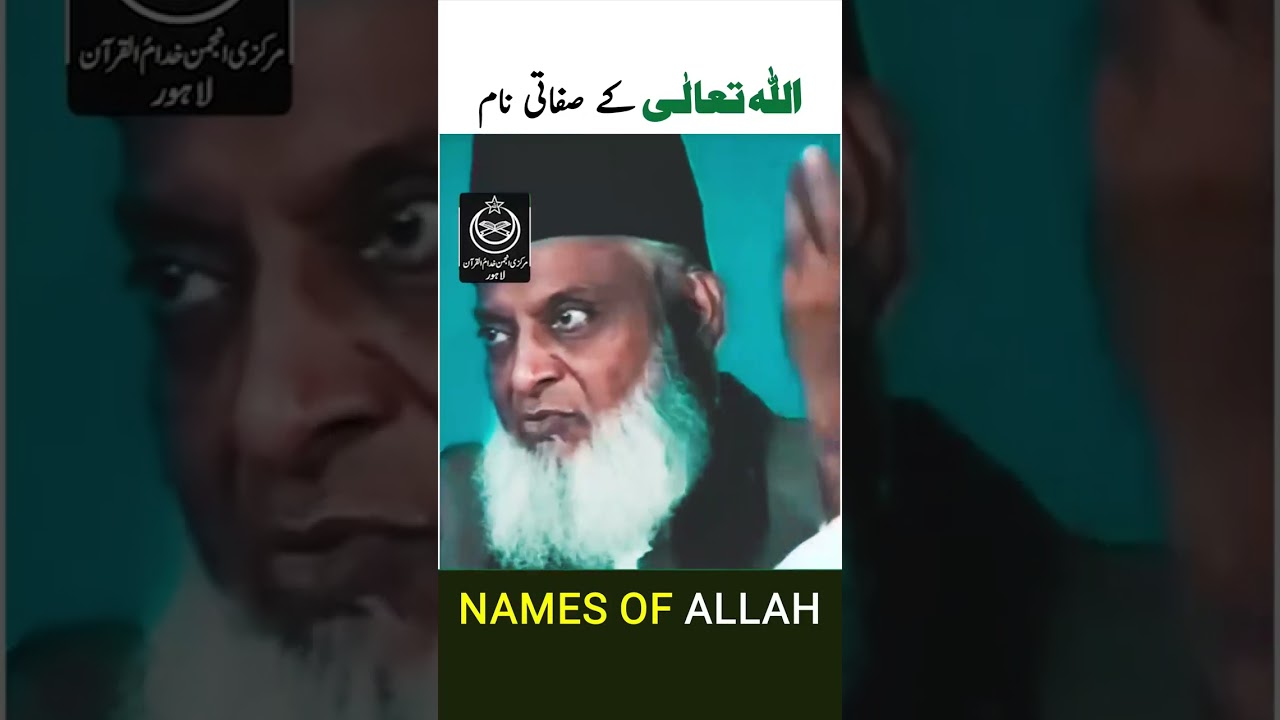
This lecture clarifies the distinction between Allah’s personal name and His attributes. It explains that ‘Allah’ is the sole proper name, while all other names found in the Quran represent divine attributes. By removing the definite article and adding *tanween*, names transform into descriptive qualities. For example, ‘Al-Qadir’ is a name, but ‘Qadir’ or ‘Qadeer’ is an attribute. Similarly, ‘Al-‘Alim’ is a name, while ‘Alim’ or ‘‘Aleem’ is a quality. Essentially, names serve as indicators of a being, and Allah's personal name is unique.
51
