Pantalones cortos

This lecture explores the name Al-Adl (The Just) of Allah, as found in Surah Al-Imran. It explains that justice is a fundamental attribute of God, present within the ninety-nine names revealed through the teachings of the Prophet Muhammad, as narrated by Abu Huraira. The discussion clarifies that while many divine names are expressed through different grammatical forms, the core essence of justice remains absolute and foundational. The speaker addresses the limitations of human language when attempting to define divine attributes, acknowledging that terms like ‘embodied’ or ‘form’ are unsuitable for God but necessary due to vocabulary constraints.

53

This lecture discusses the severe consequences of hypocrisy and seeking recognition for acts of worship. It highlights that genuine devotion is motivated by sincerity to God, not by the desire for worldly praise. The speaker explains that individuals who perform good deeds with the intention of gaining recognition will receive no reward in the afterlife. The lecture emphasizes the importance of inner faith and the distinction between actions performed for God's pleasure and those performed for public acclaim. It also addresses the dangers of ostentation in charity and the importance of pure intention. Ultimately, the message is a warning against superficial religious practice and a call for genuine piety. The speaker stresses that only God knows the true state of one's heart.
52

True faith stems from acting solely for the pleasure of God. This lecture explains that complete devotion requires loving and hating, giving and withholding, all motivated by a desire to please God alone. Genuine goodness isn’t merely outward action, but the purity of intention behind it. A believer’s actions—love, dislike, generosity, and restraint—become complete when driven by a sincere desire for God’s acceptance and satisfaction. This complete devotion defines the essence of faith.
60
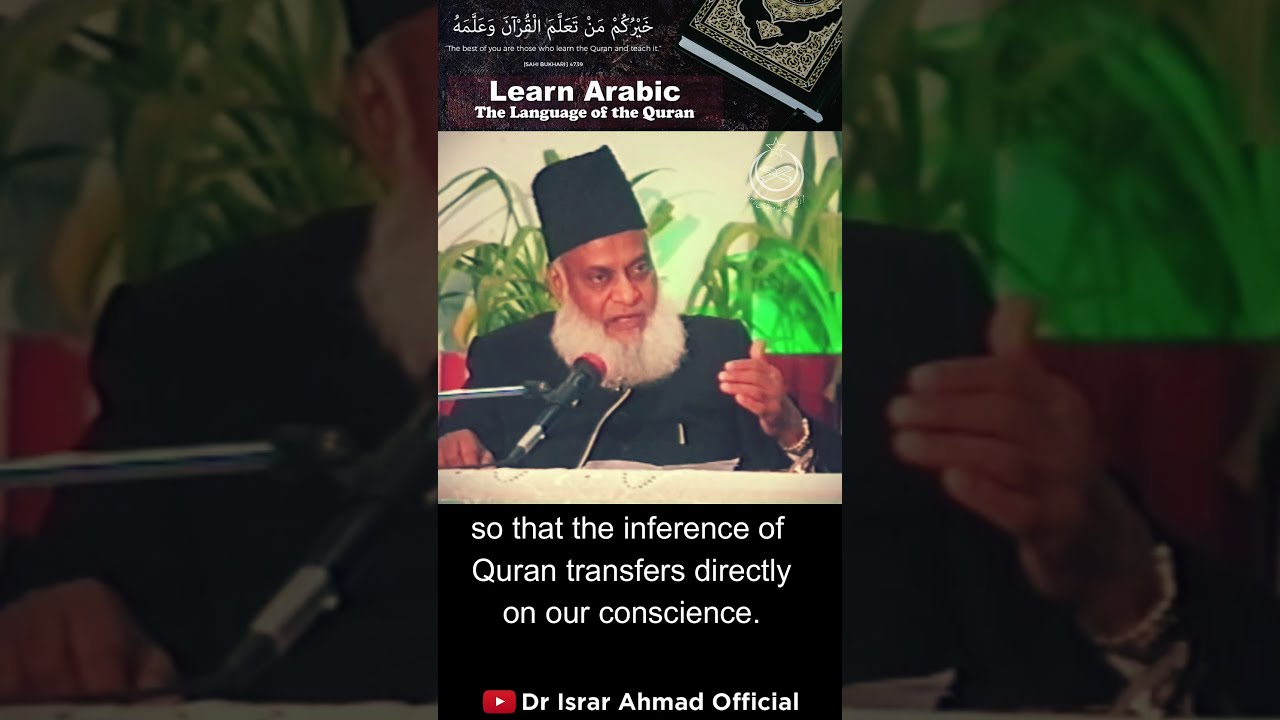
The Urdu language shares a profound connection with Arabic, extending beyond mere vocabulary. The script itself originates from Arabic, and numerous grammatical structures and lexical items are directly borrowed. This linguistic kinship makes learning Arabic particularly advantageous for Urdu speakers, facilitating a deeper understanding of religious texts like the Quran. Despite this inherent connection, sufficient effort hasn’t been directed towards mastering Arabic to directly grasp the Quran’s meaning. The speaker emphasizes the pervasive presence of Arabic-derived words in everyday Urdu speech, highlighting a missed opportunity for intellectual and spiritual enrichment.
58

This lecture addresses the pervasive issue of interest (riba) and gambling (qimar) within Pakistan’s economic system, arguing they contradict the principles of Islam upon which the nation was founded. The speaker issues a strong condemnation of these practices, stating they undermine the entire fabric of society and jeopardize spiritual well-being. He warns that continued engagement with interest-based economics will lead to divine punishment. The lecture emphasizes that even seemingly harmless activities, if reliant on interest or gambling, contribute to a systemic problem. The speaker suggests that a return to Islamic principles is crucial for societal and individual salvation.
58
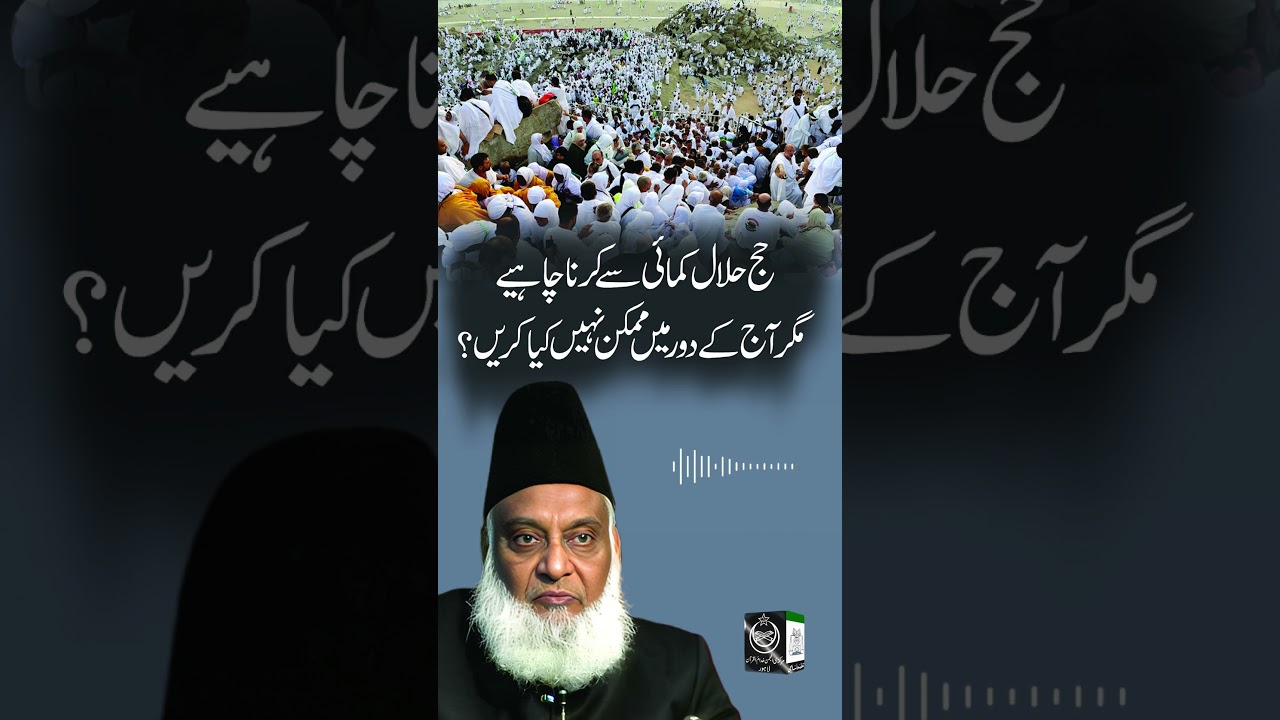
Performing Hajj and other religious obligations requires wealth earned through lawful means. Acquiring purely halal income is challenging in modern times due to pervasive indirect involvement with interest. Ambient interest exists in the air we breathe and the food we consume, which is considered a general impurity and doesn’t necessarily invalidate a transaction. Direct involvement, such as taking loans with interest to build homes or businesses, or depositing money to earn interest, is unequivocally forbidden. However, unintentional mistakes are forgivable, as God is Merciful and Pardoning. Focusing on acquiring halal income and avoiding strictly prohibited actions is paramount.
60
