Kurze Hose
This lecture clarifies the meaning of Surah Al-Asr, emphasizing that all of humanity is in loss except those who believe, perform righteous deeds, call to truth, and exercise patience. The verse’s initial oath highlights the importance of understanding its context. The discussion details the conditions for escaping loss, focusing on faith, good actions, upholding truth, and steadfastness in the face of adversity. Dr. Israr Ahmad elucidates the interconnectedness of the verses and the overall message of accountability and the path to success.

60
Dr. Israr Ahmad discusses the Prophet Muhammad’s (peace be upon him) remarkable humility and integration with his companions. He emphasizes the Prophet’s deliberate choice to present himself as an ordinary human being, eschewing any display of special status or privilege. The Prophet actively discouraged people from standing upon his arrival and mingled freely with his followers, sitting among them without distinction. This demonstrated a profound commitment to equality and accessibility, fostering a sense of unity and brotherhood among the early Muslim community. The speaker highlights that the Prophet’s approach was a conscious effort to remove barriers between himself and his companions, encouraging genuine connection and spiritual growth.
39
This lecture emphasizes adhering to the traditional Islamic method of marriage ceremonies, rooted in the practices of the Prophet Muhammad and his companions. It warns against incorporating innovations or customs not supported by authentic Islamic sources. The speaker stresses the importance of simplicity and rejecting practices that deviate from the established Sunnah, advocating for a return to the original, pure form of the marriage contract and celebration. Any social work related to marriage should align with these principles.
258
This lecture clarifies a common misconception regarding the dowry (jehez) of Hazrat Fatima (RA), the daughter of the Prophet Muhammad (peace be upon him). It explains that Hazrat Fatima’s marriage was unique in that her father, the Prophet, asked Ali (RA) if he had anything to offer as *mahr* (dower). Ali, being among the poorer companions, had nothing. He sold his armor, and Hazrat Usman (RA) purchased it, later gifting it back. The proceeds, along with a small contribution from the Prophet, were used to furnish a modest home for Fatima, including items like a mat made of date palm leaves, pillows, a water skin, and a hand mill. The Prophet did not contribute any money directly to the dowry; all provisions came from Ali’s effort and the generosity of others.
79
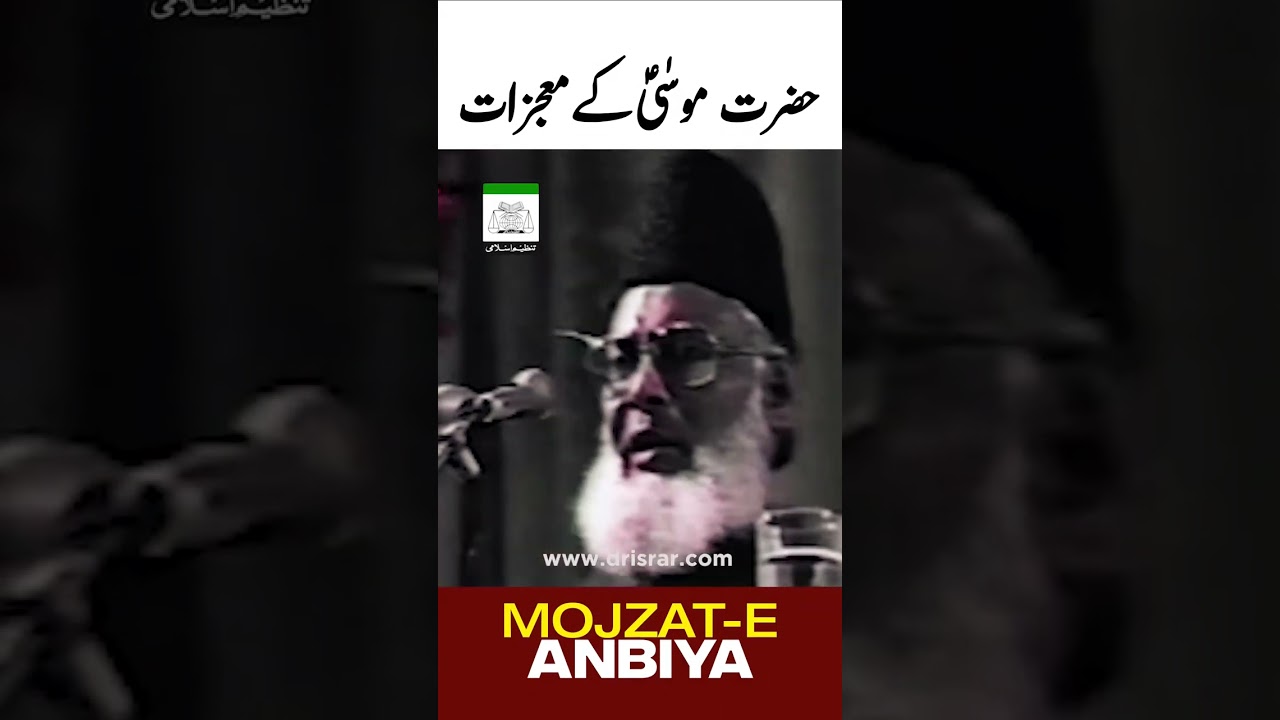
The lecture details the miracles of Prophet Moses (peace be upon him), focusing on the well-known miracles of his staff and the white hand. It further elaborates on seven additional miracles mentioned in the Quran, revealed to Pharaoh and his people. These include the splitting of the sea with his staff, the creation of twelve springs from a rock, the descent of manna and quail, and the provision of shade with clouds in the desert, offering protection where no shade existed.
50
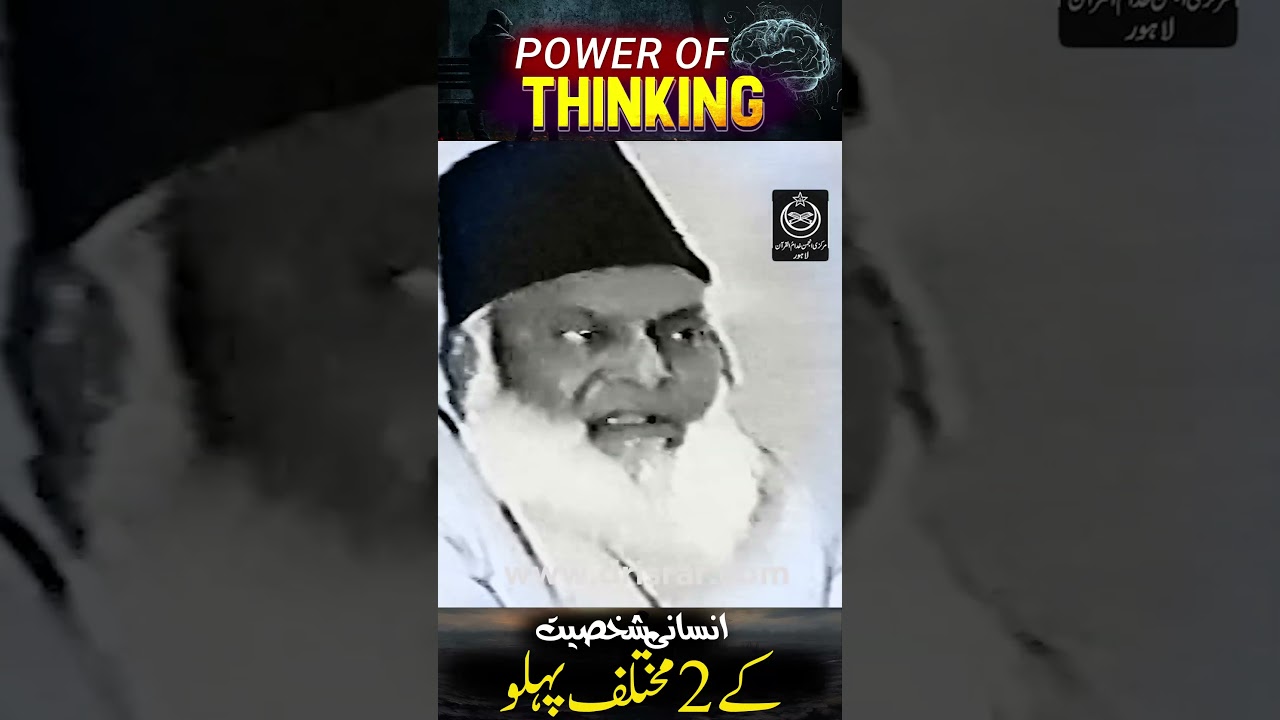
Human personality is comprised of two essential aspects: knowledge and thought, and action and character. These two are inextricably linked; a person’s beliefs and ideas manifest in their actions, ethics, and dealings. Correct action stems from sound thinking; flawed foundations lead to flawed outcomes. Limited thought results in limited action and character. A skewed initial approach inevitably leads to a distorted final result.
34
