निकर

After witnessing a powerful earthquake, the Israelites questioned God’s plan. Moses pleaded for mercy, reminding God of their deliverance from Pharaoh and their current vulnerability. God responded by explaining the nature of His mercy: a universal mercy encompassing all creation, and a specific mercy reserved for those who follow His Messenger, the unlettered Prophet. This highlights the distinction between God's boundless compassion and the blessings bestowed upon the faithful who adhere to divine guidance.

75
Hares Ahshari reports that the Messenger of Allah commanded Muslims to adhere to five principles: maintaining unity and cohesion within the community, obedience to leadership, migration for the sake of faith, and striving in the path of God. This directive, relayed by the Prophet, is not of his own volition but a direct command from God. These principles are essential for the strength and progress of the Muslim community, ensuring collective action and spiritual advancement. The report emphasizes that these are divine instructions, communicated through the Prophet, and should be followed diligently.
54
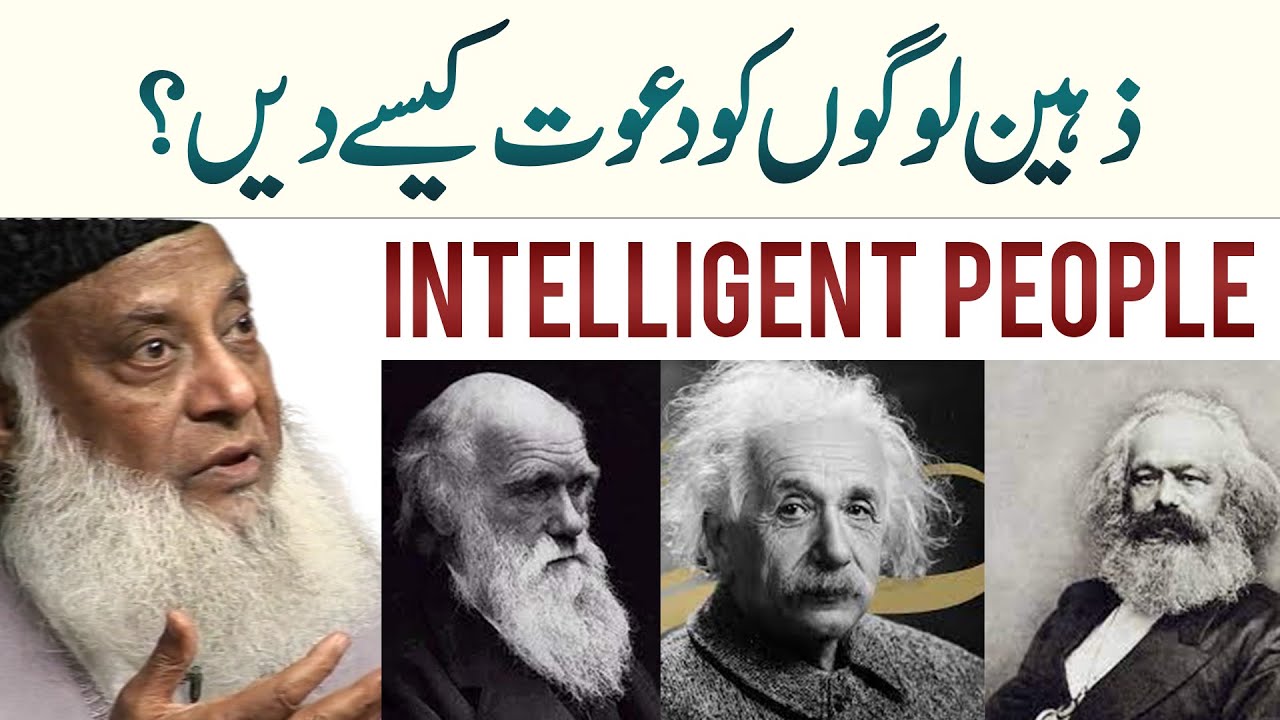
The lecture addresses the necessity of clearing the mind of conflicting ideologies, specifically Darwinian evolution and other Western philosophies, before accepting Islamic teachings. The speaker emphasizes that preconceived notions and intellectual impurities act as barriers to true understanding of religious concepts like the story of Adam and Iblis. He critiques the influence of thinkers such as Darwin, Freud, Marx, Adler, Bertrand Russell, and Sartre on contemporary thought, asserting that these philosophies obstruct a clear reception of Islamic principles. The speaker highlights the importance of intellectual purification to facilitate genuine faith and understanding.
51
This lecture discusses a potential large-scale conflict between India and Pakistan if China and Pakistan strengthen their alliance. The speaker predicts a future Islamic revival originating from the region, even at a significant cost in lives. A key prophecy from Shah Aliullah Dehlavi foretells a time when the upper castes of India will predominantly convert to Islam. The lecture emphasizes the historical trajectory and inevitable changes occurring, acknowledging the inability to prevent these unfolding events.
64
This lecture addresses the question of accountability for unintentional involvement with interest (riba). It clarifies that if someone unknowingly consumes something containing interest, they are not exempt from sin. However, the speaker proposes that sincere effort dedicated to establishing and strengthening religious practice can serve as expiation. The analogy of involuntary inhalation of dust is drawn; just as one cleanses their lungs, striving for faith cleanses the soul. The lecture emphasizes that consistent, dedicated work for the cause of religion is a valid form of atonement for unintentional transgressions.
62

This lecture explains how Eid al-Adha, with its central practice of sacrifice, represents a broadening of the sacred experience of Hajj. The speaker highlights that while not everyone can physically perform Hajj, participating in the sacrifice of Eid al-Adha allows Muslims worldwide to share in that same spiritual objective. The discussion draws parallels between certain restrictions observed during Hajj and those followed during the days of sacrifice, noting similarities in ritual practices. The core idea presented is that Eid al-Adha extends the spirit of devotion and unity inherent in Hajj to all Muslims, regardless of their geographical location or ability to travel to Mecca.
62
