ショーツ
After witnessing a powerful earthquake, the Israelites questioned God’s plan. Moses pleaded for mercy, reminding God of their deliverance from Pharaoh and their current vulnerability. God responded by explaining the nature of His mercy: a universal mercy encompassing all creation, and a specific mercy reserved for those who follow His Messenger, the unlettered Prophet. This highlights the distinction between God's boundless compassion and the blessings bestowed upon the faithful who adhere to divine guidance.

75
This world is fundamentally incomplete from the perspective of moral law. Physical laws operate with absolute certainty – transgression leads to consequence. However, moral failings, like lying or theft, often go unpunished in this life. This creates an inherent imbalance. A complete moral order, and the corresponding consequences for actions, necessitates another world, another existence where justice prevails. The speaker emphasizes the deficiency of this world’s system of accountability and advocates for a realm where moral principles are fully realized and upheld.
54
Dr. Israr Ahmad discusses the historical significance of Prophet Muhammad (peace be upon him). He references Dr. Michael Hart’s book, *The 100*, which ranks Prophet Muhammad as the most influential figure in human history. The lecture highlights the revolutionary impact of the Prophet’s life and teachings, establishing him as a pivotal figure who reshaped the course of history. Dr. Hart’s research involved selecting one hundred of the most influential individuals throughout history and ranking them based on their impact, ultimately placing the Prophet Muhammad at the top.
40
This lecture addresses the grave sin of associating partners with God, specifically the pre-Islamic Arabian practice of assigning gender to God and believing in divine offspring. It highlights how attributing progeny to Allah is the most egregious form of *shirk*. The discussion condemns the notion of God having sons and daughters, referencing the verse about God's displeasure with angels who assigned gender to Him. The lecture emphasizes the immense audacity of such a claim and warns against its consequences.
42
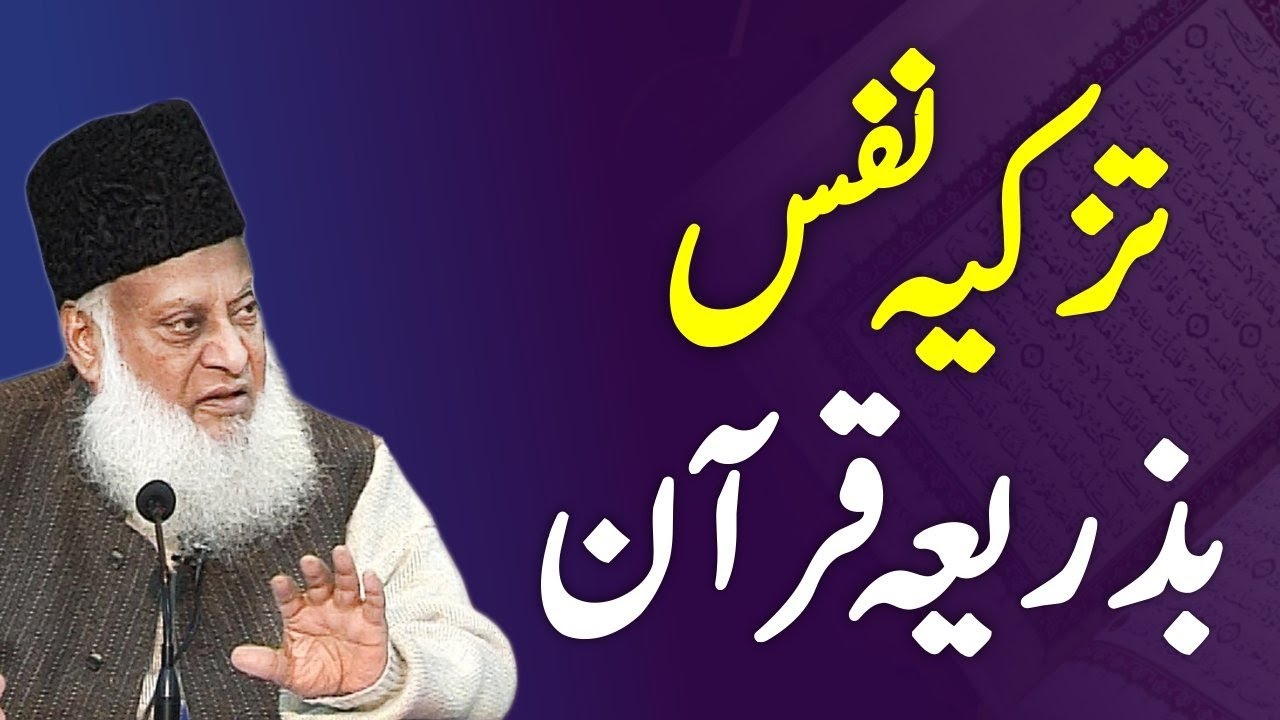
Dr. Israr Ahmad comprehensively explains the profound concept of *tazkiya* (self-purification) as outlined in the Quran. He breaks down the process into four essential stages: purification of thought (*tathir-e-fikr*), purification of the *nafs* (lower self), purification of the heart (*tasfiya-e-qalb*), and illumination of the soul (*tajalliy-e-ruh*). He emphasizes that true progress requires removing obstacles to spiritual growth, addressing both internal and external influences. The lecture highlights the Quran as the primary tool for *tazkiya*, detailing how it affects the intellect, the heart, and the soul. Dr. Ahmad draws parallels between the Quran's wisdom and the purification process, explaining how its verses resonate with the human spirit. He concludes by referencing the teachings of Iqbal and Hadith, further illustrating the importance of confronting and reforming the inner self, and how the Quran can transform an individual’s life.
180
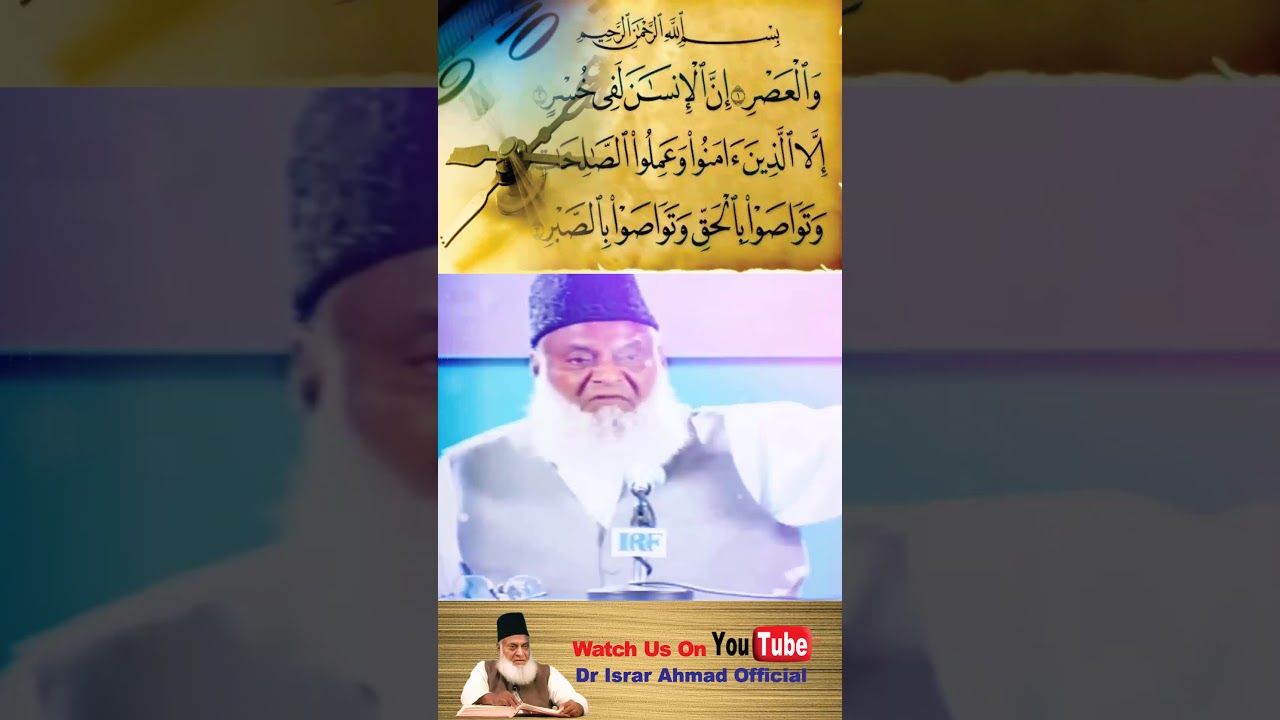
Humanity, universally, is in loss. Salvation is achieved through four essential conditions: faith, righteous deeds, advocating truth, and encouraging good conduct. These are not merely recommendations, but fundamental requirements for achieving deliverance. Without fulfilling these conditions, true salvation remains unattainable. This lecture details these prerequisites for spiritual success and a meaningful life.
220
