Shorts
This lecture emphasizes solely relying on Allah for assistance and rejecting the practice of seeking help from spiritual entities or intermediaries. It asserts that Allah possesses the power to alleviate suffering directly, without requiring the intervention of spirits or angels. The speaker stresses that true solace and resolution come from turning to Allah alone with sincere prayer and supplication, and that Allah can grant relief through any means He chooses, independent of any external agent. The core message is a firm rejection of practices involving seeking help from anything other than the Divine.

61

Every action, no matter how small or large, is recorded in the knowledge of Allah. Each word uttered is also within His awareness. Therefore, even the weight of an atom of good will be witnessed, and similarly, the weight of an atom of evil will also be seen. This emphasizes complete accountability for all deeds, encouraging mindful action and discouraging wrongdoing.
67
This lecture explores the unique relationship between Prophet Ibrahim (Abraham) and God, highlighting his status as a close friend (Khalil) of God as mentioned in the Quran. It details how God chose Ibrahim as an Imam (leader) for humanity and traces the lineage of prophets through his descendants, ultimately leading to Prophet Muhammad (peace be upon him). The lecture emphasizes the continuous chain of prophets spanning 1400 years, from Moses and Aaron through Jesus and John, culminating in the prophethood of Muhammad (peace be upon him). It underlines Ibrahim's pivotal role in the history of divine guidance.
68
This lecture explores the limits of human understanding regarding the unseen world (Ghaib) and the afterlife. It emphasizes that certain aspects of these realms, such as the exact nature of punishment or what occurs after death, are beyond our complete comprehension. The speaker stresses the importance of accepting what has been revealed in the Quran and Sunnah regarding these matters through faith, rather than attempting to delve into details that are intentionally concealed. The lecture clarifies that belief in the unseen is a condition for benefiting from the guidance of the Quran, and highlights the experience of the deceased hearing the sounds of those departing after burial, as mentioned in Hadith. True understanding will only be revealed in the afterlife.
52
This lecture clarifies that fulfilling obligatory prayers is the minimum requirement for prayer. While fulfilling obligations is essential, incorporating voluntary prayers (sunnah and nafl) adds depth to one's spiritual practice. The speaker categorizes these voluntary acts based on their emphasis by the Prophet Muhammad, differentiating between those regularly practiced (sunnah mu’akkadah), those practiced occasionally (sunnah ghair mu’akkadah), and other optional prayers (nawafil). It’s recommended to participate in these supplementary prayers to the extent possible, aligning with the guidance of the Prophet and within the bounds of one’s time.
165
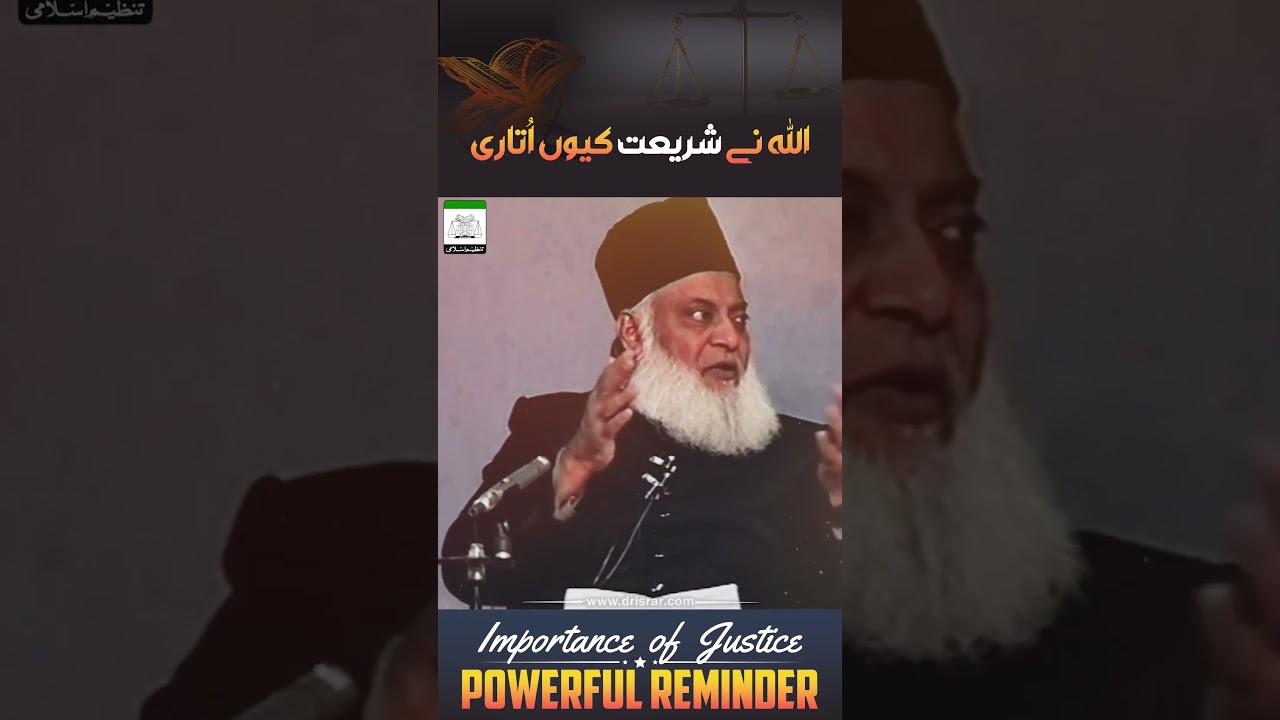
This lecture explores the fundamental importance of justice (Adl) in Islam, referencing Surah Aal-e-Imran and emphasizing the divine mandate for establishing equitable systems. It details how prophets were sent with clear teachings, scriptures, and a balance of rights and responsibilities—defining obligations for all levels of society, from individuals to employers and employees. The discussion highlights the consequences of neglecting justice and the impact of large-scale religious observances like Hajj on societal change. While rituals remain, the underlying spirit of striving for justice must be preserved. God sent messengers and revealed books so people could stand firm on justice.
46
