Shorts
This lecture focuses on the profound meaning and spiritual significance of the phrase "Allah Akbar." Dr. Israr Ahmad elaborates on its implications for a believer’s life, emphasizing its connection to gratitude, humility, and the recognition of God’s greatness. He explains how the consistent remembrance of God through this declaration can transform one’s perspective and lead to inner peace. The discourse underscores the importance of aligning one’s actions with the acknowledgment of God’s supreme power and mercy, fostering a deeper spiritual connection and a life guided by faith.

48
The Quran, as divine speech, reflects the complete personality of its speaker – Allah. The eloquence and depth of language reveal the speaker's knowledge, sophistication, and the heights of their thought. It is a complete representation of divine attributes, offering insight into Allah’s characteristics, wisdom, and the breadth of divine understanding. The very nature of speech embodies the speaker’s status, intellect, and the scope of their perception. Consequently, the Quran serves as a perfect manifestation of Allah’s complete personality and attributes.
78
This lecture discusses the importance of prioritizing the afterlife over worldly pursuits. It emphasizes that those solely focused on immediate gains neglect the true purpose of life. The speaker highlights that fulfilling parental duties, like maintaining their graves, is commendable but ultimately secondary to striving for eternal reward. The core message centers on verses from Surah Bani Israel, detailing the swift provision of worldly desires for those who seek them, contrasted with the enduring reward promised to those who dedicate themselves to the hereafter and consistently strive for it. The lecture underscores the difference between immediate gratification and lasting spiritual fulfillment.
28
This excerpt details the catastrophic events preceding and occurring on the Day of Judgement. It describes the dimming of vision, the extinguishing of the moon, the merging of the sun and moon, and the resulting panic and desperation of humanity. People will search for any refuge, but find none. The verse emphasizes ultimate accountability before God, where every deed—past and future—will be revealed. It highlights that on that day, humanity will be made to realize the consequences of their actions and be held accountable for everything they have done.
78

This lecture addresses the question of resurrection after complete physical disintegration. It refutes the notion that being reduced to dust or metal precludes the possibility of being recreated. The speaker clarifies that even if one were to become stone, fossilized, or transformed into an exceptionally hard substance, Allah is capable of recreating them. The argument centers on the absolute power of God and the inherent possibility of renewal, regardless of the state of decomposition. It is a response to those who express disbelief based on the perceived impossibility of being revived after death.
40
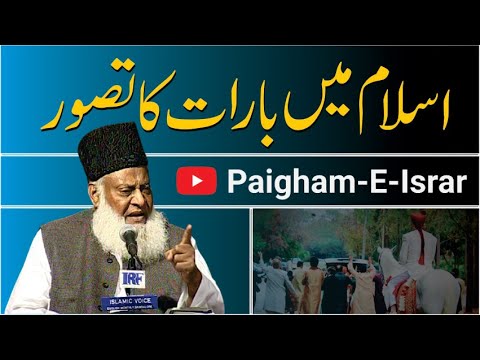
This lecture clarifies that the practice of *barat* (a wedding procession) is not an Islamic tradition. The *nikah* (marriage contract) in Islam is performed in the mosque, without lavish feasts or processions. The historical context reveals that the custom originated from pre-Islamic Hindu traditions, stemming from the need to protect the bride and her dowry during travel between villages. It was a protective measure against bandits, evolving into a large, extravagant procession with feasting and displays of wealth at the groom's home. The example of Prophet Muhammad's daughter, Fatima, demonstrates that even in her marriage to Hazrat Ali, there was no such elaborate procession; rather, a few women accompanied her after the *nikah*. The lecture emphasizes that this practice is a cultural addition, not a religious requirement.
86
