شارٹس
This lecture addresses the Islamic perspective on disciplining adult children. It clarifies that physical violence against adult offspring is prohibited. The speaker emphasizes that the root cause of disobedience often lies in a lack of religious upbringing during childhood. Establishing consistent prayer habits and good character in children from a young age is presented as preventative measure. Alternatives to physical punishment include emotional distance, ending contact, and addressing the underlying causes of the child's behavior. The discussion stresses that proper guidance during formative years is crucial for preventing future issues.

49
True faith is deeply rooted conviction in the heart—belief in God, His attributes, His presence and knowledge, life after death, accountability, reward and punishment, Paradise and Hell, angels, divine revelation, scriptures, prophets, messengers, and the finality of the prophethood of Muhammad, peace be upon him. This conviction is the foundation of a meaningful life.
39
This lecture clarifies the permissibility of dedicating the reward of charitable deeds to others, specifically deceased parents or loved ones. It distinguishes between financial donations, where transferring the reward is acceptable, and acts of worship like prayer and Quran recitation, where the reward belongs solely to the worshipper. The speaker emphasizes that dedicating worship directly to anyone other than Allah constitutes shirk (associating partners with God) and renders the act impermissible. Financial charity’s reward can be transferred, but the reward for obligatory worship remains with the individual performing it.
105
Hares Ahshari reports that the Messenger of Allah commanded Muslims to adhere to five principles: maintaining unity and cohesion within the community, obedience to leadership, migration for the sake of faith, and striving in the path of God. This directive, relayed by the Prophet, is not of his own volition but a direct command from God. These principles are essential for the strength and progress of the Muslim community, ensuring collective action and spiritual advancement. The report emphasizes that these are divine instructions, communicated through the Prophet, and should be followed diligently.
55
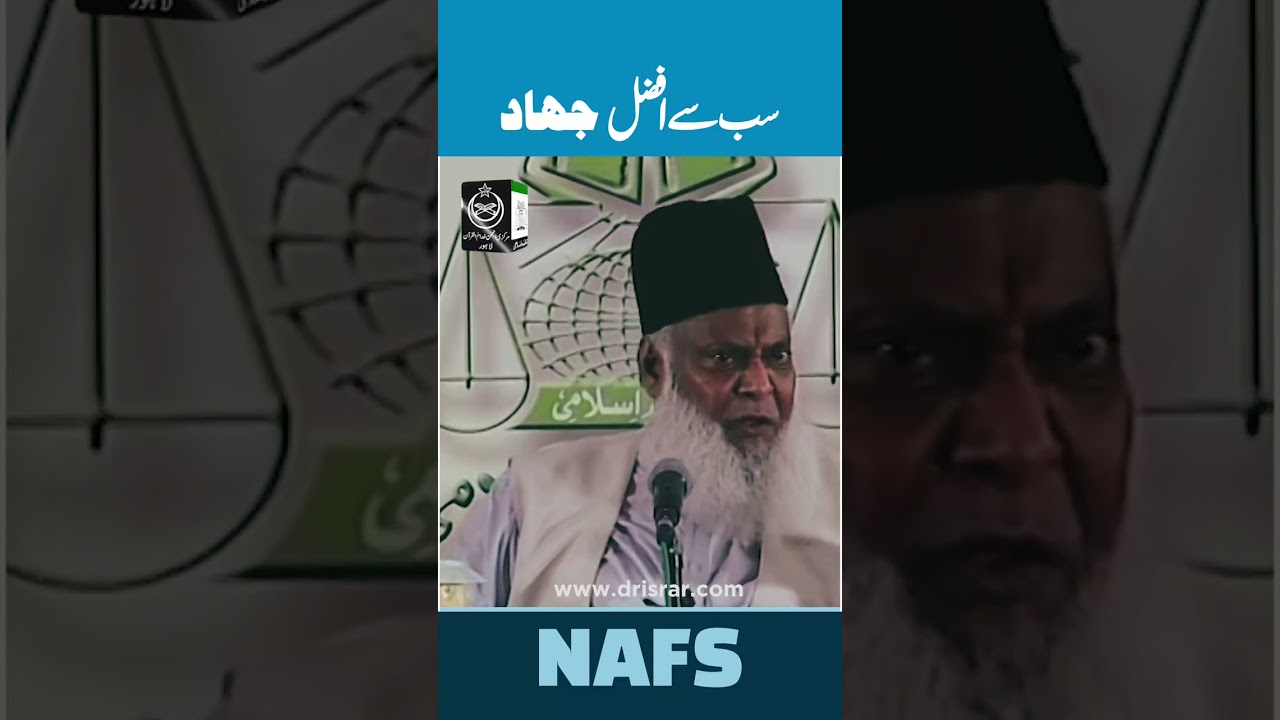
Dr. Israr Ahmad explains that the greatest form of *jihad* is the struggle against one’s own base desires (*jihad e nafs*), achieved by dedicating oneself to God. This internal struggle protects against worldly temptations that constantly demand attention and resources. He contrasts this with physical *jihad* – fighting in the path of God – which, while important, is considered a lesser form of struggle. The constant internal demands of the *nafs* are portrayed as a relentless pursuit of material possessions and immediate gratification. Overcoming these internal pressures constitutes the superior *jihad*.
54
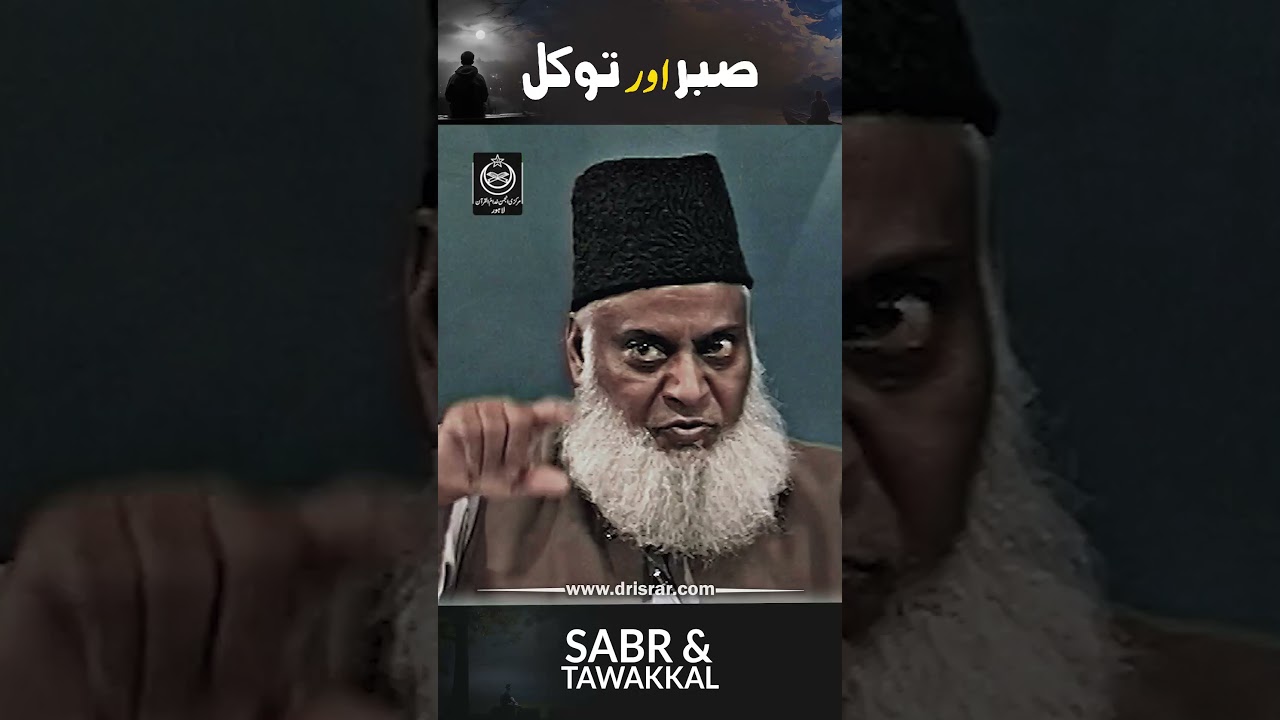
This lecture emphasizes the twin virtues of patience (sabr) and reliance on God (tawakkul) as fundamental principles for navigating life’s challenges. It stresses complete surrender to divine will, rejecting self-reliance on personal abilities, intelligence, or qualifications. True strength lies in enduring hardship with patience and placing unwavering trust in God’s plan. The core message advocates for abandoning dependence on one’s own efforts and instead, cultivating a complete and absolute trust in Allah for all outcomes.
75
