شلوار کوتاه

This lecture explores the destructive nature of greed (bakhili) and the dangerous state of self-sufficiency (istighna). It contrasts those who are mindful of others’ feelings and seek forgiveness with those who are indifferent and act without regard for consequences. The speaker emphasizes that a lack of empathy leads to spiritual ruin, ultimately culminating in the severe consequences of the afterlife. The discourse highlights the importance of humility, consideration for others, and seeking repentance to avoid the path of destruction.

50

Dr. Israr Ahmad explains the significance of *suhoor* (pre-dawn meal) in Islam. He highlights that *suhoor* distinguishes Muslim fasting from that of the Jews. Fasting begins at dawn, not sunrise, allowing time for the meal. He cautions against excessive strictness in observing the timing of *suhoor*, referencing the Prophet Muhammad’s emphasis on ease and avoiding unnecessary hardship in religious observance. The practice should be approached with balance and moderation, prioritizing accessibility and avoiding overly rigorous interpretations.
65

The Quran emphasizes the husband's role as a protector and provider within marriage, requiring the wife’s obedience unless the command involves sin. It highlights that righteous wives are obedient to their husbands, but obedience is not required in matters of disobedience to God. Husbands are responsible for guiding their wives towards righteousness and maintaining a just and loving relationship. This lecture clarifies the rights and responsibilities within a marital bond, emphasizing the importance of mutual respect and adherence to divine guidance.
141

Those close to God experience no fear or grief. Fear stems from what God wills, and even seemingly undesirable events contain hidden benefits. The Quran highlights that what we dislike may be good, and what we desire may be harmful, as God’s knowledge surpasses our own. We perceive only the outward appearance of actions and events, unaware of the divine intention and wisdom behind them. Our vision is limited; we cannot comprehend the ultimate purpose of God. Therefore, we are easily affected by superficial occurrences. True understanding lies in recognizing God’s overarching plan, which remains beyond our immediate perception.
54
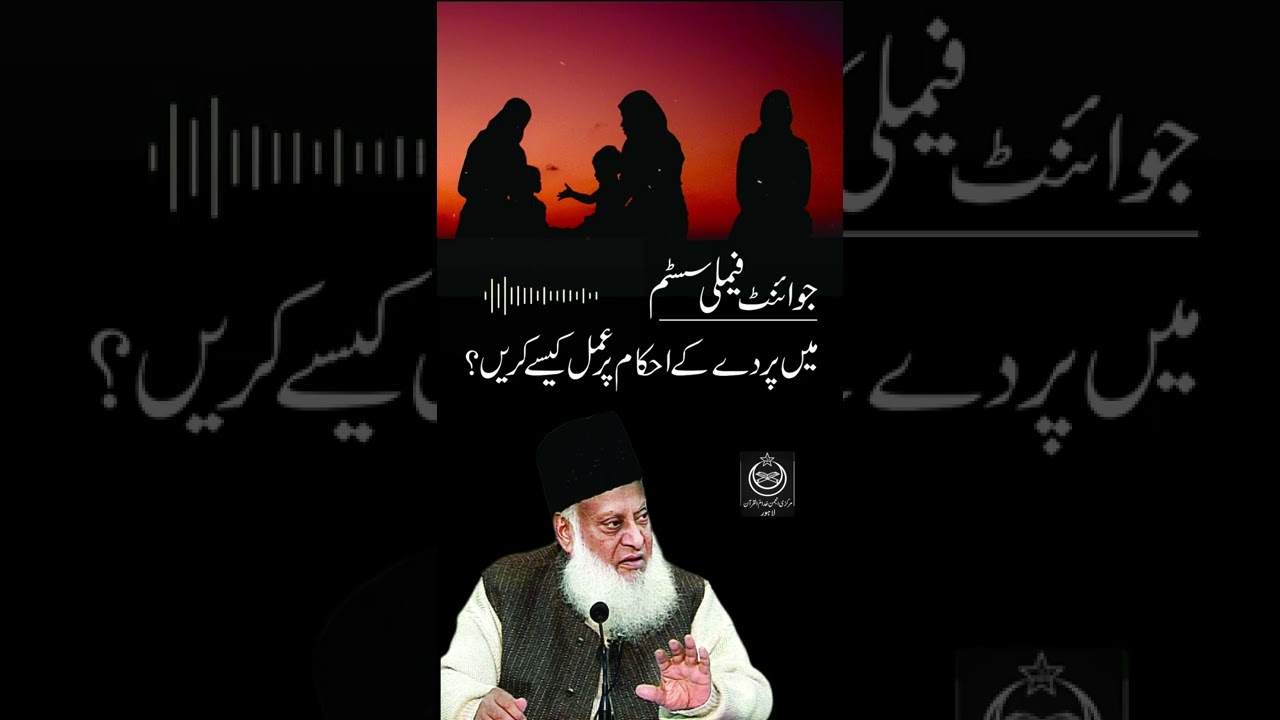
This lecture discusses the application of *purdah* (modesty/seclusion) within a joint family system. Dr. Israr Ahmad explains that while strict adherence to *purdah* as practiced between separate households isn't possible, certain guidelines can be followed. These include avoiding direct face-to-face interaction between a younger brother's wife and her husband’s elder brother, maintaining distance, and ensuring privacy during work or activities where unrelated men may be present. The discussion uses an example of a woman working while maintaining *purdah* from male relatives and outsiders.
91

This lecture clarifies the definition of an ‘aayat’ (Quranic verse), differentiating it from a complete sentence or poetic verse. It explains that an aayat can be short, like ‘Wal Asr,’ or consist of multiple sentences, such as those found in Surah Al-Qurs. The determination of what constitutes an aayat is based on the teachings of the Prophet Muhammad (peace be upon him). The lecture emphasizes the importance of retaining the essence of ‘aayat’ in translations, as each verse is a sign of Allah’s knowledge and wisdom. A precise translation in Urdu or English is often impossible because ‘aayat’ intrinsically signifies a divine indication.
57
