السراويل القصيرة
True acceptance of prayer hinges on sincerity and a faithful relationship with God. Dedicate time, resources, and abilities to the faith. Consistent good deeds and supplication are encouraged; there are no restrictions on making dua. Avoid bargaining with God or treating faith as a transaction. Focus on consistent righteousness and a genuine connection with the divine.

66
This lecture clarifies that Allah accepts the repentance of those who commit errors due to ignorance or emotional impulse, provided they sincerely turn back to Him immediately. The verse from Surah An-Nisa emphasizes that Allah’s acceptance of repentance is guaranteed for those who act out of unawareness but promptly seek forgiveness. This highlights the boundless mercy of Allah and the importance of immediate repentance after a mistake.
62

This lecture clarifies the distinction between *qayamat* (the Day of Judgement) and *akhirat* (the afterlife). *Qayamat* refers to the specific moment of the world’s destruction and the ensuing upheaval, marked by cosmic disturbances and widespread devastation. It is the hour of immense tribulation and accountability. *Akhirat*, however, denotes the resurrected existence after death, the day people will stand before God for judgment. The lecture emphasizes that while commonly used interchangeably, these terms represent distinct phases in the final reckoning. *Qayamat* is the cataclysmic event; *akhirat* is the eternal life following it, characterized by standing before God for accountability.
67
This lecture discusses the practice of fasting on the 13th, 14th, and 15th of each Islamic month, known as Ayyam-e-Beiz. It explains that this practice continued after the obligatory fasts of Ramadan were established, as it was a regular habit of the Prophet Muhammad and his companions. The lecture also notes the significance of these days due to the brightness of the moon and the opportunity for voluntary worship. The practice continues among devout Muslims today as a means of following the Sunnah.
61
This lecture emphasizes the immense importance of serving and respecting one’s parents, particularly in their old age. It states that caring for elderly parents is a guaranteed path to Paradise. Neglecting them in their weakness is considered a grave misfortune. The talk highlights that showing kindness, affection, and providing for parents in their old age secures one’s entry into Jannah. It underscores the vital connection between parental respect and spiritual reward.
65
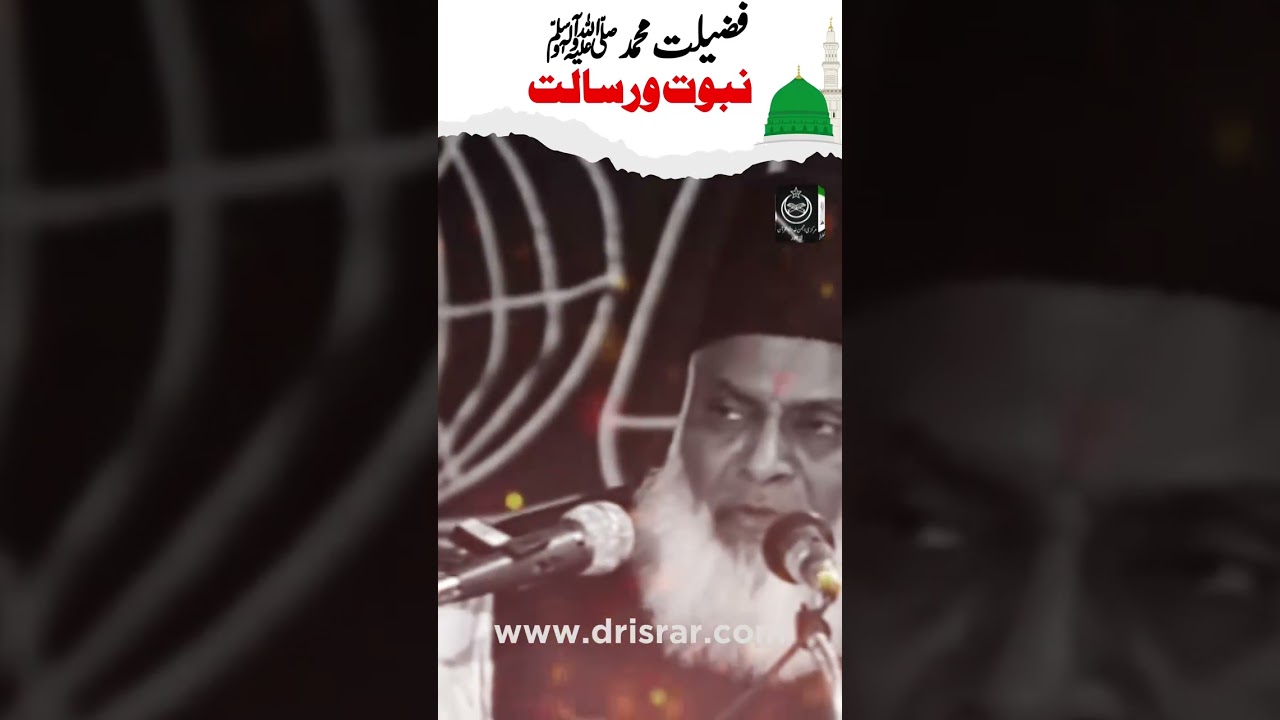
Prophethood and Messengership progressed gradually, reaching their peak and culminating in completion. This fulfillment of the mission and perfection of prophecy forms the foundation of Muhammad’s excellence. The greatest manifestation of the completion of Messengership is that no other messenger achieved the dominance of God’s religion through their call, propagation, organization, struggle, and striving—except Muhammad, the Messenger of God. Every prophet was a caller, a proclaimer, a teacher, and a guide. However, Muhammad, the Messenger of God, was not merely a caller, a proclaimer, a witness, a bearer of glad tidings, an exemplar, or a caller to God, but the one who actually established God’s religion.
53
