Korte broek

This lecture explores the concept of commitment and its manifestation in various agreements, from simple employer-employee contracts to the complex social contract of marriage. It emphasizes that upholding one's commitments isn't contingent on external oversight, but stems from internal integrity and adherence to the terms agreed upon. The speaker highlights the responsibilities within marriage – the husband’s provision of sustenance, shelter, and the wife’s corresponding duties – framing marriage as a solemn social agreement demanding mutual respect and fulfillment of obligations.

36
This lecture explores the profound meaning of ‘La Ilaha Illallah’ (There is no god but Allah) and its connection to genuine faith. It clarifies that merely reciting Arabic phrases is insufficient; true belief originates from a deep, internal conviction. The speaker emphasizes that imitating ancestral practices without understanding is a form of superficiality. Real faith, the lecture asserts, is a personal affirmation arising from the heart, encompassing belief in Allah, the Messenger, the Quran, Gabriel, and the Day of Judgement. This internal validation is the foundation of genuine Iman.
78
Dr. Israr Ahmad unequivocally states that the 20th century’s greatest Islamic thinker was a lover of God and a herald of the revival of the Muslim community. He wasn’t merely aware of this revival, but actively foretold it, specifically predicting the resurgence of the Hashemite lineage. He proclaimed the imminent arrival of a book for the pure community, and a great leader from the Hashemite lineage. He was, therefore, both a scholar and a prophet of this revival, and most importantly, a beacon of the second Islamic era.
41
Humans often ask for what appears good to them, unaware of what truly benefits them. This lecture explains the importance of *Istiqarah* – seeking guidance from Allah to discern true good from apparent good. Dr. Israr Ahmad elucidates that humans are prone to short-sightedness and hasty decisions, often requesting things that are ultimately detrimental. True benefit lies in asking Allah to grant what is best for us, acknowledging our limited knowledge. The lecture highlights a specific prayer taught by the Prophet Muhammad (peace be upon him) to his companions, emphasizing the need to surrender to divine wisdom and accept what Allah ordains, even if it differs from our initial desires. It’s a call to seek Allah’s guidance in all matters, recognizing that He knows what is best for us, even when we do not.
65
Expanding one’s intellect through the study of science, philosophy, and logic is crucial for comprehending the wisdom within the Quran. True benefit lies not only in acquiring this knowledge but also in sharing it with others. The greatest wealth is the ability to disseminate this understanding, and the greatest service to humanity is to guide others toward divine direction. This pursuit of knowledge, and its subsequent sharing, is the highest form of generosity and selfless service.
48
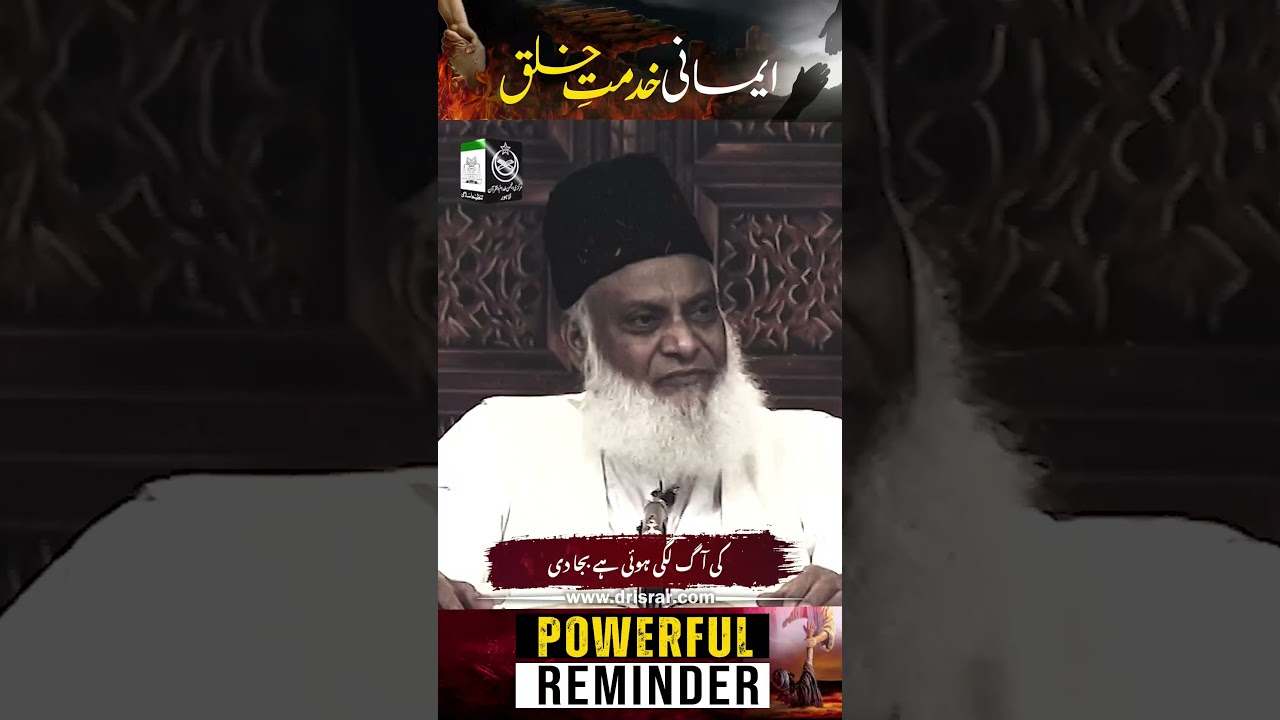
This lecture emphasizes that true service to humanity lies in saving people from the torment of hellfire, rooted in the belief that the afterlife is the true existence. It highlights that indifference to the suffering of others, particularly their spiritual peril, demonstrates a lack of compassion. The core message is that preventing someone from entering hell is the greatest act of service, especially if one is aware of the consequences of disbelief. Genuine faith necessitates actively guiding others towards salvation and alleviating their spiritual hunger.
70
