Quần short
This lecture emphasizes the religious obligation of every Muslim to strive for the establishment of the Caliphate system. It asserts that failing to do so constitutes a contradiction of faith and a disregard for divine law. The speaker criticizes a narrow focus on material possessions and worldly concerns, arguing that a true Muslim’s life should be dedicated to this essential struggle, regardless of whether their efforts are recognized or accepted by others. The lecture draws a parallel to the tireless work of past prophets, highlighting that persistent effort is key to success, even in the face of rejection.

71
Dr. Israr Ahmad explains that all trials and tribulations, whether on a large scale like natural disasters or personal misfortunes, are part of Allah’s preordained plan, recorded in His knowledge. He emphasizes that nothing happens by chance; everything occurs with Allah’s permission and is within His complete knowledge of past, present, and future. Acceptance of this truth, rather than grief or blame, is the key to peace and resilience. The speaker illustrates this with the story of a Sufi saint who accepted being struck by a stone as a decree from Allah. True understanding means recognizing Allah’s hand in all events and trusting in His wisdom, even when experiencing hardship.
97
This lecture clarifies that fulfilling obligatory prayers is the minimum requirement for prayer. While fulfilling obligations is essential, incorporating voluntary prayers (sunnah and nafl) adds depth to one's spiritual practice. The speaker categorizes these voluntary acts based on their emphasis by the Prophet Muhammad, differentiating between those regularly practiced (sunnah mu’akkadah), those practiced occasionally (sunnah ghair mu’akkadah), and other optional prayers (nawafil). It’s recommended to participate in these supplementary prayers to the extent possible, aligning with the guidance of the Prophet and within the bounds of one’s time.
174
The advent of Muhammad ﷺ brought a complete transformation to all aspects of life. Existing beliefs, ideologies, individual personalities, and moral codes were fundamentally altered. Daily routines, social structures, political systems, and societal norms underwent a radical change. A nation previously characterized by widespread illiteracy became a beacon of knowledge and learning, becoming an educator for the world. It absorbed and developed sciences from both the East and West, disseminating them globally. This profound revolution dwarfs any other historical upheaval, including the French Revolution, in its scope and impact.
57
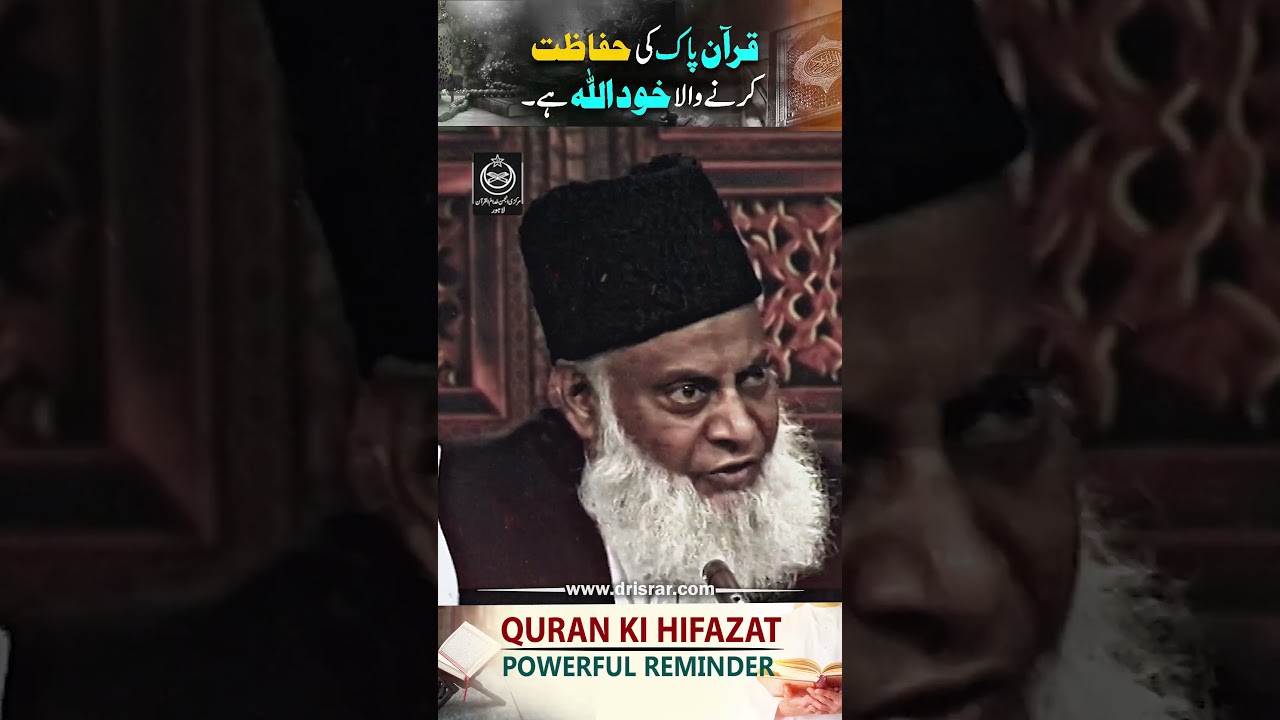
This lecture explores the divine protection of scriptures. It questions why, if God protected the Torah and Gospel, alterations still occurred. The argument centers on the unique preservation of the Quran, asserting that human intervention cannot corrupt its original form. The Quran's protection is explicitly stated in scripture, contrasting with the perceived lack of such protection for previous texts. Human translations and interpretations are acknowledged as sources of potential distortion, while the Quran itself remains inviolable.
51
Early Arabs primarily believed in Allah, though they also worshipped various deities and idols. They believed these idols would intercede on their behalf in the afterlife. While many acknowledged the existence of the afterlife, they struggled to reconcile the concept of resurrection with the physical decay of the body. Some believed their deities would protect them, reflecting a complex blend of monotheistic and polytheistic beliefs. This lecture explores the nuances of their faith and understanding of the divine and the hereafter.
42
