Shorts

Dr. Israr Ahmad discusses the pervasive influence of immoral culture and its detrimental effects on society. He highlights how obscenity is being normalized and propagated through media, infiltrating even private homes. The lecture emphasizes the urgent need to recognize and address this growing crisis, as it threatens the moral fabric of communities and families. Dr. Ahmad critiques the deceptive branding of immorality as something acceptable, and warns against its insidious spread.

64
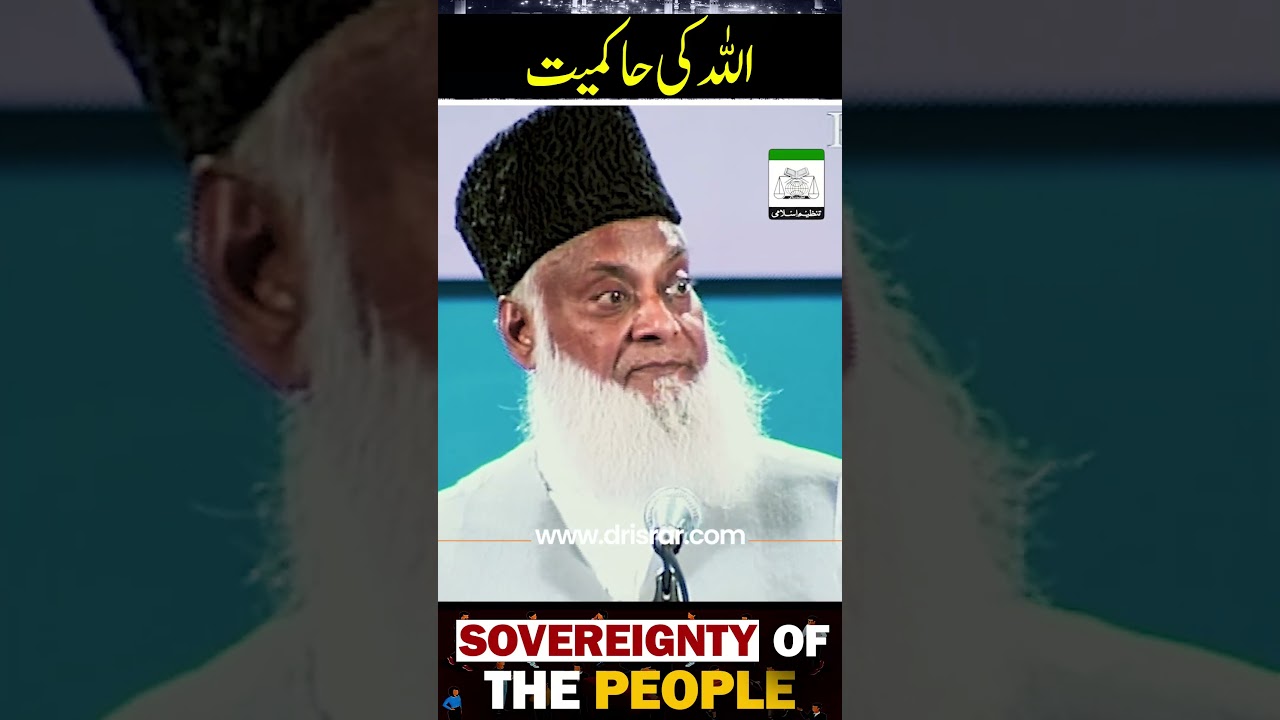
This lecture asserts that the ultimate right is the sovereignty of God, and its implementation is essential. Resistance to this divine right is considered rebellion. The speaker critiques secularism and popular sovereignty, arguing they contradict the fundamental right of God’s rule. True teaching of right involves facing resistance, while compromise and agreements that cause no harm are insufficient. The lecture emphasizes the importance of upholding God’s sovereignty even in the face of opposition.
56

This lecture explores the historical context of the Prophet Muhammad’s era, emphasizing that the triumph of Islam was not merely a historical event but a continuing process. It highlights the sacrifices made by those who strove to establish the principles of Islam, contrasting their success with the misfortune of those who remained indifferent. The speaker asserts that the fulfillment of the Prophet's mission will continue, even if not by the current generation, as it is a divine decree. The lecture stresses the importance of dedicating oneself to this purpose, recognizing it as the path to true success in this life and the hereafter.
93

Imam Razi discusses a nuanced point regarding divine mercy and human accountability. He explains that concealing certain knowledge is an act of Allah’s compassion, as increased awareness brings greater responsibility. A story illustrates this: The Prophet Muhammad instructed Hazrat Ali to awaken a sleeping man for prayer. The Prophet clarified that if he had awakened the man himself and the man refused, it would be considered disbelief. However, if Hazrat Ali gently roused him, it wouldn’t carry the same consequence. This highlights a crucial distinction: direct intervention carries a different weight than indirect guidance. The level of accountability depends on the method of conveyance.
59

Human beings, like all animals, are driven by fundamental needs: sustenance and procreation. These base desires, originating from the *nafs* (ego/self), are inherently amoral, demanding satisfaction without regard for ethical considerations like *halal* (lawful) or *haram* (unlawful). The Quran emphasizes the need to control these primal urges. The human self is a source of both potential and temptation, requiring spiritual guidance and discipline to avoid succumbing to base instincts. This lecture explores the nature of these desires and the importance of self-control in Islam.
66
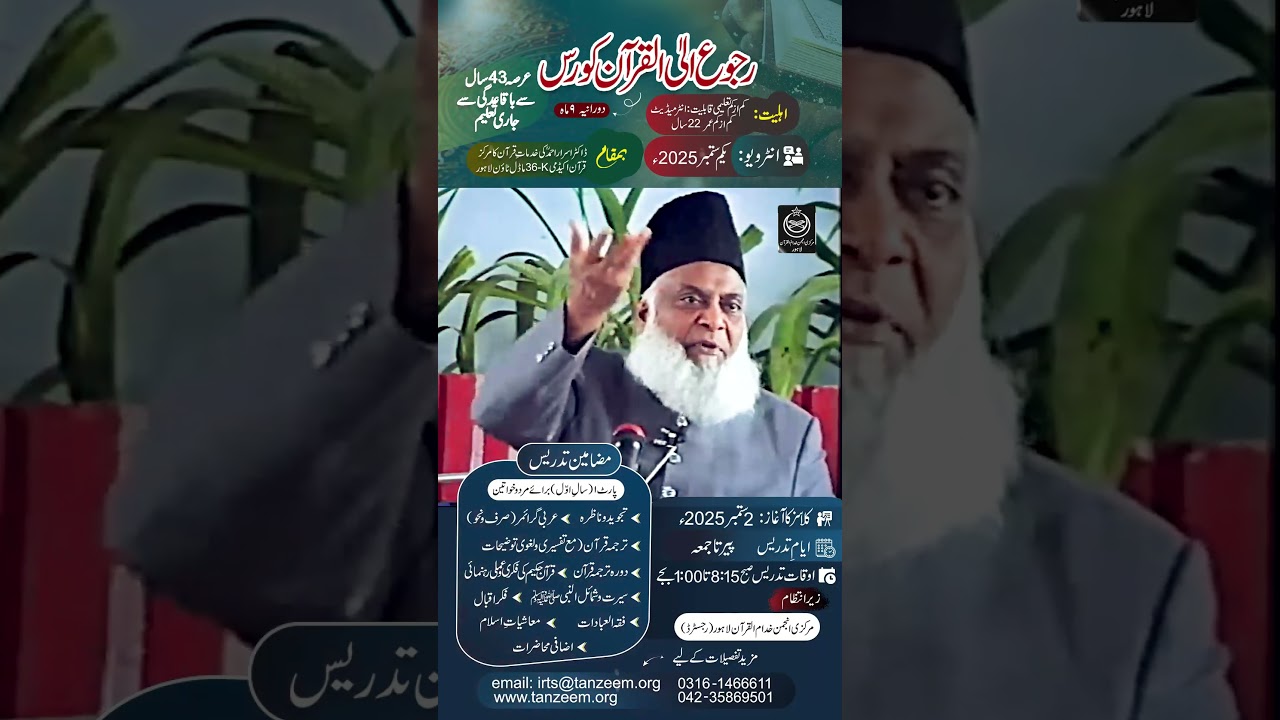
This lecture emphasizes the necessity of personal repentance (tawbah) and its expansion into a collective movement. It urges listeners to prioritize learning Arabic to properly understand and convey the Quran, as the primary medium for inviting others to the faith. The speaker stresses the urgency of life, the potential for unforeseen circumstances, and the importance of dedicating time to religious education and the preparation of a dedicated group (da'i) committed to spreading the message of Islam. He shares his life's dedication to Quranic study, teaching, and the organization of a committed group, viewing this as a vital struggle for the faith. The ultimate goal is the growth of a movement devoted to upholding and propagating Islamic principles.
59
