Шорты

On the Day of Judgement, disbelievers will lament their past actions, begging for a second chance to worship and obey God, promising to abstain from evil. They will be reminded of how they mocked the early believers – the poor, slaves, and needy – who were steadfast in their faith. God declares He has rewarded their patience today, affirming they are the true victors and will enter Paradise. This highlights the ultimate triumph of faith over worldly status and the importance of perseverance in the face of adversity.

57

The Quraysh delegation arrived to Abu Talib during his final moments, issuing an ultimatum: control Muhammad or face open conflict. They didn’t seek wealth, power, or possessions, but demanded Muhammad cease his proclamation of One God. Abu Jahl immediately recognized the core issue – this message threatened the foundations of their entire belief system and the idols they worshipped. This bayān details the pivotal confrontation and the essence of the demand made against the Prophet Muhammad.
68

The essence of sacrifice lies in acknowledging Allah as the sole deity and submitting to Him. Without this spiritual connection, rituals like sacrifice, prayer, fasting, and pilgrimage become meaningless formalities. True devotion stems from a genuine relationship with Allah, transforming actions into sincere worship. The core of sacrifice is not merely the act itself, but the underlying recognition of God’s sovereignty and one’s complete surrender to His will. Without this internal state of piety, all external observances are rendered futile.
84

This lecture clarifies the significance of Shab-e-Barat based on authentic hadith. It explains that the Prophet Muhammad (peace be upon him) would visit the Baqi graveyard to seek forgiveness for the deceased. The speaker emphasizes that while night-long worship is virtuous, celebrating with fireworks and imitating Diwali practices are not part of Islamic tradition. Fasting on the 15th of Sha'ban is also discussed, linking it to the Prophet’s regular practice of fasting on the 13th, 14th, and 15th of each lunar month. The core message is to focus on sincere worship, seeking forgiveness, and remembering the deceased.
84
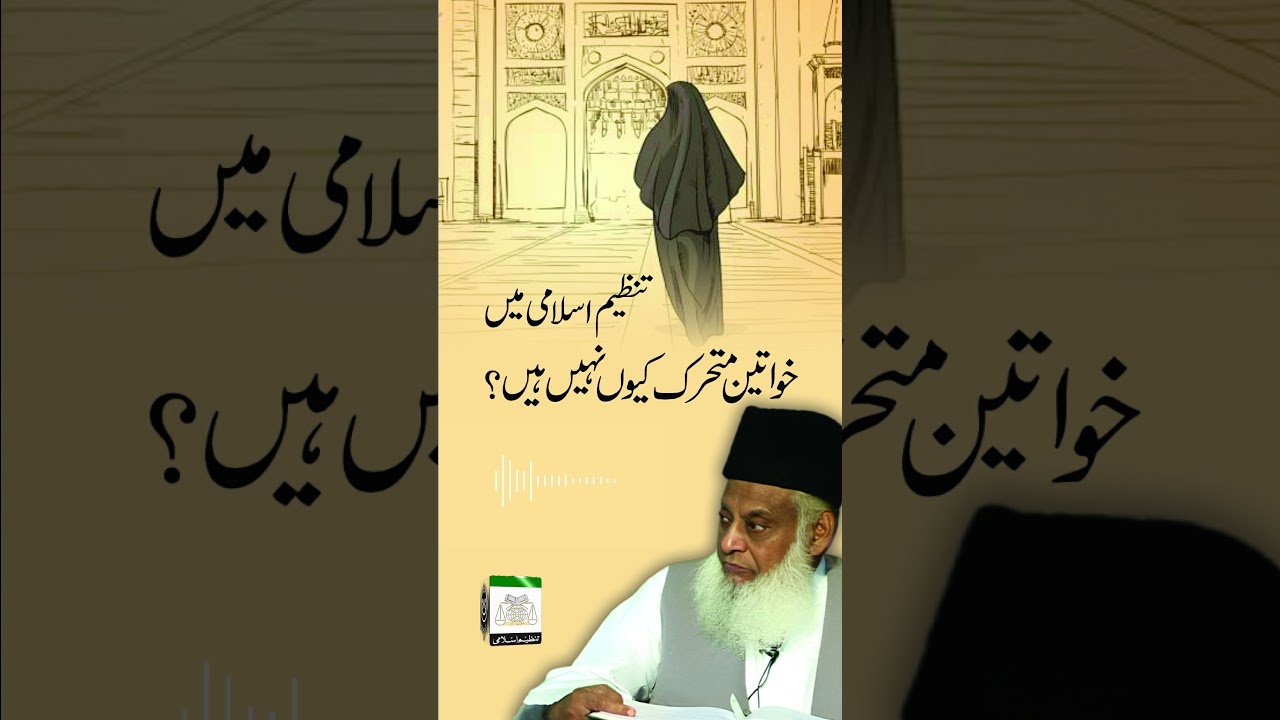
This lecture discusses the societal expectations placed upon women, particularly within a traditional framework. It highlights the prioritization of domestic responsibilities and the perceived conflict between these duties and external activities like preaching or political canvassing. The speaker emphasizes that a woman’s primary sphere of influence is her home, and while participation in other areas isn’t forbidden, it should not come at the expense of her familial obligations. The lecture addresses the potential for conflict when societal expectations clash with a woman's desire to engage in public life and suggests a balanced approach is necessary. It suggests that societal structures will naturally slow the pace of external activities for women prioritizing their homes.
96

The Prophet Muhammad (peace be upon him) serves as the best example for those who believe in God and the Day of Judgement, and who consistently remember God. The Quran provides guidance for all, but only those who are pious and fulfill specific conditions—faith in God and the afterlife, and constant remembrance of God—will truly benefit. This lecture highlights the Prophet’s life as a complete argument for humanity. The establishment of Islam's social justice system was achieved through persistent effort, hardship, sacrifice, patience, perseverance, and resilience, not through miracles or divine comforts. The example of the Battle of Tabuk demonstrates the dedication of early Muslims, even sharing meager rations to support one another. This is the essence of the Prophet’s legacy.
78
