Shorts

Hazrat Ali (RA) narrates that the Prophet Muhammad (peace be upon him) foretold of a great tribulation (fitna). When asked about the means of salvation, the Prophet (peace be upon him) stated that the Quran is the source of guidance. It contains accounts of those who came before and those who will come after, and holds the solutions to all disputes and differences.

57
This lecture clarifies the distinction between faith (iman) and submission (islam), highlighting a prevalent issue where people adopt the rituals of Islam without genuine belief in their hearts. Dr. Israr Ahmad explains that merely declaring faith or belonging to a Muslim family does not equate to true iman. He emphasizes the importance of conscious, thoughtful acceptance of faith, warning against selective obedience to religious commandments. The speaker discusses the Quranic verses regarding hypocrites who profess Islam outwardly but lack inner conviction. True faith, he argues, necessitates complete surrender to Allah and His Messenger, and a sincere commitment to all divine teachings. Allah rewards sincere obedience even amidst imperfection, but selective adherence invites His displeasure. Ultimately, Dr. Israr Ahmad urges introspection and a conscious striving for genuine iman, not merely inherited or ritualistic Islam.
77

God states that direct communication is possible without intermediaries. Acceptance of His commands and adherence to His teachings are essential for answered prayers. He is ever-forgiving and accepts repentance. God responds to every call for help, but requires obedience, attentive listening, sincere belief, and practical implementation of His guidance. He is the most merciful and responds to those who turn to Him with sincerity and commitment.
67
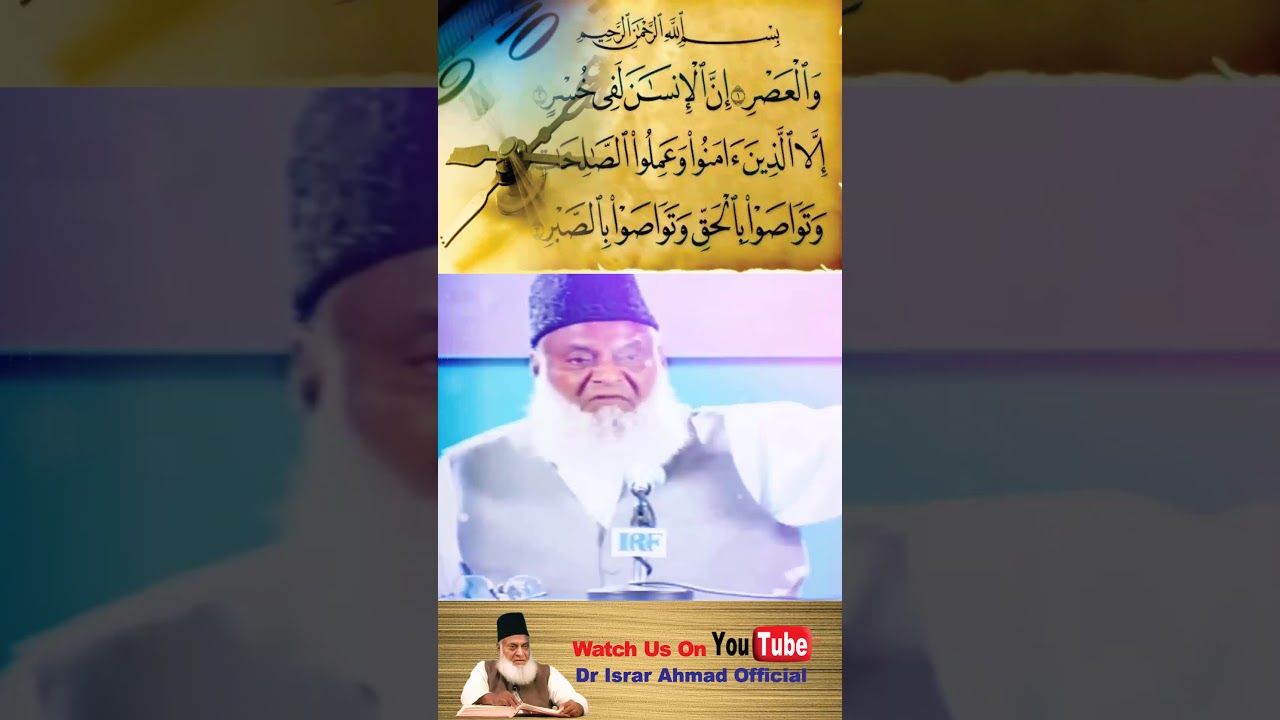
Humanity, universally, is in loss. Salvation is achieved through four essential conditions: faith, righteous deeds, advocating truth, and encouraging good conduct. These are not merely recommendations, but fundamental requirements for achieving deliverance. Without fulfilling these conditions, true salvation remains unattainable. This lecture details these prerequisites for spiritual success and a meaningful life.
212

This lecture discusses the inevitable trials and tribulations faced by believers. It explains that hardship and adversity are not punishments, but rather tests of faith designed to distinguish those genuinely committed to their beliefs from those who are not. True believers willingly sacrifice their lives and possessions for the promise of Paradise. These trials—fear, hunger, loss of wealth, and life—are the price of admission to eternal reward. Those who persevere through these difficulties demonstrate their sincerity and earn their place in Paradise. The lecture emphasizes that genuine faith requires a willingness to endure hardship for the sake of God.
40

Shirk fi zāt, considered the most egregious form of polytheism, involves associating partners with God's very essence. This belief, tragically prevalent amongst some communities claiming Abrahamic lineage, manifests as attributing offspring to God. The argument posits that just as offspring inherit traits from parents, a divine 'offspring' would necessarily share God's attributes, thereby equaling God. This concept fundamentally contradicts the absolute uniqueness and transcendence of God, and is a severe transgression. It represents the ultimate in associating partners with God, exceeding even the worship of idols.
53
