السراويل القصيرة

This video recounts an incident where Hazrat Ali’s armor was stolen and recovered from a Jewish man. Hazrat Ali, despite being the Caliph, appeared before the judge as a plaintiff. He corrected the judge for addressing him by his kunya (nickname) instead of his name, emphasizing that he was present as an ordinary litigant seeking justice, not as a figure of honor. When the Jewish man failed to produce valid witnesses beyond his son and slave, Hazrat Ali requested other witnesses. Upon failing to do so, the case was dismissed, leading the Jewish man to confess the theft. This highlights Hazrat Ali's commitment to justice and fairness, even when personally involved.

57

This lecture explains that the night of Decree (Laylat al-Qadr) is when the measures and destinies for the upcoming year are determined. While these decrees exist within Allah's eternal knowledge, the specifics of their manifestation – events, circumstances, and incidents – are communicated to the angels for execution. This process occurs annually, mirroring a budgetary session where yearly affairs are assigned. The lecture highlights that Allah's ancient knowledge encompasses all that will occur, and the angels are tasked with bringing these divine decisions to fruition.
63
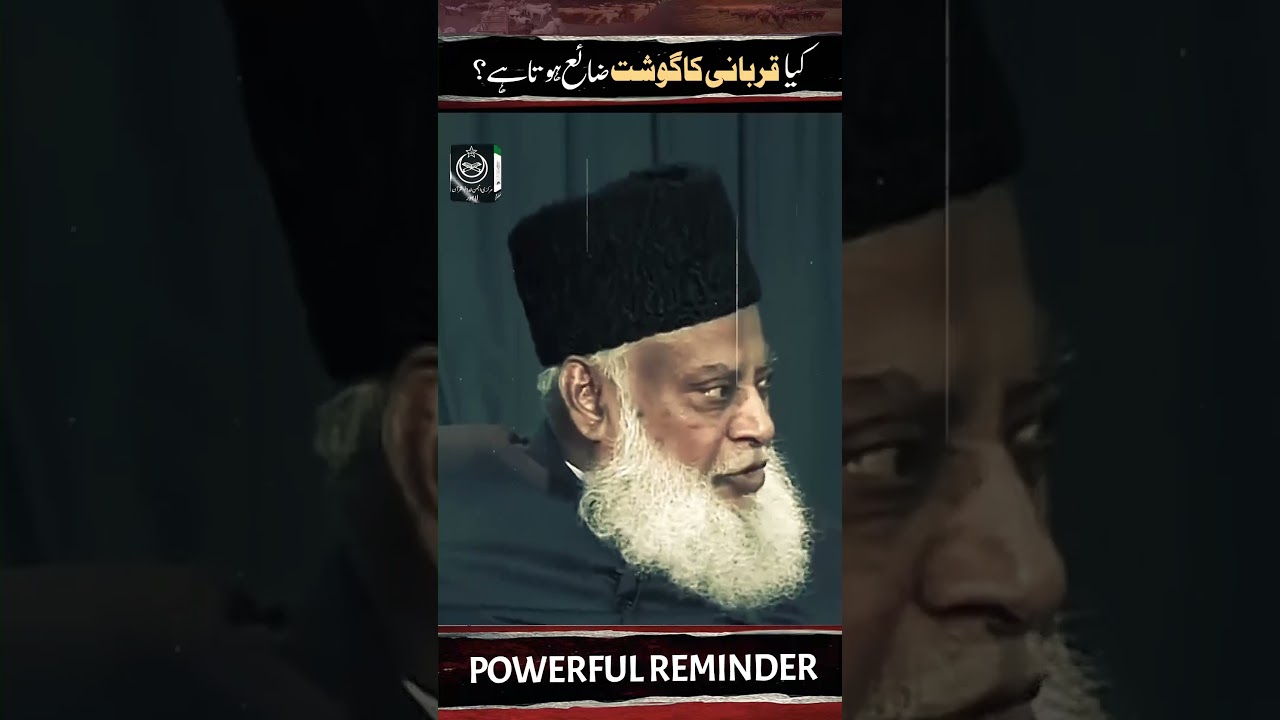
This lecture discusses the historical and economic benefits of sacrificial meat (Qurbani) in a specific region. It highlights how, traditionally, communities utilized every part of the animal, ensuring no waste. The speaker details how this practice provided a livelihood for local herders and a year-round meat supply for residents. The lecture contrasts this sustainable system with modern practices and argues against claims of wastefulness, emphasizing the economic support Qurbani provided to the community. It describes a time when communities thrived due to the efficient use of resources from the sacrificial animals, providing economic stability for local residents and herders. The lecture points out that Qurbani was not merely a religious ritual but a crucial element of the local economy.
95

Rebellion obscures the imprint of devotion. This lecture explores the purpose of fasting as a means to renew commitment to worship. Fasting serves as a shield against base desires. The month-long practice of abstaining from food and permissible pleasures, even when readily available, cultivates self-discipline and restraint. This rigorous training strengthens the ability to resist unlawful acts for the remaining eleven months of the year. It is an exercise in devotion, preparing the soul for a life of obedience and spiritual growth.
49

This lecture details the revelation of the Quran and its transmission. The Quran originated from the Preserved Tablet and the Book of Decrees, conveyed by Archangel Gabriel to Prophet Muhammad (peace be upon him). This transmission wasn't literal hearing with ears, but a direct conveyance to the heart. From the Prophet’s heart, it was then articulated through his blessed tongue to the ears of his companions, and preserved in their memories. The lecture emphasizes the trustworthiness of both Gabriel and Muhammad in preserving the divine message, highlighting that neither altered the revealed text. It draws a distinction between divine revelation and the words of poets or soothsayers, reinforcing the unique and sacred nature of the Quranic message. The Prophet’s role as a receiver and communicator of this message is also underscored.
47

Fasting cultivates self-control by imposing restrictions not only on prohibited things but also on permissible enjoyments. This practice aims to develop restraint throughout the year, extending beyond the month of Ramadan. The purpose of these limitations is to foster discipline and the ability to control one’s desires and impulses, even when not explicitly forbidden, leading to a strengthened will and self-governance. This self-control is the primary wisdom behind the practice of fasting.
70
