Calção
This lecture outlines three essential methods for conveying the message of God: wisdom (hikmat), good counsel (nasihath hasana), and gracious debate (jidal hasan). Wisdom involves presenting logical arguments and evidence. Good counsel emphasizes gentle and persuasive advice. Gracious debate advocates for respectful disagreement and reasoned discussion. The emphasis is on approaching dialogue with intelligence, kindness, and a focus on positive outcomes, avoiding harshness or aggression.

65
During standing in prayer (namaz), it is permissible to look at the mosque wall or generally around. The gaze should remain focused on the spot where one prostrates. Raising the head and looking around or upwards at the sky is strongly discouraged. Maintaining focus on the prayer spot is essential for proper concentration and devotion.
85
This lecture emphasizes a direct relationship with God, negating the need for intermediaries. It highlights the importance of constant remembrance and sincere connection through reflection and contemplation. The speaker stresses that God is always accessible and responsive to those who earnestly seek Him. The lecture encourages listeners to move beyond ritualistic practices and cultivate a deep, personal connection with the Divine. It urges constant awareness of God’s presence in every moment, emphasizing that every moment could be one’s last. The speaker draws a parallel to Iqbal's philosophy, advocating for the removal of barriers between the Creator and creation and urging a direct connection unmediated by dogma or external structures.
43
Dr. Israr Ahmad discusses the Islamic ruling on property dealers charging fees from both the buyer and seller, or from both landlord and tenant. He asserts that taking fees from both sides is *haram* (forbidden). The dealer should only take a commission from one party to incentivize securing the best possible deal for that client, whether a lower rental price or a better sale price. This approach ensures fairness and ethical conduct in property transactions.
79
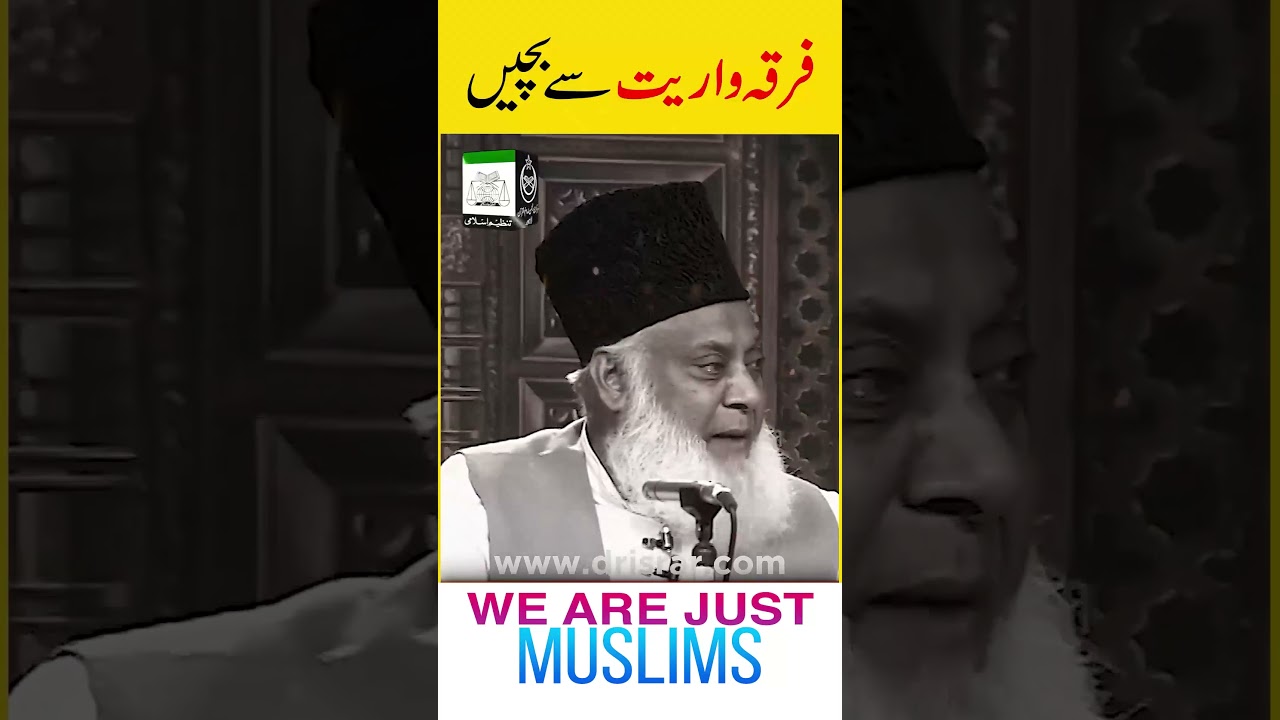
This lecture clarifies the dangers of sectarianism and emphasizes the importance of unity within the Muslim community. It explains that forming separate factions based on personal understanding or lineage is detrimental. The Quran clearly identifies Muslims as a unified body, and adhering to this principle is crucial. The speaker stresses that Muslims should unite under the single identity of ‘Muslim’ as ordained by God, rejecting divisions that arise from differing interpretations or the creation of new groups. It condemns the formation of new sects and emphasizes the importance of remaining unified under the banner of Islam.
50

The speaker asserts that religious morality built upon a foundation lacking inherent ethical character is inherently weak and ineffective. He illustrates this with the example of a local businessman known as Haji Blackia, a wealthy sugar distributor known for his outward religious observance (leading prayers, having a long beard) but lacking genuine moral principles. The speaker argues that superficial religious practice without inner integrity is meaningless and ultimately futile. True religious morality must be rooted in solid ethical character.
63
