السراويل القصيرة
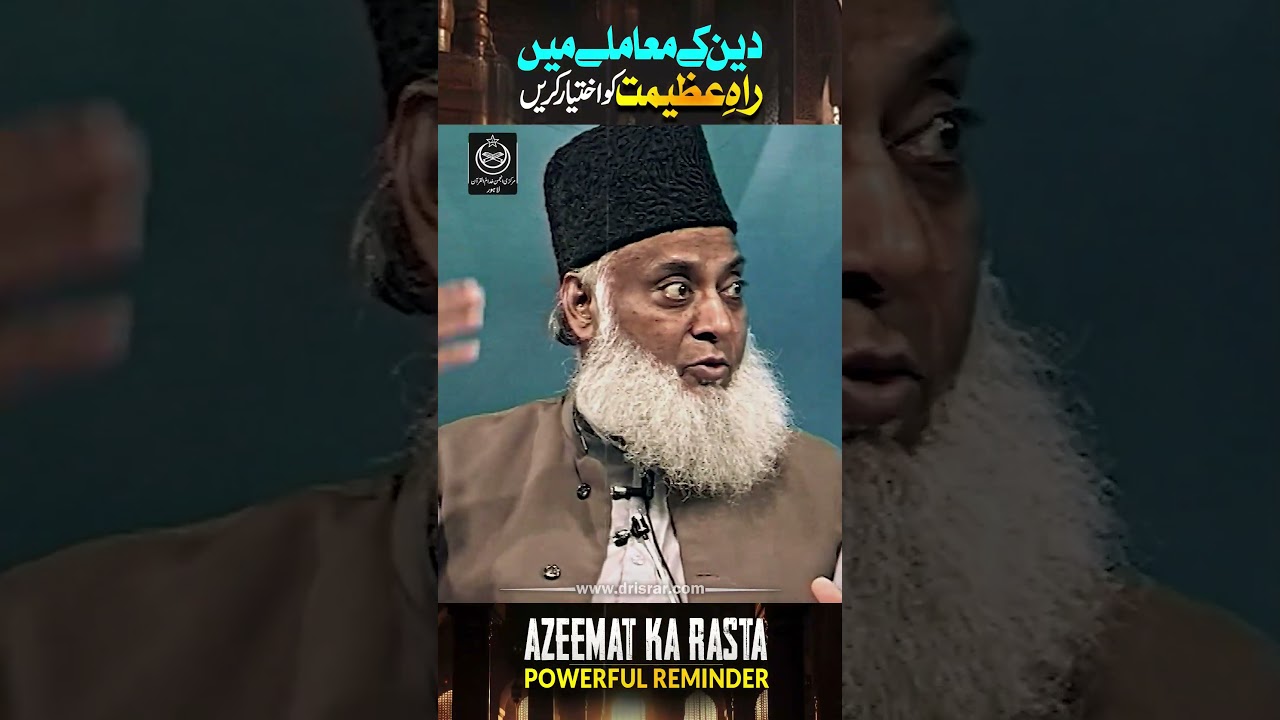
This lecture emphasizes the importance of actively listening to guidance and striving for the highest standards in faith. It contrasts a worldly acceptance of ‘good enough’ with the Islamic imperative to continually improve and pursue excellence ('ihsan'). The speaker highlights that faith is not static, progressing from Islam to Iman to Ihsan, and encourages listeners to adopt a mindset of continuous improvement in their spiritual journey. Accepting minimum requirements is discouraged; instead, a commitment to the best possible path is advocated.

69

Partial obedience is ultimately disobedience. True faith demands complete submission to divine commands. Selective acceptance of religious tenets renders all obedience void. This lecture details the severe consequences outlined in Surah Baqarah, verse 85, for those who pick and choose which aspects of faith to follow. Such individuals face humiliation in this world and intensified punishment on the Day of Judgement. The core message emphasizes that the veto power resides within one's own desires, and yielding to them when it comes to divine commands is unacceptable. Complete and sincere obedience is essential for spiritual well-being and salvation.
65
The Quran is unique among scriptures in its completely preserved text. Unlike other religious texts, the Quran's original form has been consistently maintained and memorized by generations of Muslims worldwide. This preservation isn't limited to written copies; a vast community of *huffaz* (memorizers) actively maintain the text through oral tradition, with even young children capable of correcting scholars. This consistent, multi-generational safeguarding represents a fundamental aspect of the Quran's significance, acknowledged even by those who do not believe in its divine origin. The Quran's textual integrity stands as an unparalleled phenomenon among religious books.
65

Dr. Israr Ahmad discusses the profound period Prophet Muhammad (peace be upon him) spent in the Cave of Hira. He highlights the intense contemplation and spiritual journey undertaken by the Prophet before receiving revelation. The lecture details the Prophet’s questioning of existing beliefs, his rejection of idolatry prevalent in his time, and his search for the true God. It emphasizes that this period of solitude and reflection was crucial in shaping his mission and preparing him for prophethood. The discussion also touches upon the Prophet's inherent inclination towards monotheism and his rejection of the worship practices of Jews and Christians.
91

This lecture emphasizes that true religious devotion requires personal piety and the practical implementation of faith within one’s own life and sphere of influence. The speaker cautions against merely constructing physical structures like mosques without concurrent self-improvement and organized, constructive action. He warns that disorganized groups can cause disruption and impede meaningful progress. The core message is that establishing faith within oneself and one’s immediate surroundings is the foundational step before attempting wider religious work.
60

The Quran’s true absorption into one's being necessitates a softened heart. Just as water readily permeates a smooth vessel, the Quran is best received by a receptive soul. The Quran serves as both a remedy and a guide, embodying divine mercy and representing Allah’s greatest blessing to humanity. A softened heart is essential for benefiting from the Quran’s teachings and experiencing its transformative power. It highlights the Quran's role as a source of healing, direction, and divine grace.
55
