السراويل القصيرة
The Quran outlines four essential conditions for salvation: faith, righteous deeds, adherence to truth, and patience. These components form a complete prescription for spiritual well-being. Removing even one element invalidates the prescription, potentially leading to negative consequences instead of healing. Just as a patient cannot alter a doctor’s prescribed medication and expect positive results, one must fully embrace these four conditions to achieve salvation. These four elements constitute a complete prescription from God for spiritual healing and success.

56
Hazrat Ali (RA) narrates that the Prophet Muhammad (peace be upon him) foretold of a great tribulation (fitna). When asked about the means of salvation, the Prophet (peace be upon him) stated that the Quran is the source of guidance. It contains accounts of those who came before and those who will come after, and holds the solutions to all disputes and differences.
60
The text discusses the immense scale of future conflicts, referencing battles and wars described in prophetic traditions. It highlights a catastrophic war, described as ‘The Great Battle,’ characterized by widespread death and destruction. The area most affected will be the Arab world. The text emphasizes the severity of this coming conflict, predicting a level of carnage so extensive that even birds will be unable to find a place to land without stepping on corpses.
84

Accountability in the Hereafter exists regardless of prophetic guidance. Humans are inherently equipped with intellect and a moral compass to distinguish between right and wrong. The basis of this accountability stems from the inherent trial of human existence, as stated in the Quran. God created humanity from a mingled sperm and subjected them to trials, bestowing upon them hearing and sight, and granting them intellect and the faculty of discernment. Individuals will be held accountable for utilizing these faculties. The standard of judgment for those who did not receive a prophetic message is based on their inherent belief in one God and their performance of general good deeds versus evil acts, rather than adherence to specific religious rituals.
54
Human sovereignty is fundamentally flawed and unacceptable in Islam. True authority and governance belong solely to Allah. Any claim to sovereignty by individuals, whether pharaohs or tyrants, represents impurity and disbelief. The concept of human rule is akin to a massive, pervasive filth that cannot be cleansed, even if distributed across all of society. Islamic monotheism (Tawhid) centers on recognizing Allah as the ultimate and only sovereign.
51
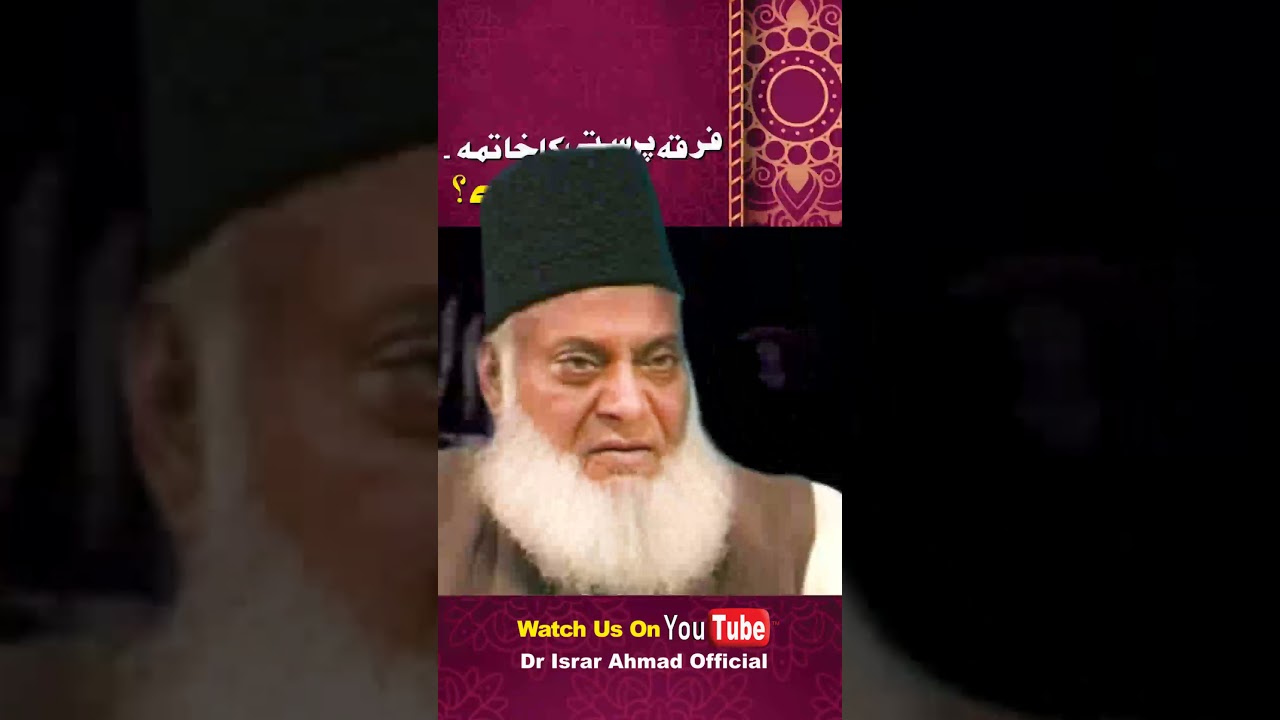
This lecture emphasizes the importance of recognizing truth and excellence wherever it exists, regardless of sectarian or group affiliation. It critiques the insularity of religious circles, which often limit perspectives to a single school of thought, hindering intellectual growth and unity. The speaker advocates for open-mindedness, studying diverse perspectives, and acknowledging the contributions of scholars from all backgrounds to foster understanding and strengthen the collective pursuit of faith. Recognizing shared values and learning from the past is essential for progress and overcoming narrow-mindedness.
80
