Quần short
This lecture explores the perspective of M.N. Roy, a prominent communist revolutionary, on the historical significance of Islam. Roy, a key figure in the Comintern, recognized the revolution initiated by Muhammad as one of the greatest in human history. He detailed this view in his book, *The Historical Role of Islam*, acknowledging its profound impact on global events. Dr. Israr Ahmad analyzes Roy’s analysis and provides insightful commentary on the topic.

66
This lecture addresses the question of resurrection after complete physical disintegration. It refutes the notion that being reduced to dust or metal precludes the possibility of being recreated. The speaker clarifies that even if one were to become stone, fossilized, or transformed into an exceptionally hard substance, Allah is capable of recreating them. The argument centers on the absolute power of God and the inherent possibility of renewal, regardless of the state of decomposition. It is a response to those who express disbelief based on the perceived impossibility of being revived after death.
51
This lecture details the rulings surrounding I'tikaf during the last ten days of Ramadan. It clarifies that I'tikaf begins on the 21st night after the 20th night has passed. The lecture emphasizes that physical intimacy is prohibited for those observing I'tikaf within the mosque, although wives may visit for essential consultations or meetings. This session explains the wisdom behind these rulings and the permissible interactions during I'tikaf.
66
Sometimes, jokes are tolerated among friends, but sensitivity varies. A remark accepted on one day can deeply wound someone experiencing emotional vulnerability. Words, unlike physical wounds, leave lasting scars on the heart. The proverb highlights that while a sword’s wound can heal, a wound inflicted by language does not. Emotional pain is more enduring and difficult to recover from than physical injury. This bayan discusses the profound impact of language and the importance of mindful communication.
53
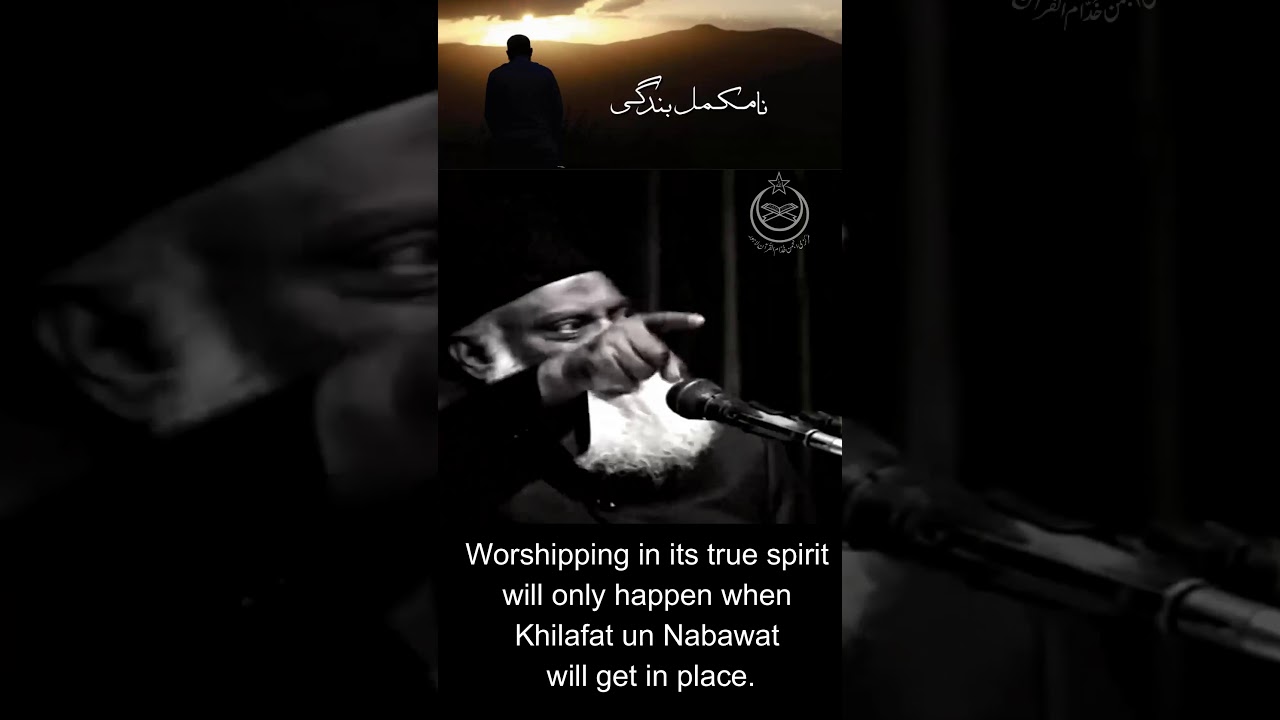
This lecture emphasizes that complete devotion to God requires the establishment of a caliphal system mirroring the Prophetic methodology. Without it, adherence to divine law is incomplete. The speaker highlights the necessity of implementing all of God’s commands, including legal penalties, to achieve true worship. Current selective obedience, mixing divine and man-made laws, constitutes *shirk* (associating partners with God). Complete worship and obedience will only be realized with the restoration of a rightly guided caliphate, ensuring exclusive devotion to God.
180
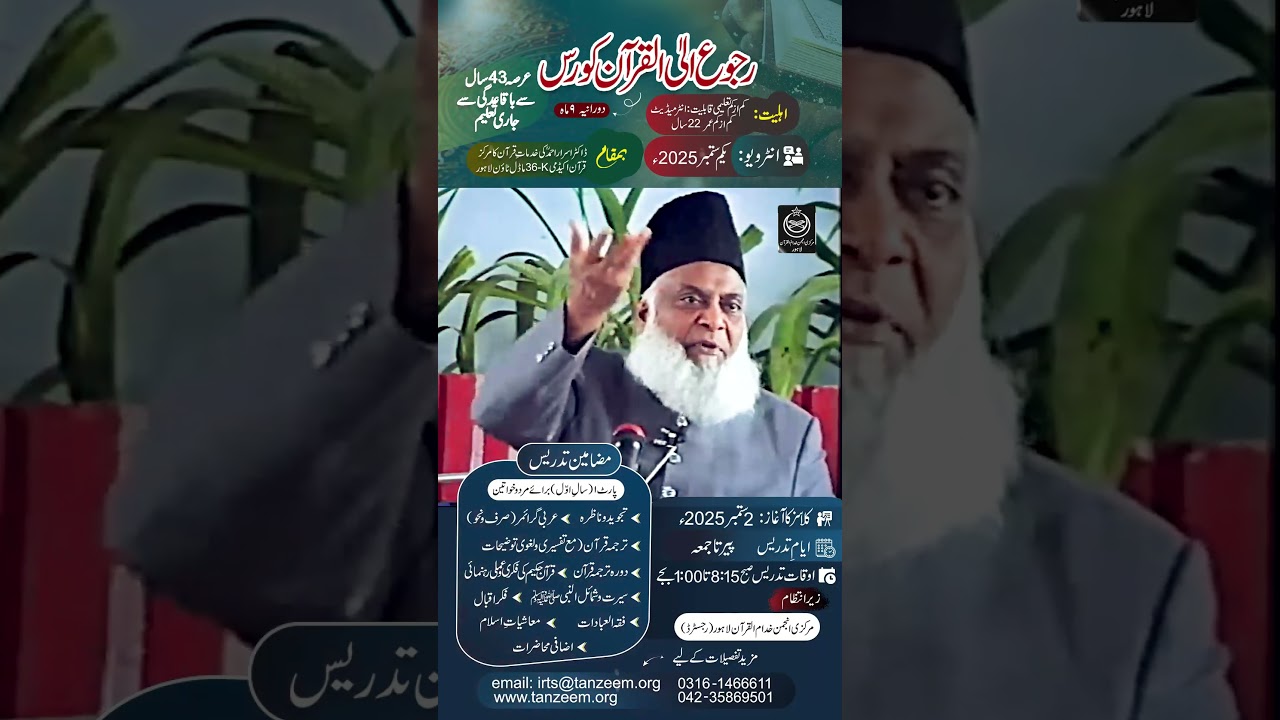
This lecture emphasizes the necessity of personal repentance (tawbah) and its expansion into a collective movement. It urges listeners to prioritize learning Arabic to properly understand and convey the Quran, as the primary medium for inviting others to the faith. The speaker stresses the urgency of life, the potential for unforeseen circumstances, and the importance of dedicating time to religious education and the preparation of a dedicated group (da'i) committed to spreading the message of Islam. He shares his life's dedication to Quranic study, teaching, and the organization of a committed group, viewing this as a vital struggle for the faith. The ultimate goal is the growth of a movement devoted to upholding and propagating Islamic principles.
63
