Korte broek
This lecture explores the concept of free will and its implications. Humans experience freedom in this world, but are accountable for their actions. The material laws of this world do not immediately punish wrongdoing, creating a false sense of impunity. However, the ultimate return is to God, where every deed, no matter how small, will be accounted for. Those who perform even a speck of good will find it before them, and those who commit even a speck of evil will also face its consequences. This emphasizes divine accountability and the importance of righteous conduct despite the apparent lack of immediate consequences.

52
This video recounts an incident where Hazrat Ali’s armor was stolen and recovered from a Jewish man. Hazrat Ali, despite being the Caliph, appeared before the judge as a plaintiff. He corrected the judge for addressing him by his kunya (nickname) instead of his name, emphasizing that he was present as an ordinary litigant seeking justice, not as a figure of honor. When the Jewish man failed to produce valid witnesses beyond his son and slave, Hazrat Ali requested other witnesses. Upon failing to do so, the case was dismissed, leading the Jewish man to confess the theft. This highlights Hazrat Ali's commitment to justice and fairness, even when personally involved.
55
This lecture explains that I'tikaf represents the culmination of the month of Ramadan, a peak spiritual experience. It’s a period of complete devotion where individuals disconnect from worldly routines and dedicate themselves entirely to worship. This disconnection isn’t merely physical; it’s a complete turning of the soul towards God, severing ties with everything else. I'tikaf signifies a total focus on the Divine, an all-encompassing surrender, and a complete disconnection from all distractions. It’s the highest point of spiritual intensity achieved during Ramadan.
83

The Quran was the instrument of revolution brought by the Prophet Muhammad (peace be upon him). It transformed minds, altered beliefs, and reshaped value systems. Before, life was the most cherished possession; now, martyrdom is the most welcomed. This revolution, initiated by a single individual, prioritized striving in the way of God over material gain. Surah Al-Furqan emphasizes the directive to not heed the disbelievers and to wage a great struggle through the Quran. The Quran itself was the greatest sword in the hands of the Prophet Muhammad (peace be upon him).
99
The Quran’s true greatness lies in its being the expression of the Divine Speaker, revealing the entirety of God's attributes. Just as one can discern a person's intellect, understanding, and character from their speech, the Quran manifests all of God’s qualities. The text’s eloquence embodies complete divine attributes, making it a reflection of the Divine Being.
65
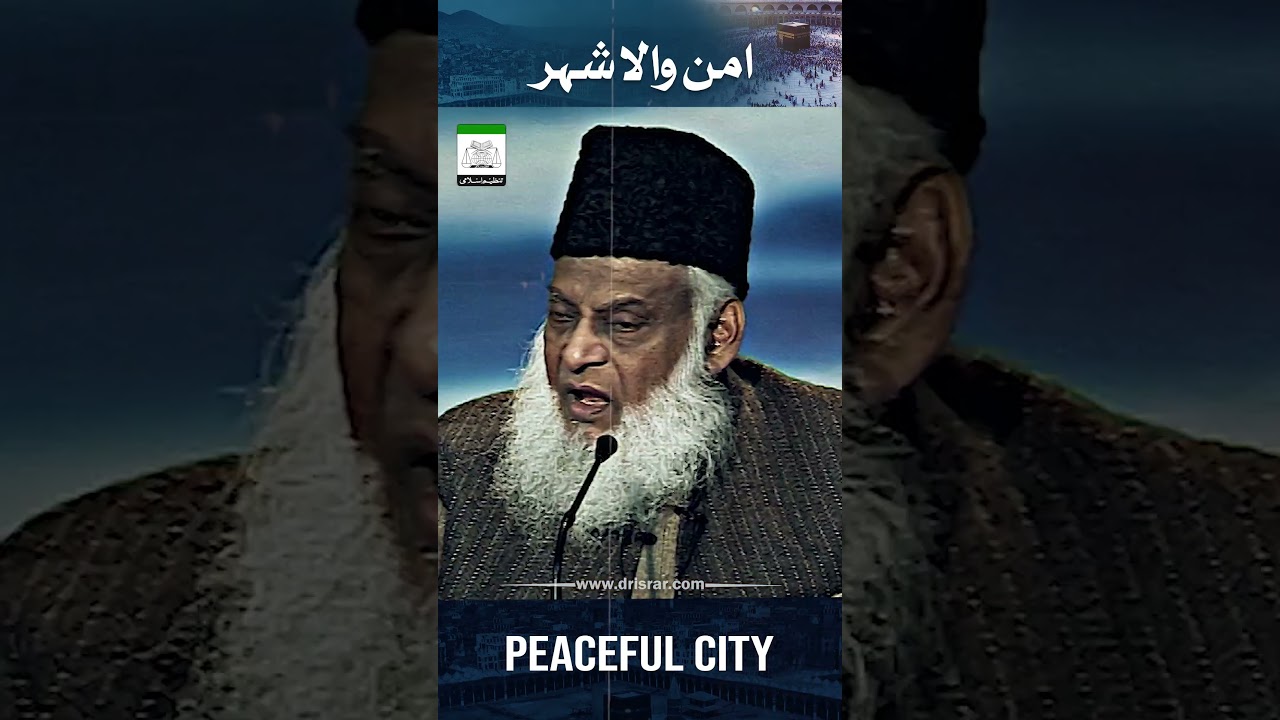
This lecture discusses the unique sanctity of Mecca, highlighting its historical role as a place of peace amidst a turbulent Arab society. Despite centuries of tribal conflict, feuds, and cycles of revenge killings, Mecca’s sacred precinct remained a sanctuary. Even those seeking retribution for deeply personal grievances—like the murder of a father—would refrain from violence within its boundaries. This demonstrates Allah’s provision of security and peace to the city, earning it the title 'City of Peace.' This inherent protection continues to be a defining characteristic of Mecca today.
40
