শর্টস

Imam Ahmad ibn Hanbal narrates a tradition from Maqdad ibn al-Aswad, a companion of the Prophet Muhammad (peace be upon him). During a consultation before the Battle of Badr, Maqdad declared that they were not like the companions of Moses who hesitated to fight, but were followers of Muhammad, ready to obey his command. The Prophet (peace be upon him) then proclaimed a significant prophecy: no dwelling, whether built of brick or tents, will remain where Islam does not enter, either with the honor of acceptance or the disgrace of rejection. This signifies Islam’s inevitable global spread and triumph.

41
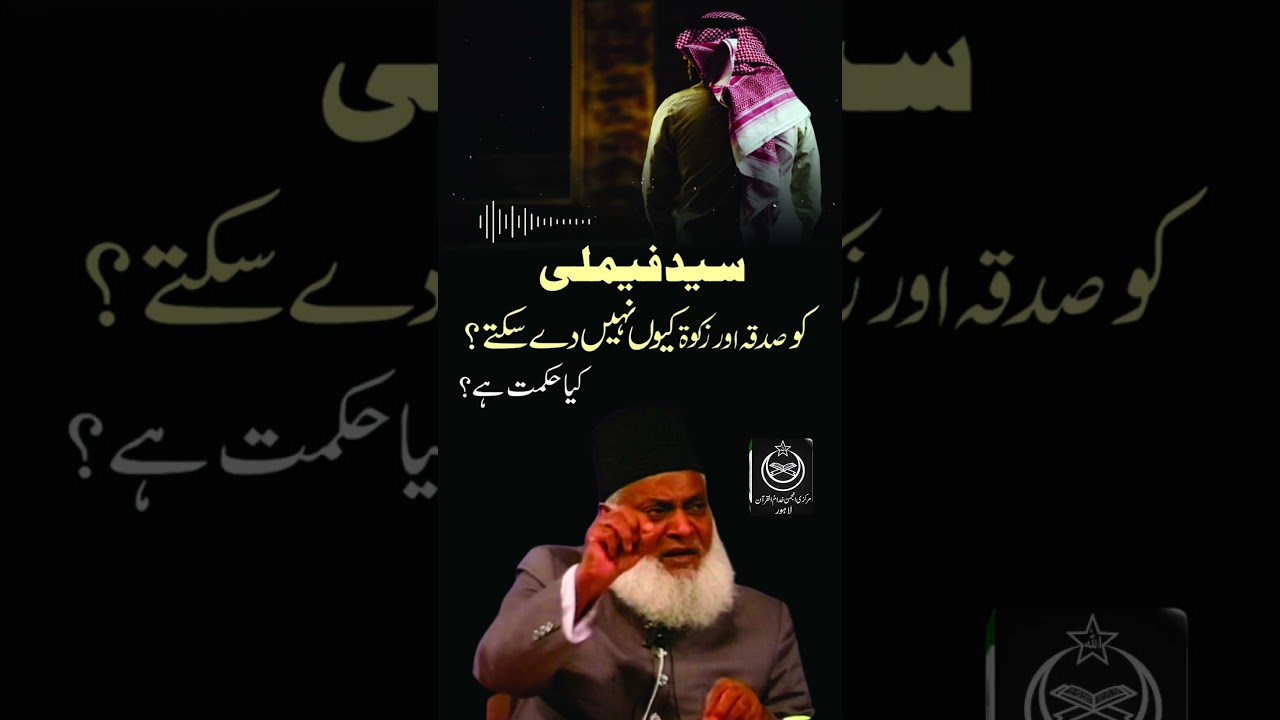
Dr. Israr Ahmad explains the profound wisdom behind the Prophet Muhammad's (peace be upon him) decision to refrain from accepting charity (sadqa) or Zakat for himself and his household. This ensured that the benefits reached those truly in need – the poor and deserving. He emphasizes that wealth carries obligations beyond just Zakat, encouraging additional support for those less fortunate. The speaker repeatedly highlights that wealth carries responsibilities beyond the obligatory Zakat and encourages providing aid beyond it.
103

The Quran is structured into groups of verses – Makki (Meccan) and Madni (Medinan). Each group centers around a core theme, with the Makki verses presenting one aspect of that theme and the Madni verses revealing another. This creates a layered understanding of each topic within the Quran. The structure implies seven primary divisions within the Quran, alternating between Makki and Madni verses to comprehensively explore each subject. This layered approach ensures complete coverage of each theme.
55

This lecture clarifies that Allah accepts the repentance of those who commit errors due to ignorance or emotional impulse, provided they sincerely turn back to Him immediately. The verse from Surah An-Nisa emphasizes that Allah’s acceptance of repentance is guaranteed for those who act out of unawareness but promptly seek forgiveness. This highlights the boundless mercy of Allah and the importance of immediate repentance after a mistake.
58

This lecture clarifies the true meaning of righteousness (nichat) in Islam. It emphasizes that outward displays of devotion, like facing east and west, are insufficient. Genuine righteousness stems from sincere faith in God, the Day of Judgment, angels, scriptures, and the prophets. The Quran defines this inner faith and commitment as the core of true piety and virtue.
58

This lecture details the historical development of Taraweeh prayers. Initially, the Prophet Muhammad (peace be upon him) led the congregation for only three nights, praying eight rak'ahs and combining it with Tahajjud. The practice of twenty rak'ahs connected to Isha prayer originated during the Caliphate of Umar ibn al-Khattab, an innovation aimed at unifying diverse congregations. While some, like the Ahl-e-Hadith, maintain the original eight rak'ahs, the majority of Sunni schools (Hanafi, Maliki, Shafi'i, Hanbali) follow Umar's practice, citing the principle of adhering to the traditions of the Prophet and the rightly guided Caliphs. This practice is also observed in the Haramain Sharifain. The lecture clarifies the historical context and differing viewpoints surrounding Taraweeh.
128
