Celana pendek
This lecture details a specific, undisclosed hour on Friday when prayers are believed to be particularly effective. Various interpretations exist regarding its timing. Some scholars suggest it's the period between the two khutbas during Jummah prayer. Others believe it spans from immediately after the Jummah prayer until Asr. Consequently, many observant Muslims spend this time in mosques, engaging in remembrance and recitation of the Quran. The precise timing remains intentionally concealed, adding to its spiritual significance.

67
This lecture addresses the core responsibility of Muslims: to convey the message of the Quran to all of humanity, not just the Muslim community. It emphasizes that failure to act upon and implement the Quranic principles has led to the current state of weakness, humiliation, and subjugation experienced by the Muslim world. The speaker highlights a pattern of powerful nations exploiting Muslim lands without regard for international law, driven by self-interest and targeting Muslim countries specifically. The current plight of the Muslim community is presented as a direct consequence of neglecting this fundamental duty.
46
It is a universally acknowledged truth that among all books claiming divine origin or containing the word of the universe’s creator, only the Quran maintains complete textual integrity. No other scripture has remained fully preserved in its original form. All other claimed divine texts have undergone alterations or lack complete historical corroboration of their original content. This lecture details the unique preservation of the Quran.
56
Every individual is a vicegerent of God on Earth. Establishing divine governance begins with self-governance. Humans are entrusted with physical and intellectual capabilities as a divine deposit. The ‘self’—whether termed ego, soul, or *ruh*—is the actual vicegerent on this body, responsible for aligning one's existence, emotions, desires, and aspirations with God’s commands. This personal implementation of divine principles is the foundational requirement of vicegerency for every person.
218
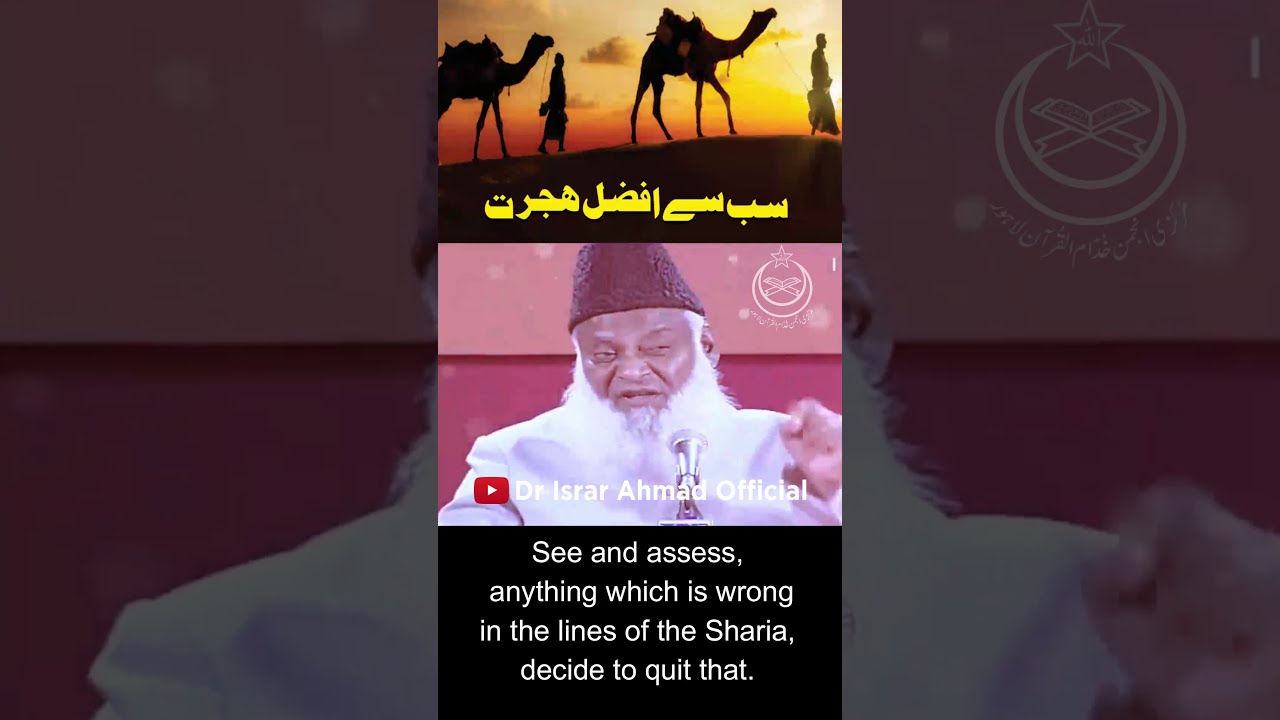
The Prophet Muhammad (peace be upon him) was asked about the most virtuous form of migration. He responded by emphasizing the abandonment of everything displeasing to God. This necessitates a self-assessment to identify and eliminate harmful practices and beliefs, aligning one's life with the spirit of Islamic law. This is the true beginning of migration – an internal purification and commitment to righteous conduct.
73
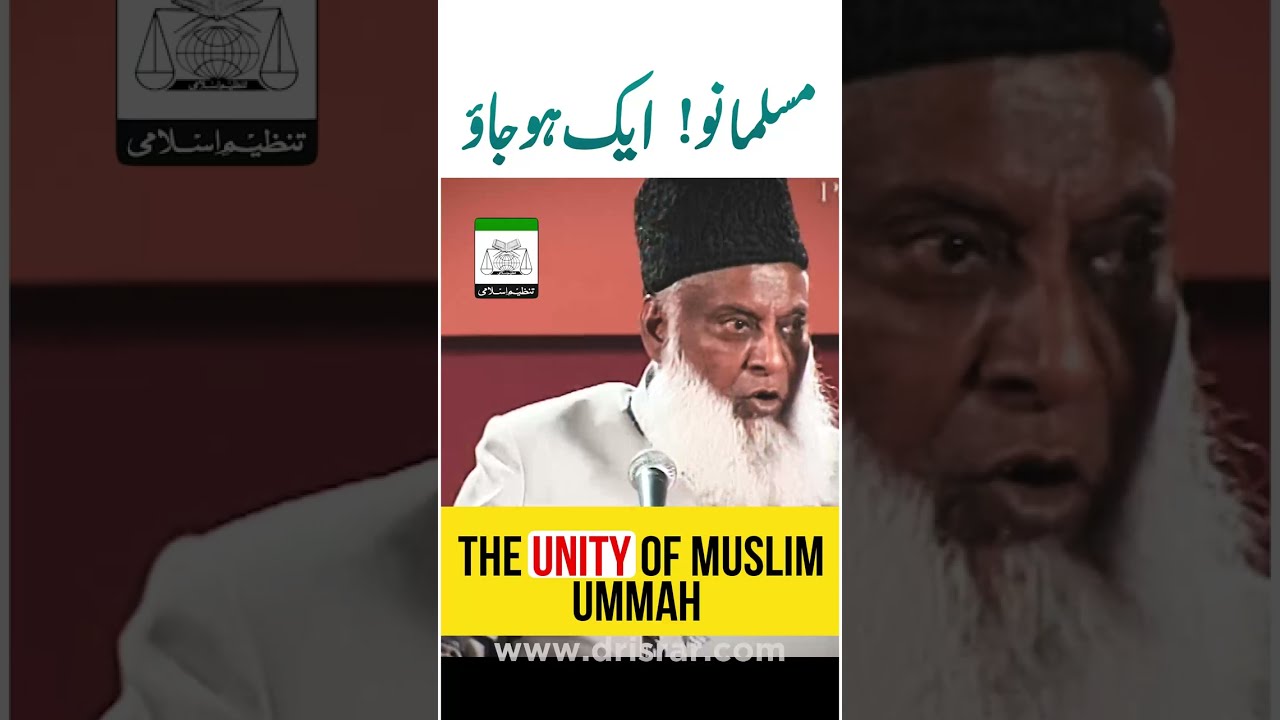
Establishing a connection with the Quran fosters mental and intellectual harmony, unifying purpose. A community (Ummah) is defined by a shared objective. Today, the Muslim Ummah exists as a collective striving for a common goal. While the ideal of a unified Muslim Ummah, extending from India to the shores of the Nile, remains a vision, the reality is that a truly cohesive Muslim community does not currently exist. This lecture explores the concept of Ummah, its historical aspirations, and its present fragmented state.
88
