شارٹس

This lecture explores the concept of *talaawat* beyond mere recitation, emphasizing its true meaning as actively following the Quran's guidance. The speaker explains how beginners often rely on physical aids like fingers to maintain focus while reading. True *talaawat*, however, involves making the Quran one’s leader, adhering to its principles, and seeking its light. This entails complete submission and following its path, as expressed in the prayer for the Quran to be an Imam, a source of light, guidance, and mercy.

46
This lecture discusses the application of *purdah* (modesty/seclusion) within a joint family system. Dr. Israr Ahmad explains that while strict adherence to *purdah* as practiced between separate households isn't possible, certain guidelines can be followed. These include avoiding direct face-to-face interaction between a younger brother's wife and her husband’s elder brother, maintaining distance, and ensuring privacy during work or activities where unrelated men may be present. The discussion uses an example of a woman working while maintaining *purdah* from male relatives and outsiders.
83

This lecture explores the profound roles of two significant women in Islamic history: Fatima bint al-Khattab, who profoundly influenced Umar ibn al-Khattab, and Fatima bint Muhammad, mother of Hasan and Hussein. It highlights how a Muslim woman can fully realize her potential within the boundaries of Islamic teachings, exemplifying strength, influence, and nurturing. The discussion emphasizes the unique contributions of these women and their lasting impact on Islamic society and the lives of believers.
51
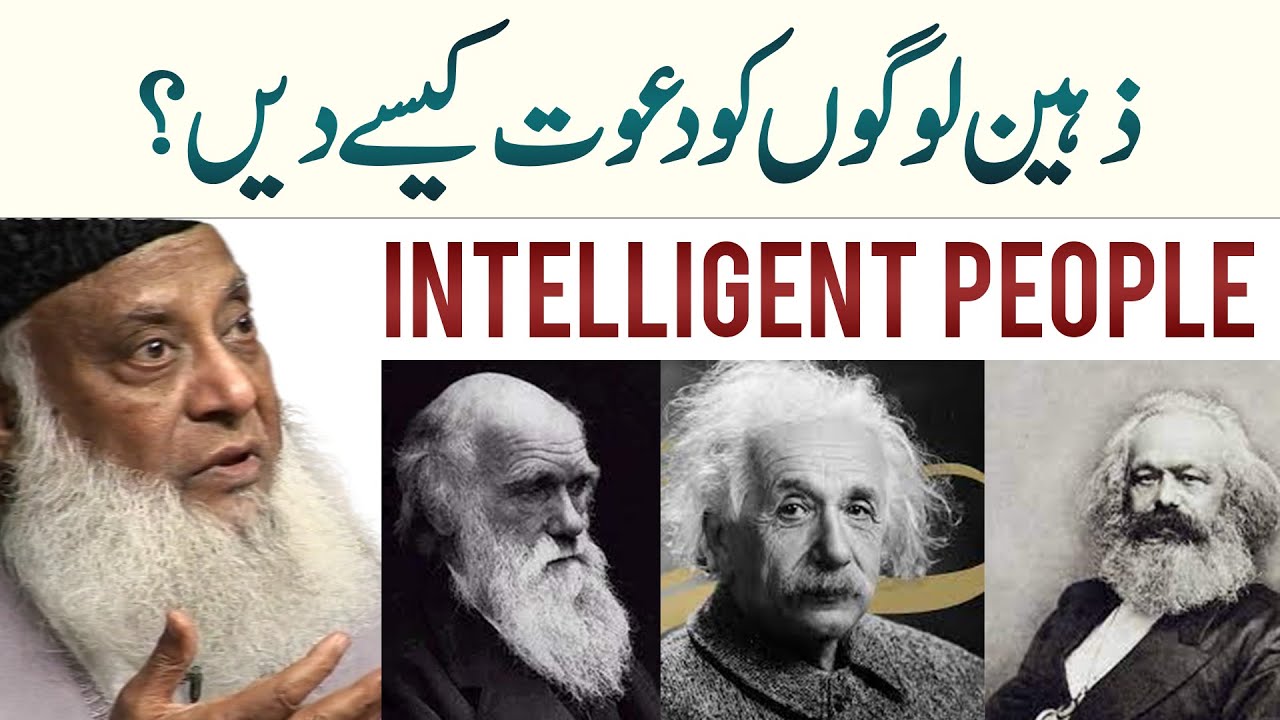
The lecture addresses the necessity of clearing the mind of conflicting ideologies, specifically Darwinian evolution and other Western philosophies, before accepting Islamic teachings. The speaker emphasizes that preconceived notions and intellectual impurities act as barriers to true understanding of religious concepts like the story of Adam and Iblis. He critiques the influence of thinkers such as Darwin, Freud, Marx, Adler, Bertrand Russell, and Sartre on contemporary thought, asserting that these philosophies obstruct a clear reception of Islamic principles. The speaker highlights the importance of intellectual purification to facilitate genuine faith and understanding.
45
The vast majority of Muslims today lack true faith, with only a small fraction embodying genuine belief. This lecture highlights a pervasive disconnect between professed belief and actual practice, particularly regarding adherence to Quranic principles. Many prioritize worldly concerns and are fixated on death without acknowledging the reality of the afterlife as the true life. The speaker emphasizes a critical contradiction: professing belief in the Quran while simultaneously engaging in prohibited practices like usury, demonstrating a lack of genuine faith in divine commandments.
65
This lecture explores the concept of true faith as demonstrated through submission to authority in resolving disputes. It uses the analogy of interwoven tree branches—a ‘shajarah’—to illustrate how disagreements arise between people. Genuine believers will not fully embrace faith until they accept arbitration and judgment from a designated authority, even when their personal claims conflict. The lecture emphasizes that resolving conflicts through proper channels, and accepting the outcome, is a fundamental aspect of faith. The analogy highlights that intertwined issues require external resolution, just as branches need pruning to allow growth.
74
