Shorts
This lecture details the profound encounter between Prophet Moses (peace be upon him) and Allah on Mount Tur. Despite direct communication, Moses expresses a desire to behold Allah. Allah responds that direct vision is beyond human capacity, but offers a demonstration through the mountain. When Allah manifests a glimpse of His glory upon the mountain, it is utterly destroyed, and Moses falls unconscious. This event highlights the immense power and majesty of Allah and the limitations of human perception when encountering the Divine.

59
The Quraysh delegation arrived to Abu Talib during his final moments, issuing an ultimatum: control Muhammad or face open conflict. They didn’t seek wealth, power, or possessions, but demanded Muhammad cease his proclamation of One God. Abu Jahl immediately recognized the core issue – this message threatened the foundations of their entire belief system and the idols they worshipped. This bayān details the pivotal confrontation and the essence of the demand made against the Prophet Muhammad.
60
This lecture discusses the two central acts of worship in Ramadan: fasting during the day and standing in prayer (Tahajjud) at night. Fasting is obligatory, while Tahajjud, although highly encouraged and rewarded, is not compulsory. The speaker explains that while the Prophet Muhammad (peace be upon him) observed Tahajjud as a regular practice akin to an obligation, it remains optional for the general Muslim population. Those who perform Tahajjud will receive a high status with Allah. The emphasis is on voluntary devotion and the blessings within Ramadan’s nights.
61
True unity within the Muslim community requires more than just superficial calls for togetherness. It necessitates a fundamental alignment of thought, ideology, objectives, and methodology. Mere gatherings, like a herd of animals, are insufficient. The Quran serves as the sole unifying force, fostering intellectual and ideological harmony not merely through recitation, but through comprehension and mindful study. When individuals share a common purpose – the elevation of the word of God – they truly become a community. This shared objective is the foundation for genuine unity.
67

This lecture emphasizes accountability for the faculties of sight, hearing, and intellect. Individuals will be questioned about how they utilized these gifts. It highlights the importance of observing the universe, acquiring knowledge, and employing reason. Neglecting these capabilities will be subject to divine questioning. The message underscores the responsibility humans bear in utilizing their inherent cognitive and sensory abilities for understanding and reflection.
33
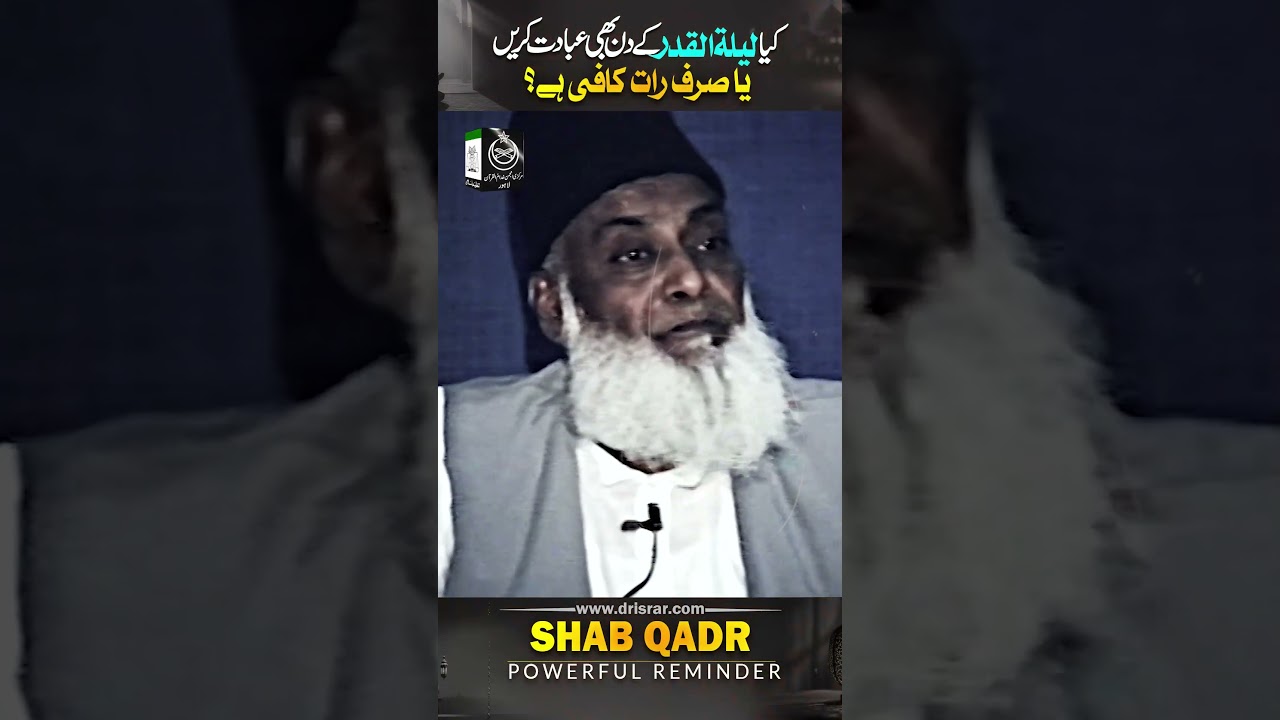
The lecture clarifies that the blessings of Laylat-ul-Qadr (the Night of Power) are not limited to the night itself, but extend to the following day. The Quranic use of terms like ‘yom’ (day) and ‘layl’ (night) encompasses the full 24-hour cycle. This means the entire day following Laylat-ul-Qadr shares in its spiritual significance. This resolves a potential issue regarding time zones; the blessings are universally available regardless of geographical location, ensuring no part of the Earth is excluded from this divine blessing. The lecture emphasizes the Quran’s comprehensive nature, leaving no aspect untouched by divine grace.
77
