Quần short
The text discusses the immense scale of future conflicts, referencing battles and wars described in prophetic traditions. It highlights a catastrophic war, described as ‘The Great Battle,’ characterized by widespread death and destruction. The area most affected will be the Arab world. The text emphasizes the severity of this coming conflict, predicting a level of carnage so extensive that even birds will be unable to find a place to land without stepping on corpses.

80
The Quran provides guidance on two primary levels: intellectual and practical. It addresses fundamental philosophical questions concerning the nature of existence, life, truth, and morality—exploring concepts such as the universe, the meaning of life, knowledge, right and wrong, good and evil. Simultaneously, the Quran offers a comprehensive system of practical directives governing individual and collective life, encompassing religious obligations, ethical guidelines, economic principles, and social norms. This dual approach provides both intellectual understanding and actionable guidance for humanity.
47
This lecture emphasizes that genuine access to the essence of the Quran is only possible through self-purification. The speaker highlights a lament about humanity’s disregard for this immense blessing – neglecting to read, understand, implement, or make the Quran a guiding principle in life. Instead, many actively reject it, shaping their own unfortunate destiny through denial. The core message is a call to prioritize internal purification to unlock the true meaning and benefits of divine revelation.
107
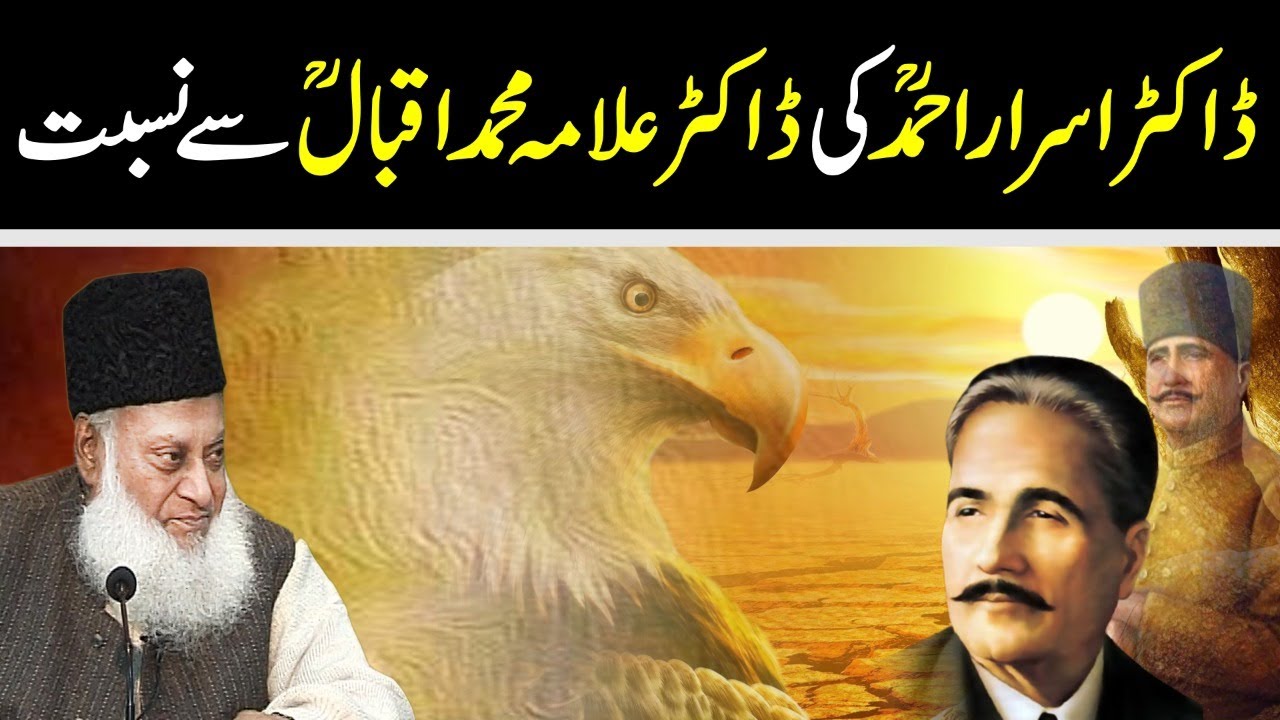
Dr. Israr Ahmad discusses Allama Iqbal’s vision for the Muslim Ummah, his early exposure to Islamic teachings, and the connection between his poetry and the Quran. He details the establishment of an organization fulfilling Iqbal’s dream of combining Quranic study with modern education, and the principles behind the founding of an organization dedicated to practicing Muslims committed to Quranic principles. He also explains the reasons behind the failure of the establishment of Jamaat-e-Islami and the founding of Tanzeem-e-Islami. Dr. Ahmad emphasizes the importance of prioritizing faith and practice over political engagement and adhering to a system based on commitment rather than elections. He shares his personal connection with Iqbal’s legacy and his commitment to continuing his work.
80
The lecture discusses the practice of adorning sacrificial animals with silk cloths and parading them, deeming it a display of wealth rather than a spiritually meaningful act. True sacrifice, it emphasizes, should stem from inner piety and submission to God. The speaker highlights that genuine devotion lies in humility and sincere worship, referencing the verse encouraging the Prophet to give glad tidings to those who are humble before God. The focus is on the internal state of the worshiper, not outward show.
48
Extremism in charitable giving is undesirable. Intense emotion can lead individuals to impulsively donate all their wealth, potentially harming themselves. The Quran and the teachings of the Prophet emphasize the necessity of balance in spending. The verse from Surah Al-Furqan highlights that true believers spend neither stingily nor wastefully, but maintain a moderate course between these extremes. This approach ensures both the well-being of the giver and the effective distribution of resources to those in need. It’s crucial to consider consequences and adopt a reasoned approach to charity.
47
