Shorts

The Quran states that true believers possess an intense love for God. This love surpasses all other affections, even those for family. The Prophet Muhammad (peace be upon him) emphasized that complete faith is unattainable unless he is more beloved to a person than their father, son, or all of humanity. This love is not merely an emotion but is manifested through obedience. However, obedience becomes true worship only when performed with a sincere and passionate devotion to God, driven by the spirit of divine love. It is the inner feeling of love that transforms acts of worship into a meaningful connection with the Divine.

90

Dr. Israr Ahmad discusses a common misconception regarding fasting during travel. He clarifies that rigidly adhering to a fast while severely weakened or during hardship is not a virtuous act but a form of self-inflicted extremism. The lecture highlights an incident during a military expedition where those observing fasts collapsed from exhaustion while others efficiently established camp. He explains that such rigid adherence stems from a flawed understanding of piety and can lead to harmful, self-destructive behavior. The key message is that religious observance should not cause undue hardship or compromise one’s ability to fulfill responsibilities, and that flexibility is essential when circumstances demand it.
88
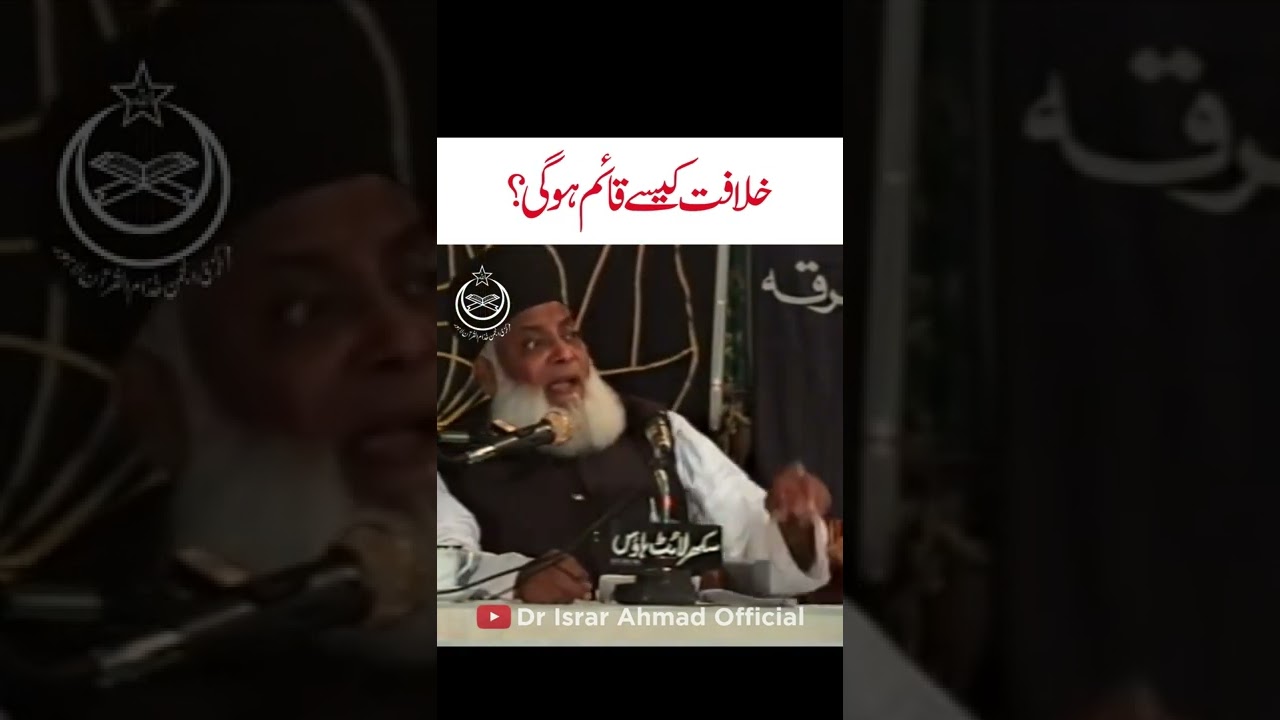
Dr. Israr Ahmad discusses the future establishment of a global caliphate rooted in the prophetic tradition. He references prophecies indicating a time when the message of Islam will permeate every corner of the earth, reaching all of humanity. He describes a vision where no home or dwelling will remain untouched by the teachings of Islam, and that his community will govern the entirety of the earth, having witnessed its eastern and western reaches in a divine revelation.
89

Human beings, like all animals, are driven by fundamental needs: sustenance and procreation. These base desires, originating from the *nafs* (ego/self), are inherently amoral, demanding satisfaction without regard for ethical considerations like *halal* (lawful) or *haram* (unlawful). The Quran emphasizes the need to control these primal urges. The human self is a source of both potential and temptation, requiring spiritual guidance and discipline to avoid succumbing to base instincts. This lecture explores the nature of these desires and the importance of self-control in Islam.
71
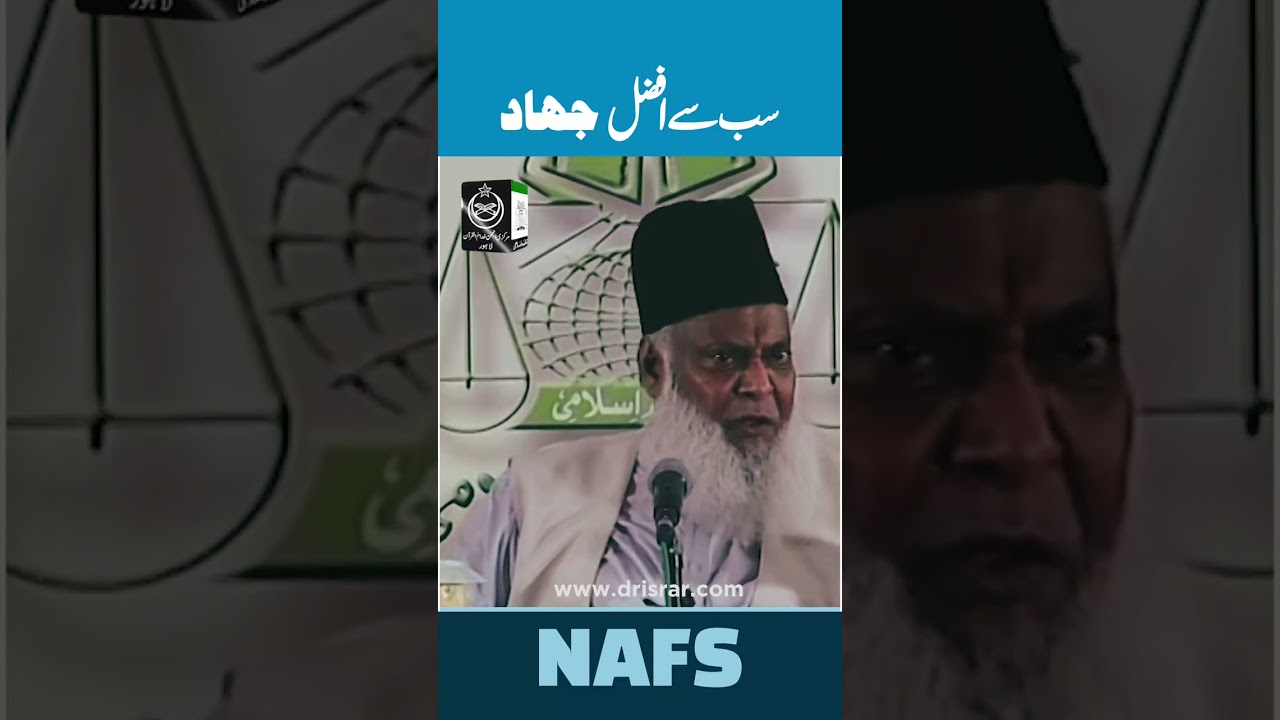
Dr. Israr Ahmad explains that the greatest form of *jihad* is the struggle against one’s own base desires (*jihad e nafs*), achieved by dedicating oneself to God. This internal struggle protects against worldly temptations that constantly demand attention and resources. He contrasts this with physical *jihad* – fighting in the path of God – which, while important, is considered a lesser form of struggle. The constant internal demands of the *nafs* are portrayed as a relentless pursuit of material possessions and immediate gratification. Overcoming these internal pressures constitutes the superior *jihad*.
52

This lecture addresses the pervasive issue of interest (riba) and gambling (qimar) within Pakistan’s economic system, arguing they contradict the principles of Islam upon which the nation was founded. The speaker issues a strong condemnation of these practices, stating they undermine the entire fabric of society and jeopardize spiritual well-being. He warns that continued engagement with interest-based economics will lead to divine punishment. The lecture emphasizes that even seemingly harmless activities, if reliant on interest or gambling, contribute to a systemic problem. The speaker suggests that a return to Islamic principles is crucial for societal and individual salvation.
58
