Şort

The lecture clarifies the distinction between being a Muslim—one who outwardly professes the faith—and a *mumin*—a true believer. It explains that merely claiming faith is insufficient; genuine belief requires complete trust in God and His Messenger, coupled with striving in His path with both wealth and life. The speaker references Surah Al-Hujurat, verse 14, highlighting that true faith enters the heart and manifests in dedicated action and sacrifice. A Muslim may adhere to the rituals, but a *mumin* embodies the complete essence of faith through unwavering dedication and continuous struggle for the sake of Allah.

80

This lecture details the life of Abu Bakr Siddique, focusing on his successful business prior to embracing Islam. It highlights how his dedication shifted from commerce to the propagation of the faith after accepting Islam. The lecture emphasizes Abu Bakr’s pivotal role in early Islamic outreach, specifically detailing how his efforts led six individuals from the 'Ashra Mubashara' (ten blessed companions) to accept Islam and join the Prophet's cause. The discussion underscores the transformation from worldly pursuits to devotion to religious work, and the sacrifices made for the sake of Islam.
46

Magheera bin Shuba, a prominent companion, advised Muawiya R.A. to designate a successor. He pointed out that the previous conflicts had decimated a large portion of the Muslim community, and the original companions were diminishing. The new Muslims, those who converted after the conquests or following the revelation of Surah At-Tawbah, lacked the strong tribal affiliations that had previously maintained central authority. Magheera warned that without the backing of a powerful tribe, the system of the Caliphate would not remain unified. Muawiya initially hesitated but ultimately understood the necessity of appointing Yazid as his heir. It's important to note that disagreement with Muawiya's decision is permissible, but questioning his intentions is not, given his status as a companion of the Prophet.
80
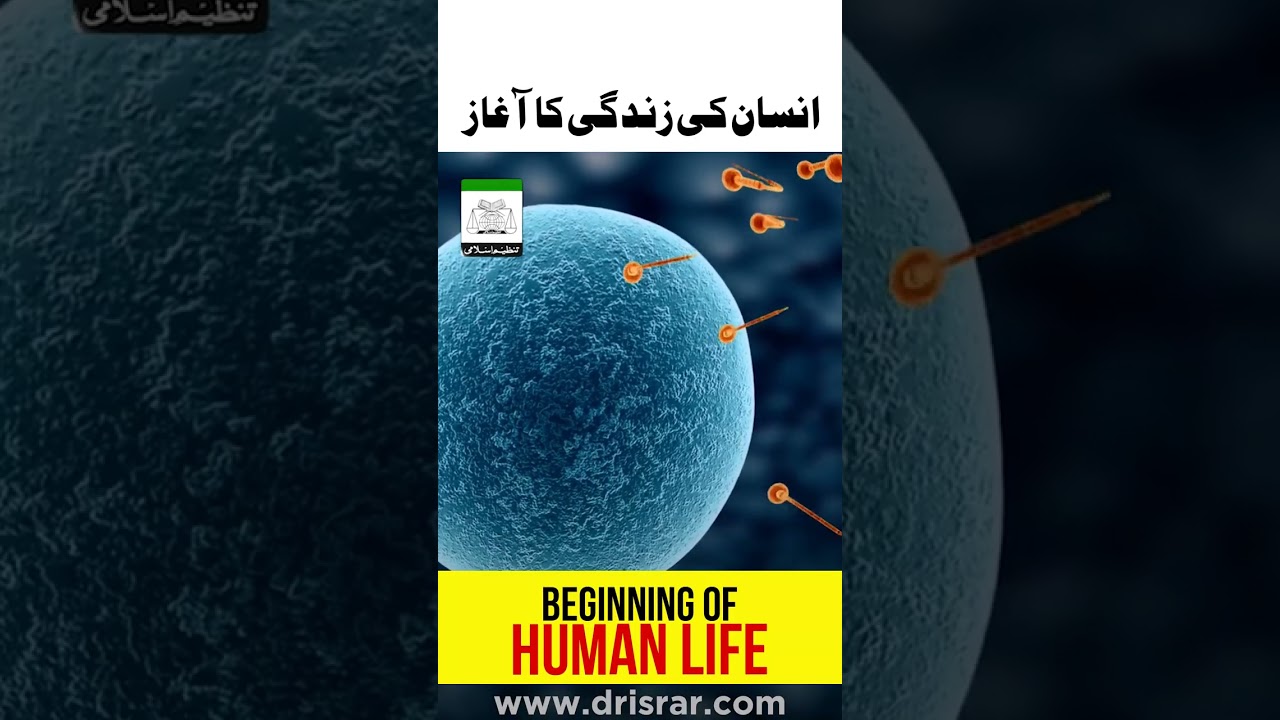
Modern microscopic observation confirms the Quranic description of human origins as detailed in Surah Qiyamah. The verse referencing the initial state as ‘nutfa’ (a drop) aligns with scientific understanding of fertilization. Microscopic analysis reveals the active, living spermatozoa originating from the male contribution, demonstrating life’s commencement at conception. The video elucidates that life does not begin 120 days after fertilization, but from the very beginning, supporting the Quranic account.
68
This lecture focuses on the profound meaning and spiritual significance of the phrase "Allah Akbar." Dr. Israr Ahmad elaborates on its implications for a believer’s life, emphasizing its connection to gratitude, humility, and the recognition of God’s greatness. He explains how the consistent remembrance of God through this declaration can transform one’s perspective and lead to inner peace. The discourse underscores the importance of aligning one’s actions with the acknowledgment of God’s supreme power and mercy, fostering a deeper spiritual connection and a life guided by faith.
61

This lecture explores a specific supplication frequently recited by the Prophet Muhammad (peace be upon him) during his Tahajjud prayers. The core message centers on affirming the truth of Muhammad, the Quran, and Prophethood itself. The speaker emphasizes that repeatedly internalizing these truths is essential for strengthening one’s faith. Genuine belief isn't merely intellectual assent but a deeply ingrained conviction within the heart, forming the very foundation of true faith. The lecture stresses that this consistent affirmation cultivates a robust and unwavering certainty.
83
