Shorts
Despite over fourteen centuries of diverse interpretations and the geographical spread of Muslims from Indonesia to Mauritania, the fundamental structure of prayer remains consistent. Differences exist in the interpretation of specific details like the number of rak'ahs, the precise pronunciation of words, and whether to say ‘ameen’ aloud or silently. However, the core ritual – standing, bowing, prostrating, and returning to standing – is universally observed. This unity across various schools of thought – including Shia, Sunni, Barelvi, Deobandi, and Kharijites – demonstrates the blessings of following the Sunnah, ensuring that the congregation remains unbroken despite differences in practice.

49
Allah tests nations with hardship to make them receptive to guidance. When people are comfortable, they are less likely to listen to truth. Divine strategy involves initial difficulty, followed by respite if they still refuse to heed the message. This pattern continues until a point of no return, after which blessings are withdrawn permanently. The lecture urges listeners to reflect on this cycle and to make the most of opportunities for positive change before it’s too late. It’s a warning against complacency and a call to embrace guidance while it’s available.
62
The Prophet Muhammad (peace be upon him) stated that some individuals, despite lacking worldly access or social standing, hold a high status in the eyes of God. Even a casual oath uttered by them is honored by Allah. The Prophet (peace be upon him) highlighted the exceptional status of companions like Abu Huraira and Abu Dharr, equating observing Abu Dharr with witnessing the arrival of Jesus (peace be upon him). These individuals represent the truly successful and blessed.
71
This lecture addresses the societal shift where religious practice has become a profession, particularly within certain communities. The speaker argues that Islam does not endorse professionalizing faith or creating hierarchies based on religious knowledge. He criticizes the practice of making religious scholars a closed class and highlights the irony that those who benefit from this system often criticize the scholars themselves. The core argument centers on the idea that Islam is a faith for all, not a vocation limited to a select few, and that the current system of professionalizing religion is a deviation from its original intent. He contrasts this with the historical practice where religious knowledge was freely accessible and emphasizes that making it a profession creates jealousy and division.
97

This lecture emphasizes that all expenditure on children should be considered a fulfillment of one’s responsibility to them, not an investment expecting a return. True reward and reliance should be placed solely with Allah. Effort dedicated to the service of Islam is the only work for which one can expect a genuine and reliable recompense. The lecture clarifies that seeking reward from anyone other than Allah is misguided.
47
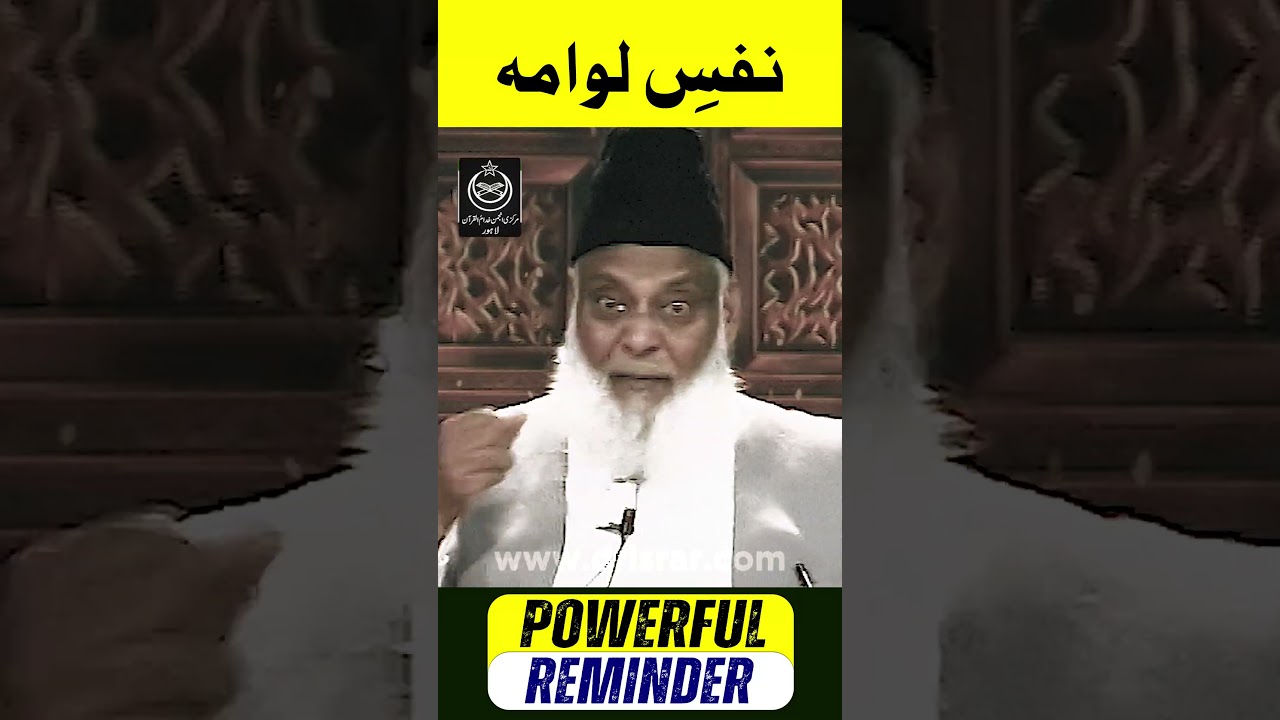
This lecture dissects the phenomenon of self-deception and the inescapable truth of one's own character. It asserts that while individuals may silence external opposition, they cannot escape the internal reckoning of their conscience. The lecture emphasizes that the self-reproaching soul (nafs-e-lawwama) possesses an inherent awareness of an individual's true nature and limitations. Despite rationalizations, excuses, or justifications, the conscience persistently reveals one's authentic self, stripping away facades and exposing underlying realities. This internal assessment remains constant regardless of external presentations.
44
