Kratke hlače
This lecture explores the critical connection between mindful prayer and genuine spiritual transformation. The speaker explains that rote recitation without internal presence renders prayer ineffective. A wandering mind, preoccupied with worldly concerns, prevents the experience of divine connection. True prayer requires focused attention, a conscious awareness of standing before God, and a heartfelt submission. Only when the mind and heart are fully engaged does prayer become a powerful force for character building and positive change. The speaker emphasizes that a distracted mind will fill with anxieties and worldly matters, negating the spiritual benefits of prayer. The essence of prayer lies in experiencing a direct connection with the Divine.

75

This lecture explores the transient and deceptive nature of worldly life, emphasizing its value as a field for cultivating rewards for the afterlife. It highlights the importance of remaining detached from worldly allurements and focusing on spiritual growth. True success lies not in accumulating worldly possessions but in preparing for the eternal realm. The speaker cautions against becoming lost in the superficialities of life, urging listeners to maintain a perspective of detachment, acting as travelers rather than settlers. Worldly life is valuable insofar as it allows one to earn provisions for the Hereafter; becoming engrossed in its distractions leads to ruin. The key to a balanced life is to engage with the world without becoming attached to it, recognizing its temporary nature and prioritizing eternal values.
68
Humanity represents a unique composite existence, embodying both animalistic and spiritual dimensions. This lecture elucidates the multifaceted nature of humankind, highlighting its inherent duality. The human being is a blend of earthly instincts and divine potential, a ‘concoction’ of both the physical and the ethereal. Understanding this complex interplay is crucial to grasping the deeper wisdom embedded within the Quranic verses. Without recognizing this fundamental truth, the profound and intricate layers of Quranic teachings remain inaccessible.
39
This lecture explores the profound connection between the call to prayer (azan) at birth and the funeral prayer (salat-e-janaza) at death. It posits that life is an interval mirroring the time between the azan and iqamat preceding a prayer, and the prayer itself. The speaker draws a parallel between the commencement of life, marked by the azan, and its conclusion, represented by the funeral prayer, highlighting the transient nature of worldly existence. Life is presented as a brief pause between these two spiritual occurrences, emphasizing the temporary nature of this world.
45
This lecture details the stages of human development from conception to old age, emphasizing the divine process governing life. It outlines creation from a sperm, its development into an embryo, then a fetus, followed by growth and maturity. The lecture acknowledges that some individuals are taken before reaching full potential, while others experience a decline in cognitive function with age, forgetting what they once knew. It reflects on the cyclical nature of life and the ultimate return to the Divine.
106
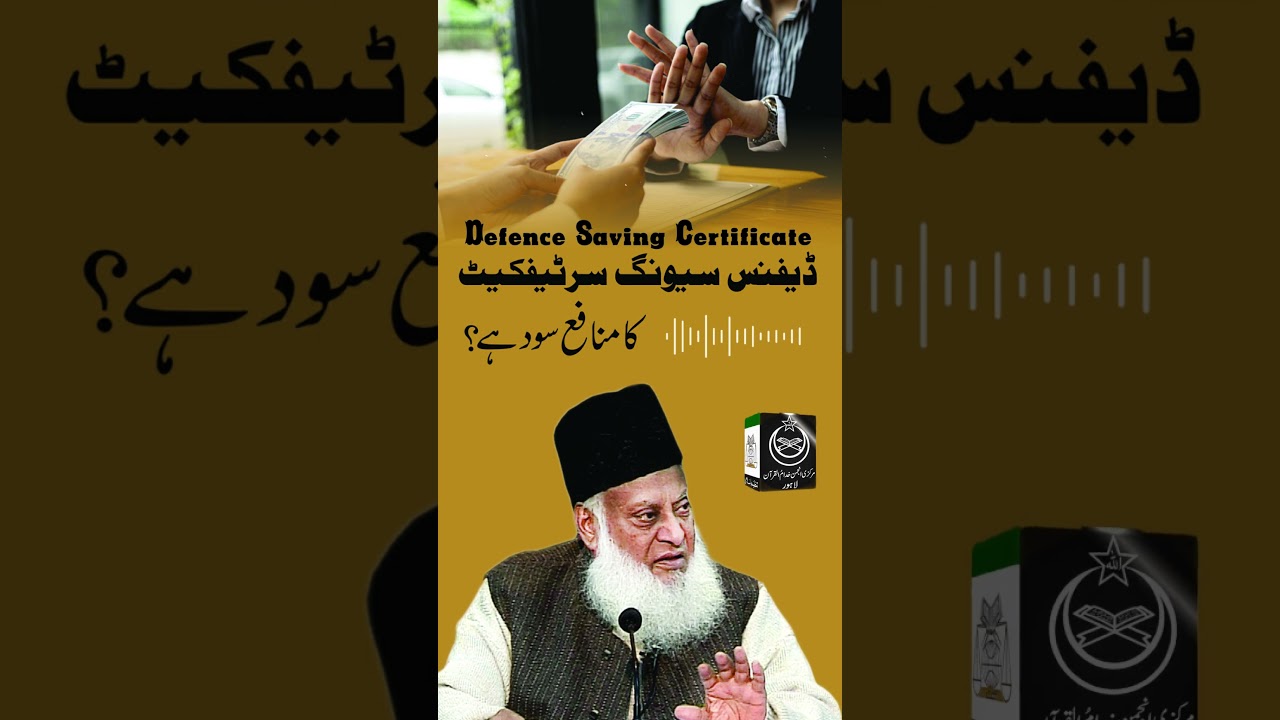
Many of Dr. Israr Ahmad’s educated friends and acquaintances advised him to deposit his retirement funds in fixed-rate Defense Savings Certificates, believing it to be the most beneficial solution. He disagreed. This lecture explains the impermissibility of interest, even when deposited in seemingly permissible schemes. They have fixed their money and are consuming the profit, believing it to be permissible, which he identifies as a significant error. The profit derived is direct interest – *haram* – and not a permissible form of trade or investment.
60
