Şort
The Quran’s compilation involved both a chronological (نزولی) and the current (مصحف) arrangement. The earliest verses revealed were from Surah Al-Alaq, followed by Surah Al-Qalam, parts of Surah Al-Muzzammil, Surah Al-Mudaththir, and then Surah Al-Fatiha. The current arrangement begins with Surah Al-Fatiha, followed by Surah Al-Baqarah, revealed in Medina. The Prophet Muhammad (peace be upon him) guided the scribes in arranging the verses as they were revealed, ensuring the final compilation was also divinely guided. This process of arrangement and compilation was a divine act, directed by God through His Messenger.

79

The soul is the center of our existence, distinct from the body. While the body originates from the earth, remains for a time, and ultimately returns to it, the soul is eternal and originates from, and returns to, God. Death involves the separation of the soul from the body; the soul itself does not die but transitions. The act of ‘ قبض’ (taking/receiving) relates to the body, not the soul. The soul’s journey is one of return to its divine source, a concept encapsulated in the phrase ‘Inna lillahi wa ilayhi raji’un.’
55
Allama Iqbal’s journey to Europe marked a significant intensification of his Islamic faith. His upbringing, deeply rooted in religious values through his devout mother and Sufi father, provided a strong foundation. While initially religious, his experiences in England proved transformative. He describes a feeling of being ‘tested’ through exposure to Western philosophy and thought, likening it to the trial of Abraham. This period of intellectual and spiritual challenge forged a deeper, more resilient faith within him. He portrays this period as a trial by fire, a process of purification and strengthening of his religious convictions.
23
The text discusses a moment of widespread questioning and anxiety regarding the Day of Judgement. People are consumed with inquiries about accountability, resurrection, and the recording of every action and word. This collective apprehension is triggered by a startling sound – described as either a thunderclap or the call of a desert guide – which awakens a sense of impending reckoning. The passage highlights humanity's inherent concern with its ultimate fate and the assurance of divine justice.
55
Dr. Israr Ahmad clarifies that the practice of collective Quran recitation for reward (sawab) is an innovation not found in Islamic tradition. True Quran recitation involves individual or attentive listening to a skilled reciter. He condemns the practice of dividing the Quran amongst multiple people to read portions as disrespectful and a form of mockery towards the scripture. The proper way to engage with the Quran is through personal recitation and focused, reverent listening.
66
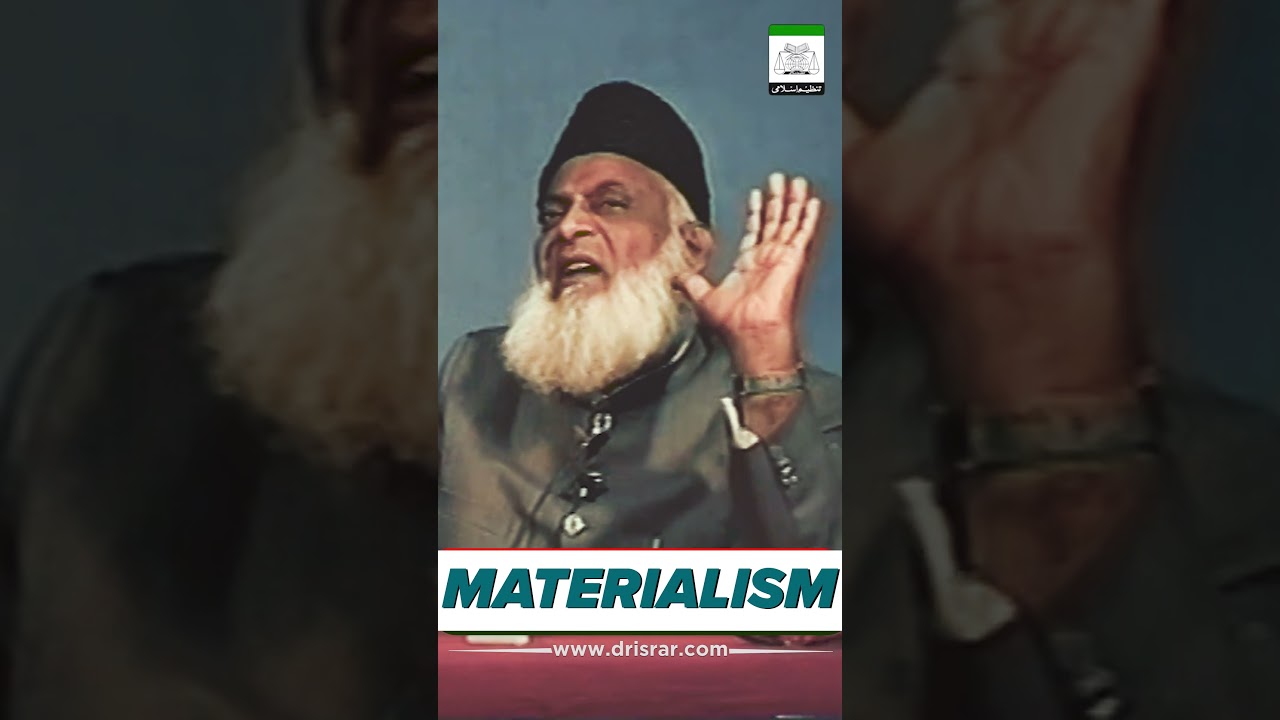
The text emphasizes that true life resides in the afterlife, not the material world. It critiques a materialistic focus, stating that people are lost in the pursuit of worldly possessions, mistakenly believing they are achieving something substantial. This pursuit leads to being lost in matter and consumed by materialism, exhausting all efforts within a limited scope. The core message is a rejection of prioritizing worldly gain over spiritual fulfillment and preparation for the afterlife.
36
