Şort
This lecture clarifies the essence of sacrifice, emphasizing that its core is submission to God and fostering piety. Mere ritualistic observance without a genuine connection to the Divine renders the act meaningless. The speaker critiques ostentatious displays of wealth during sacrifice, highlighting that true devotion lies in internalizing the spirit of humility and surrender. Genuine sacrifice necessitates a relationship with God and cultivating inner devotion. It is a demonstration of complete submission and sincerity.

53
This lecture explains the Sunni perspective on the ranking of the Sahaba, particularly the Rashidun Caliphs. The ranking is based on the consensus of the Sahaba themselves, as demonstrated by their selection of Abu Bakr, then Umar, then Uthman, and finally Ali as Caliphs. Each selection implies the chosen individual was considered the most suitable at that time. This system of ranking, known as *tartib al-khilafa*, is detailed in the writings of Hazrat Mujaddid Alf Sani. The lecture then briefly references the remaining six members of the Ashara Mubashara.
40
The Quran was the instrument of revolution brought by the Prophet Muhammad (peace be upon him). It transformed minds, altered beliefs, and reshaped value systems. Before, life was the most cherished possession; now, martyrdom is the most welcomed. This revolution, initiated by a single individual, prioritized striving in the way of God over material gain. Surah Al-Furqan emphasizes the directive to not heed the disbelievers and to wage a great struggle through the Quran. The Quran itself was the greatest sword in the hands of the Prophet Muhammad (peace be upon him).
96
This lecture explores the life of Syeda Fatima, the beloved daughter of the Prophet Muhammad (peace be upon him). It details her hardships, including physical strain from household chores and the challenges faced by early Muslims. The discussion emphasizes her devotion, piety, and the sacrifices she made for her father and the nascent Muslim community. It also addresses a poignant moment where she questions the disparity in worldly possessions, highlighting her spiritual focus despite material needs. The lecture concludes with a reflection on the immense love and respect the Prophet held for his daughter and the practice of reciting specific praises after each prayer.
49

This lecture emphasizes the importance of inviting people to the path of God with wisdom, good counsel, and respectful debate. It highlights that delivering the message of God is a duty, best fulfilled through gentle persuasion and eloquent communication. The speaker stresses that even in disagreement, one must maintain a dignified and courteous approach.
43
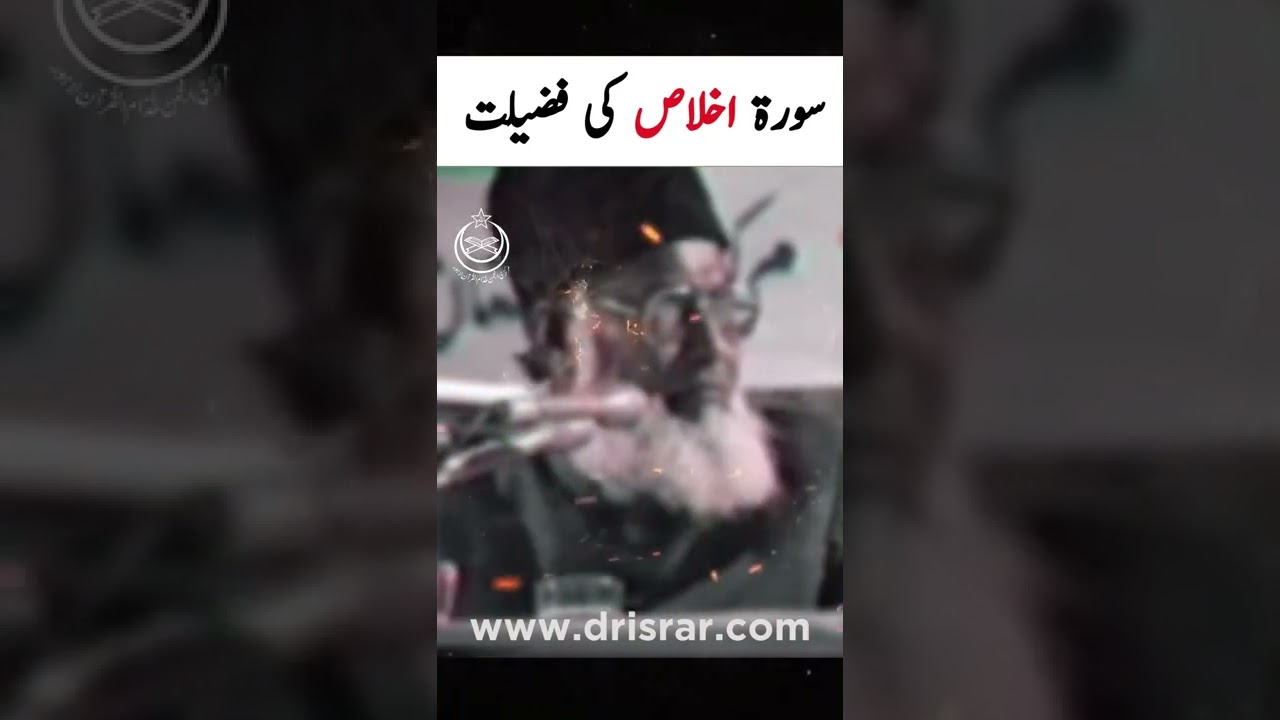
Surah Al-Ikhlas is considered the most important surah in the Quran due to its comprehensive articulation of Tawhid (the Oneness of God). While comprising only four verses, it’s equivalent to one-third of the Quran in significance. This is because the foundation of Islam is Tawhid, and Surah Al-Ikhlas encapsulates this concept in its purest form, making it the core root of the faith. Dr. Israr Ahmad explains this foundational concept with clarity and depth.
55
