شارٹس

This lecture emphasizes accepting both blessings and trials from God with contentment and recognizing divine wisdom in all circumstances. It highlights the importance of surrendering to God’s will and finding peace through acceptance of His decree. The core message is to remain steadfast in faith and find satisfaction in God’s plan, understanding that all events, whether positive or negative, occur with a divine purpose. It stresses that true contentment lies in aligning oneself with God's will, acknowledging His sovereignty, and finding peace in surrendering to His decree.

57

This lecture details three elements that lead to salvation and three that lead to destruction. Salvation is achieved through fear of God in both private and public, speaking the truth regardless of anger or pleasure, and fulfilling one’s obligations. Destruction stems from following one's desires, excessive love of wealth, and self-admiration. The most destructive of these is a bloated ego and considering oneself superior.
46
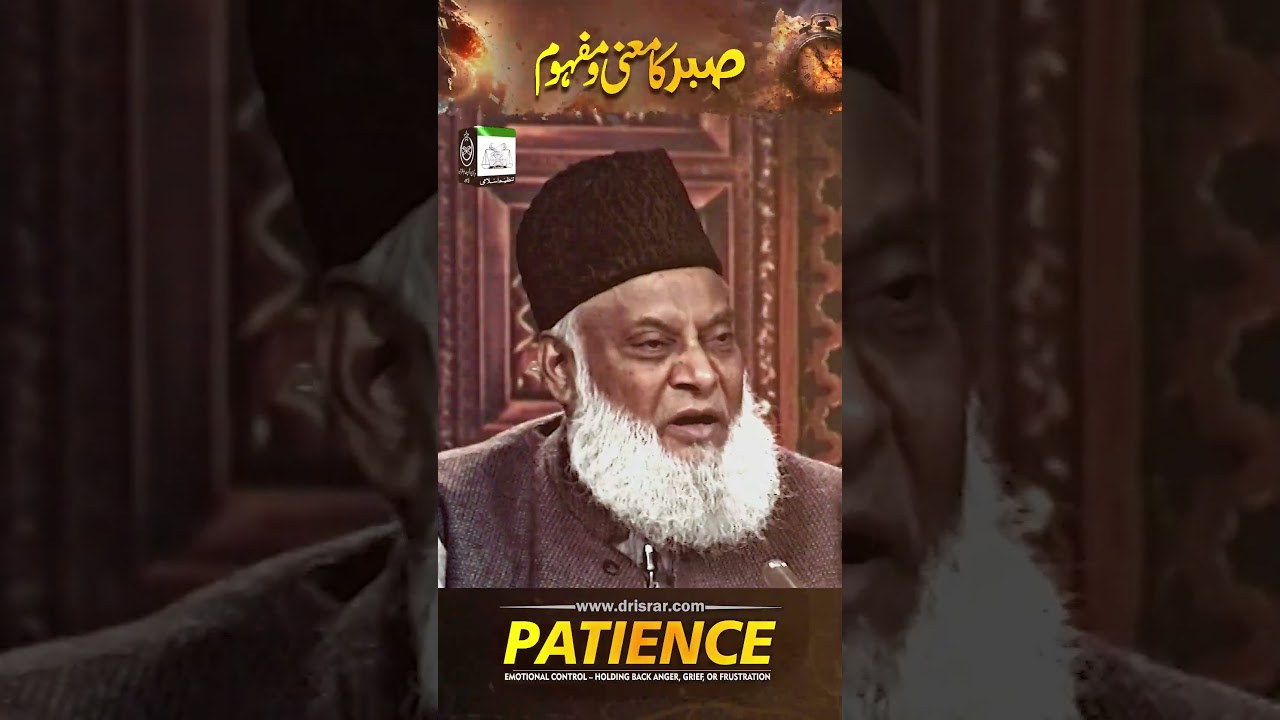
This lecture explores the etymological roots of the word 'Sabr' (patience) in Arabic and its connection to bitter substances historically used for medicinal purposes, specifically blood purification. The speaker details how the act of enduring bitterness—like consuming aloe vera or sour fruits—parallels the internal fortitude required to practice patience. The discussion extends to ancient practices of using aloe vera to preserve bodies, drawing a metaphorical link to its function in ‘cleansing’ and halting decay, mirroring the way patience preserves the soul. The core argument posits that the very essence of patience originates from the ability to withstand hardship and unpleasantness.
49

Allama Iqbal, at the beginning of the 20th century, foresaw the rise of a destructive ideology, even before its full manifestation in Nazi Germany. His initial work focused on economics, but he was a philosopher and a poet with profound insight. He recognized the seeds of a sentiment that would later fuel the Holocaust—the perception of being controlled by external forces. This early awareness, predating overt reactions within Nazi Germany itself, allowed him to anticipate the potential for extreme brutality. The systematic extermination of six million people, a horrific event, stemmed from this perceived control and the resulting resentment. Iqbal understood the danger inherent in such beliefs.
59

Rebellion obscures the imprint of devotion. This lecture explores the purpose of fasting as a means to renew commitment to worship. Fasting serves as a shield against base desires. The month-long practice of abstaining from food and permissible pleasures, even when readily available, cultivates self-discipline and restraint. This rigorous training strengthens the ability to resist unlawful acts for the remaining eleven months of the year. It is an exercise in devotion, preparing the soul for a life of obedience and spiritual growth.
43

This lecture explores the profound connection between the call to prayer (azan) at birth and the funeral prayer (salat-e-janaza) at death. It posits that life is an interval mirroring the time between the azan and iqamat preceding a prayer, and the prayer itself. The speaker draws a parallel between the commencement of life, marked by the azan, and its conclusion, represented by the funeral prayer, highlighting the transient nature of worldly existence. Life is presented as a brief pause between these two spiritual occurrences, emphasizing the temporary nature of this world.
41
