Kratke hlače
The lecture defines ‘Salihat’ (righteous women) in Islam, emphasizing their key characteristics. These women are obedient, protectors of marital fidelity and household secrets, and guardians of their husband’s honor and property in his absence. The talk highlights that a wife’s integrity directly reflects her husband’s honor, and her discretion is paramount. It emphasizes the wife’s role as the primary confidante and keeper of her husband’s secrets, alongside safeguarding his possessions and reputation.

54
Every action, no matter how small or large, is recorded in the knowledge of Allah. Each word uttered is also within His awareness. Therefore, even the weight of an atom of good will be witnessed, and similarly, the weight of an atom of evil will also be seen. This emphasizes complete accountability for all deeds, encouraging mindful action and discouraging wrongdoing.
67
Dr. Israr Ahmad explains the true meaning of poverty (miskin) in Islam. It isn’t merely a lack of wealth, but rather the failure to fulfill obligations to others. A person may perform many acts of worship – prayers, fasting, pilgrimage – yet be considered bankrupt on the Day of Judgment if they have wronged people by depriving them of their rightful inheritance, slandering them, or otherwise violating their rights. Their good deeds will be distributed to those they harmed, leaving them with nothing but the weight of their sins and ultimately destined for Hell. This lecture clarifies that true poverty lies in spiritual bankruptcy, not material lack.
72
The greatest act of gratitude is towards one’s parents, a concept emphasized five times in the Quran. Simply *looking* at the Kaaba with reverence is considered an act of worship. Similarly, looking at one’s parents with love and respect is also an act of worship. This act of reverence, even without verbal interaction, holds significant spiritual reward. The Quran highlights the immense importance of honoring and showing affection to parents.
76
This lecture discusses the extension of the principles of Hajj beyond the physical pilgrimage. It explains how the reverence associated with specific locations in Hajj, and the importance of sacrifice within the Hajj rituals, are mirrored in the universal practice of offering sacrifice. The speaker highlights how participation in sacrifice, even when unable to physically perform Hajj, allows Muslims worldwide to share in a core tenet of the pilgrimage. Similarities between the restrictions observed during Ihram and the spirit of sacrifice are drawn, emphasizing the broader application of Hajj’s principles to the entire Muslim community.
64
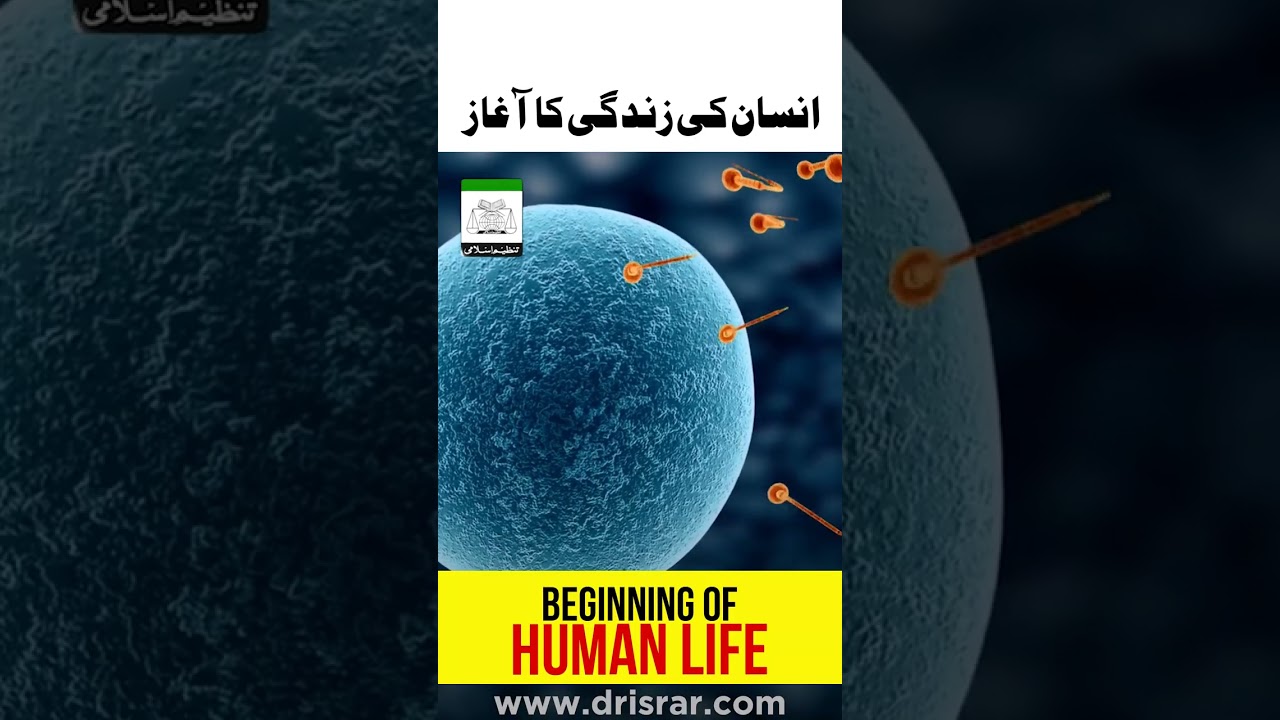
Modern microscopic observation confirms the Quranic description of human origins as detailed in Surah Qiyamah. The verse referencing the initial state as ‘nutfa’ (a drop) aligns with scientific understanding of fertilization. Microscopic analysis reveals the active, living spermatozoa originating from the male contribution, demonstrating life’s commencement at conception. The video elucidates that life does not begin 120 days after fertilization, but from the very beginning, supporting the Quranic account.
62
