Shorts

The lecture details the immense hardship faced by the Prophet Muhammad (peace be upon him) during the Year of Taif, considered the greatest personal trial. It then discusses the Battle of Uhud as the greatest collective trial for the companions. Following these trials, enhanced protection was granted to the Prophet. The year also marked the beginning of conversions to Islam, with six accepting faith during Hajj, twelve the following year, and seventy-two thereafter. This led to the Pledge of Aqabah and the opening of the path for migration, ultimately leading to triumph and success.

54

True faith is a profound attribute, but it requires cultivation. Its source and foundation lie within the Quran. Genuine faith isn't acquired through philosophical debate or intellectual reasoning, but through deep contemplation and immersion in the Quran. The Quran unlocks the heart's potential, revealing truths to those who reflect upon its verses. Deliberate study and thoughtful engagement with the Quran are essential for fostering conviction and illuminating the path to spiritual understanding. This process unlocks the heart and strengthens belief.
60

This lecture details the historical development of Taraweeh prayers. Initially, the Prophet Muhammad (peace be upon him) led the congregation for only three nights, praying eight rak'ahs and combining it with Tahajjud. The practice of twenty rak'ahs connected to Isha prayer originated during the Caliphate of Umar ibn al-Khattab, an innovation aimed at unifying diverse congregations. While some, like the Ahl-e-Hadith, maintain the original eight rak'ahs, the majority of Sunni schools (Hanafi, Maliki, Shafi'i, Hanbali) follow Umar's practice, citing the principle of adhering to the traditions of the Prophet and the rightly guided Caliphs. This practice is also observed in the Haramain Sharifain. The lecture clarifies the historical context and differing viewpoints surrounding Taraweeh.
123

This lecture discusses the significance of sacrificial animals in Islam, specifically during Hajj and Eid al-Adha. It explains that these animals represent symbols of devotion to God and foster a spiritual connection. The benefits derived from these animals, such as milk and other resources, are permissible, highlighting the inherent goodness and blessings within the act of sacrifice. The practice reinforces faith and strengthens the believer’s relationship with the Divine.
50
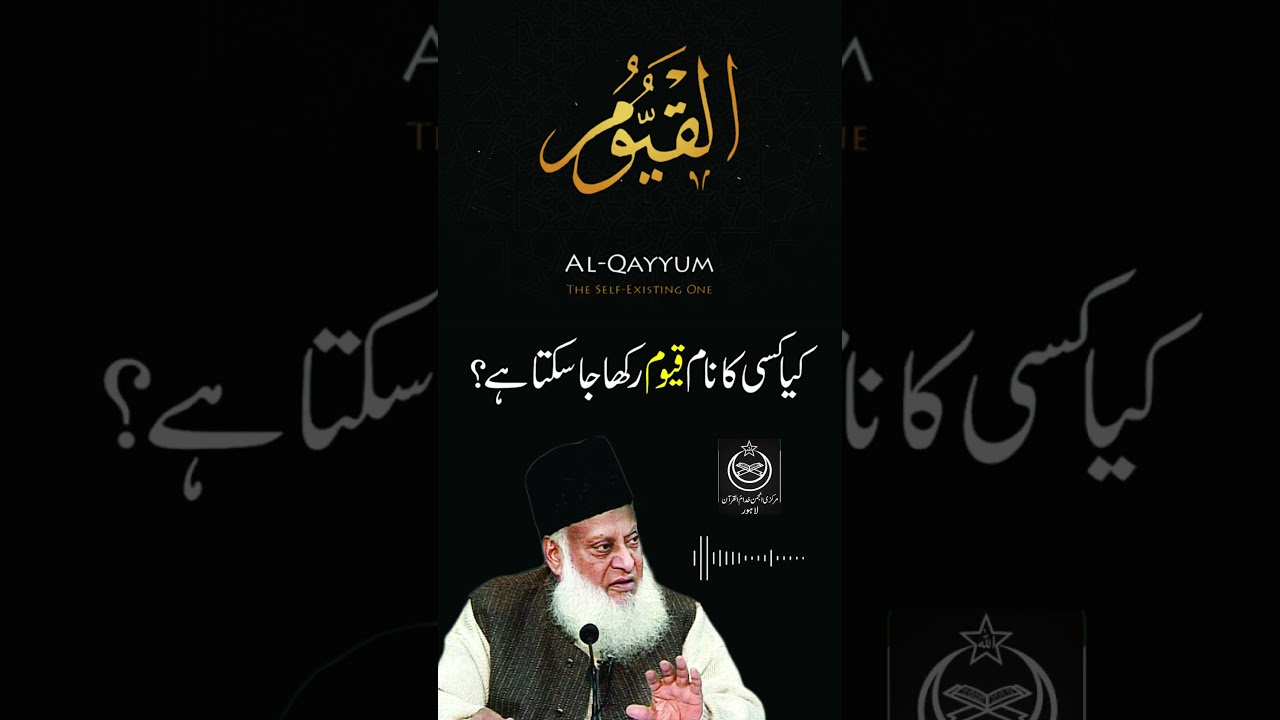
The lecture clarifies the meanings of Al-Hayy (The Ever-Living) and Al-Qayyum (The Sustainer). While 'Hayy' describes life applicable to all beings, 'Al-Hayy' specifically denotes Allah. Similarly, 'Qayyum' signifies one who establishes and maintains, but 'Al-Qayyum' is exclusive to Allah. Attributing 'Al-Qayyum' to anyone else is inappropriate. The discussion explains how using 'Abd Al-Hayy' and 'Abd Al-Qayyum' is acceptable as it acknowledges servitude to the Divine, while simply ‘Hayy’ or ‘Qayyum’ used as a name implies a claim of divine attribute.
50

This lecture explores the limits of human understanding regarding the unseen world (Ghaib) and the afterlife. It emphasizes that certain aspects of these realms, such as the exact nature of punishment or what occurs after death, are beyond our complete comprehension. The speaker stresses the importance of accepting what has been revealed in the Quran and Sunnah regarding these matters through faith, rather than attempting to delve into details that are intentionally concealed. The lecture clarifies that belief in the unseen is a condition for benefiting from the guidance of the Quran, and highlights the experience of the deceased hearing the sounds of those departing after burial, as mentioned in Hadith. True understanding will only be revealed in the afterlife.
46
