شارٹس
The lecture details the immense hardship faced by the Prophet Muhammad (peace be upon him) during the Year of Taif, considered the greatest personal trial. It then discusses the Battle of Uhud as the greatest collective trial for the companions. Following these trials, enhanced protection was granted to the Prophet. The year also marked the beginning of conversions to Islam, with six accepting faith during Hajj, twelve the following year, and seventy-two thereafter. This led to the Pledge of Aqabah and the opening of the path for migration, ultimately leading to triumph and success.

54
This lecture explains the collective responsibility of the Muslim community to propagate the message of Islam, building upon the prophetic mission. It emphasizes that after the finality of prophethood, this duty falls upon the entire Ummah. The core message is to first reconnect with faith and then extend its invitation to family, close relatives, and ultimately, all of humanity. The lecture highlights the importance of a collective strength within the Ummah to effectively convey the message and protect themselves and others from divine punishment. It stresses the need to prioritize personal and familial faith before extending outreach to a wider audience, echoing the Quranic instruction to warn close relatives first.
45
This lecture discusses the Islamic perspective on the joint family system. While there is no explicit command or prohibition in the Quran and Sunnah regarding it, adherence to Islamic principles of privacy and modesty (hijab and purdah) are crucial. The system is permissible if these principles are maintained; otherwise, it becomes problematic. Dr. Israr Ahmad explains that the core issue isn’t the system itself, but the implementation of Islamic guidelines within it. Maintaining privacy and modesty is paramount for a permissible joint family structure.
116
A lack of trust between spouses erodes the foundation of marriage and family. If a husband doubts his wife's fidelity or vice versa, it distracts from their connection and weakens their bond. Similarly, paternity concerns destabilize the entire family unit. Maintaining strong sexual attraction within the marriage—focused solely between husband and wife—is crucial for reinforcing this fundamental institution and ensuring its stability. This lecture emphasizes the vital role of mutual trust and focused intimacy in preserving the family structure.
46
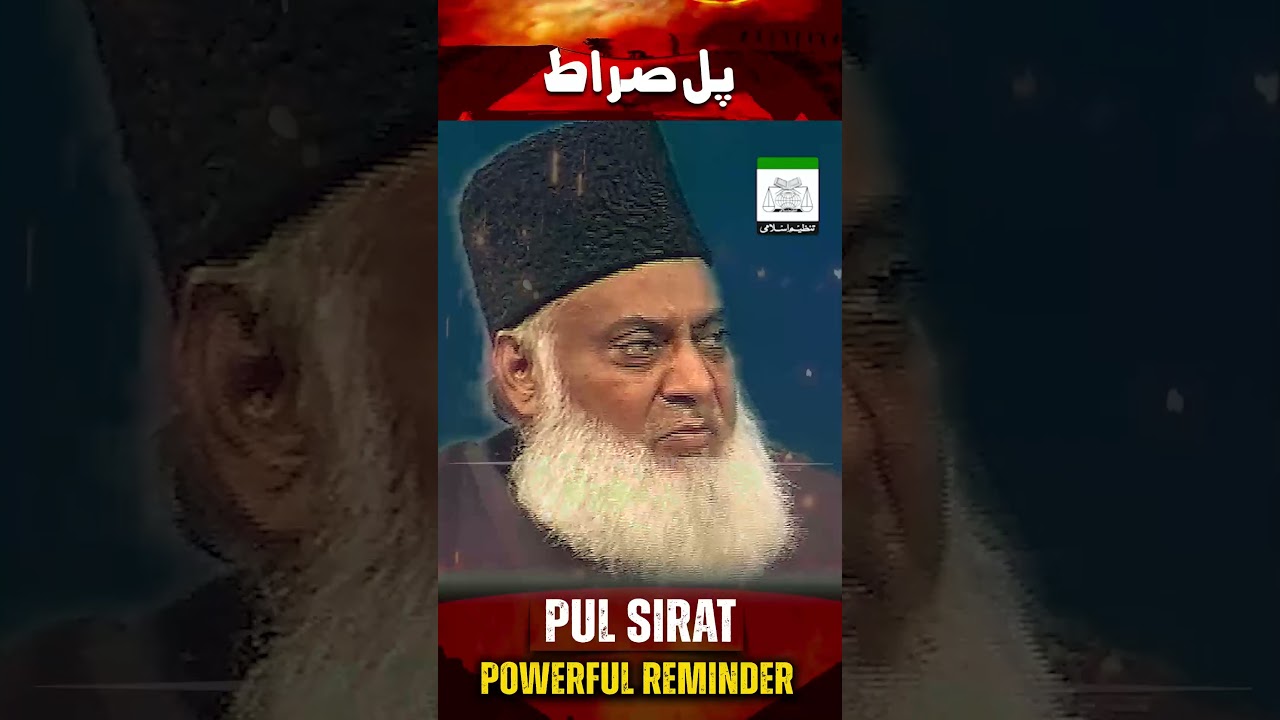
This discourse details the path of *Sirat-e-Mustaqeem* (the straight path) as it transitions from this world into the intermediate realm (Barzakh) and ultimately becomes the bridge over Hell on the Day of Judgement. It explains how the righteous will traverse this path to enter Paradise, witnessing the salvation granted by God, while the wrongdoers will fall from it due to their lack of divine guidance. The lecture emphasizes the immense value of God’s mercy and forgiveness for those who adopted a path of piety in this world. Those devoted to *taqwa* (piety) will be rescued, while the unjust will remain fallen. This path will be a test of faith and a demonstration of God’s justice.
46
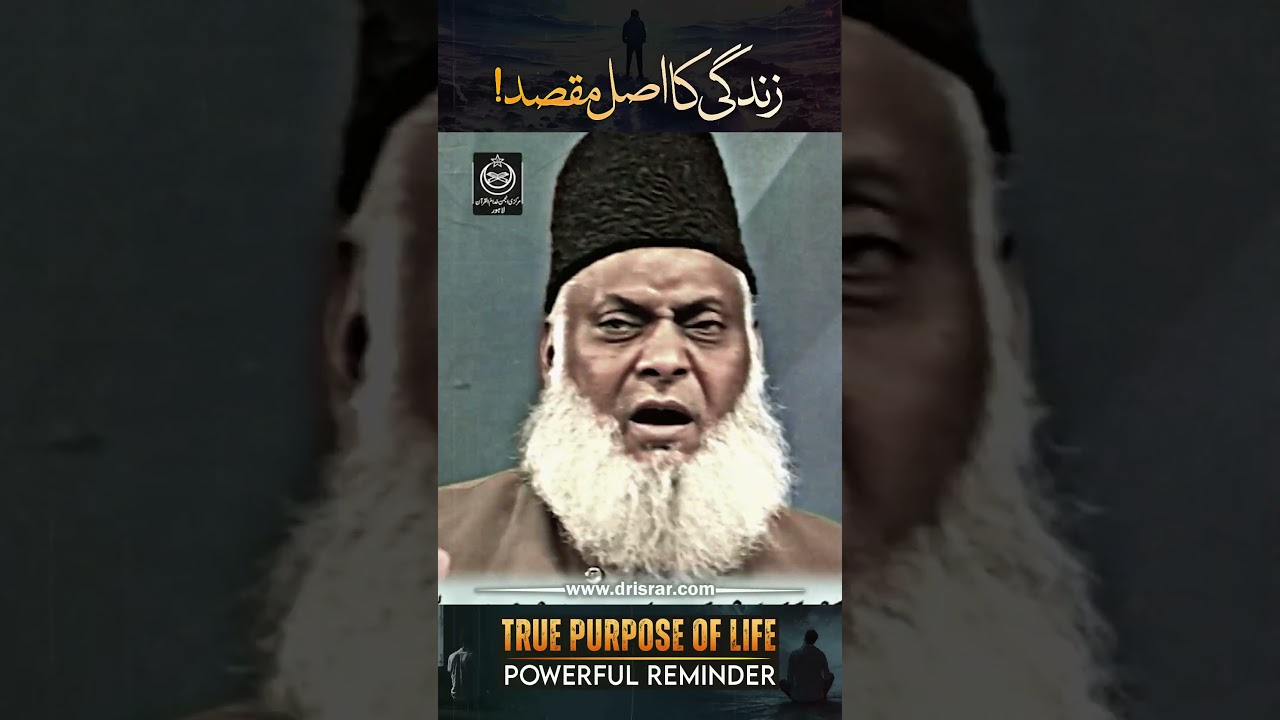
This reflection contemplates the human condition, questioning the meaning of existence beyond mere biological survival. It explores the stages of life – childhood, adolescence, youth, and old age – and asserts that true life transcends this temporary physical realm. The speaker posits that our earthly existence is a brief, evaluative period—a test—within a larger, eternal reality. This life is not the entirety of being, but a small segment, a temporary pause before returning to a perpetual, youthful existence. The core message is that the purpose of life lies beyond this transient world, within a spiritual and enduring context.
58
