Quần short
This lecture details the challenging events faced by the Prophet Muhammad (peace be upon him) during his visit to Taif. The incident at Taif proved more difficult than the Battle of Uhud due to the Prophet being alone with only Zaid ibn Harithah for protection. The people of Taif pelted the Prophet with stones, causing injury and humiliation. Zaid ibn Harithah bravely shielded the Prophet, sacrificing himself to protect him from the attack. This event highlights the Prophet’s resilience and the unwavering loyalty of his companions.

84
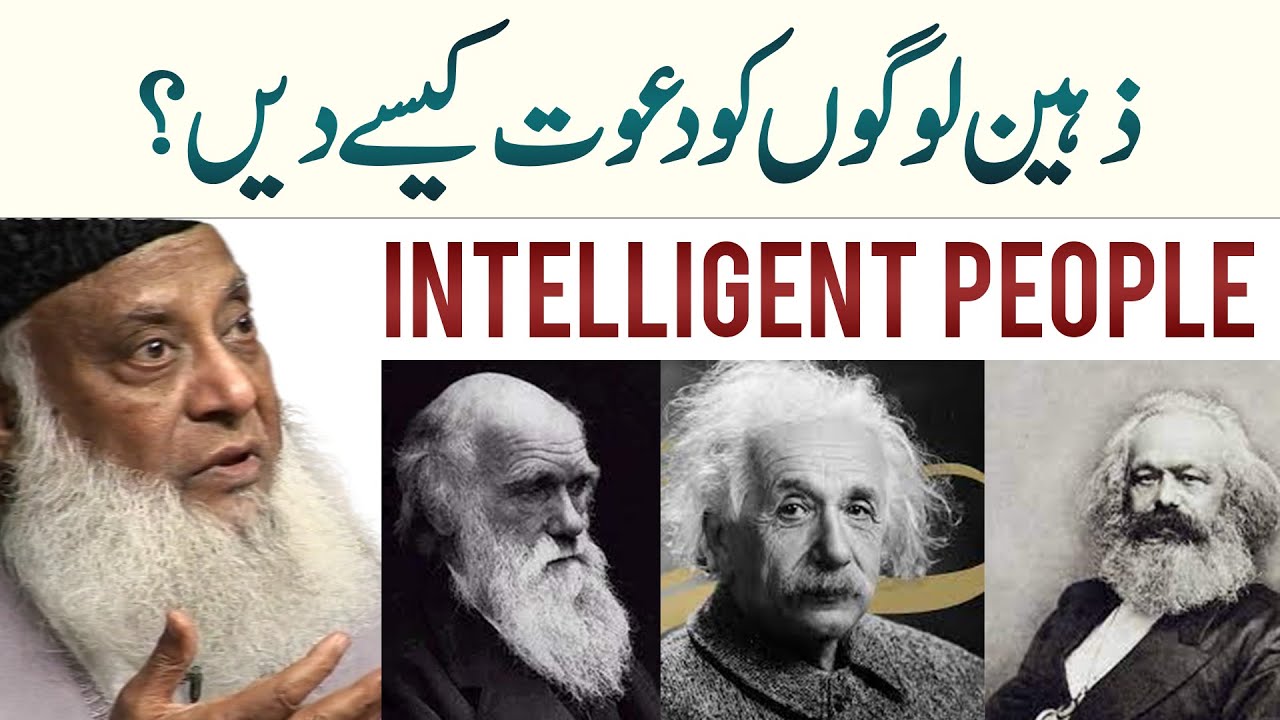
The lecture addresses the necessity of clearing the mind of conflicting ideologies, specifically Darwinian evolution and other Western philosophies, before accepting Islamic teachings. The speaker emphasizes that preconceived notions and intellectual impurities act as barriers to true understanding of religious concepts like the story of Adam and Iblis. He critiques the influence of thinkers such as Darwin, Freud, Marx, Adler, Bertrand Russell, and Sartre on contemporary thought, asserting that these philosophies obstruct a clear reception of Islamic principles. The speaker highlights the importance of intellectual purification to facilitate genuine faith and understanding.
51
Science and technology are rapidly advancing. This lecture addresses the permissibility of utilizing advancements, distinguishing between those aligned with Islamic principles (Kitab o Sunnat) and those that are neutral. It emphasizes that progress benefiting humanity should be embraced, while innovations contradicting core Islamic values should be rejected. The lecture posits that human progress is a collective inheritance, not the property of any individual, and should be guided by ethical considerations rooted in faith. Neutral advancements, permissible within an Islamic framework, can be adopted and integrated into society.
79
This lecture clarifies the nature of faith (Iman) in Islam. It distinguishes between the declaration of faith – the verbal profession of ‘La ilaha illallah Muhammadur Rasulullah’ – and the inner conviction of the heart (yaqeen-e-qalbi). The speaker explains that simply being born into a Muslim family or joining a community adopting Islam does not automatically equate to true faith. True faith necessitates a deep, internal certainty. The initial declaration establishes a legal status of being a Muslim, but genuine belief requires a conviction within the heart. This discussion emphasizes the difference between outward profession and inward acceptance.
60
The loss of modesty (hayā) correlates directly with a decline in faith (īmān). This internal restraint, a natural human quality instilled by God, protects individuals from immoral acts. When this protective barrier is removed through sin, such as adultery, internal restrictions dissolve, leading to unrestrained behavior and a visible deterioration of character. The natural human quality of modesty is an integral part of faith; its absence reveals inner corruption, much like the discharge from a festering wound.
59
This lecture clarifies that true success isn't measured by wealth, possessions, or business expansion. Instead, it's achieved through four core principles: faith (iman), righteous deeds (amal-e-saleh), encouraging truthfulness (tawasib-ul-haq), and patience (tawasib-e-sabr). The speaker argues that conventional definitions of success are fundamentally flawed and that these four elements are the genuine determinants of a fulfilling life. This lecture highlights a contrast between worldly perceptions of success and the Islamic perspective, offering a pathway to genuine achievement.
53
