Shorts

A true believer's purpose is to proclaim the greatness of their Lord. This isn’t merely reciting ‘Allahu Akbar,’ but understanding and embodying the declaration of God’s supremacy and uniqueness. The continuous remembrance of God, whether through glorification or worship, permeates all of creation – from the expanse of the universe to the smallest particle. This constant declaration of divine greatness, and the fulfillment of it through action, is what defines a righteous life. Failing to align words with deeds invites divine displeasure. The video explores this concept with reference to the verse highlighting the severity of hypocrisy.

51
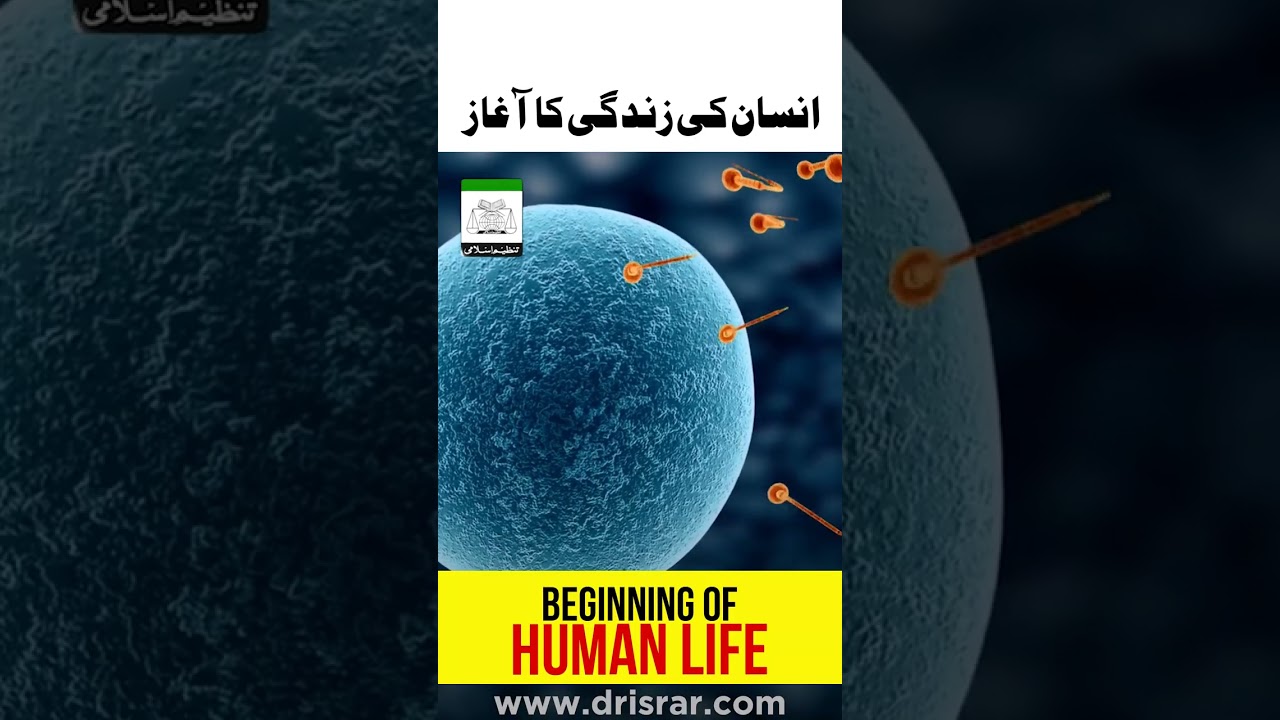
Modern microscopic observation confirms the Quranic description of human origins as detailed in Surah Qiyamah. The verse referencing the initial state as ‘nutfa’ (a drop) aligns with scientific understanding of fertilization. Microscopic analysis reveals the active, living spermatozoa originating from the male contribution, demonstrating life’s commencement at conception. The video elucidates that life does not begin 120 days after fertilization, but from the very beginning, supporting the Quranic account.
60
Humanity has been created in the best form, but when individuals descend to a bestial level, they become worse than animals. This lecture explores the inner self—the spiritual personality that perceives beyond the physical senses of sight, hearing, and intellect. It emphasizes the role of the heart in true understanding and perception, contrasting it with reliance solely on rational thought. This inner being witnesses, hears, and contemplates not through eyes or ears, but through the heart.
49
This lecture discusses the human tendency to form opinions and suspicions about others. It emphasizes that forming negative judgments without concrete evidence is harmful and unjust. While doubt itself is not inherently bad, it should prompt caution and careful consideration rather than immediate negative action. The speaker stresses the importance of avoiding pre-judgment and treating others with fairness, even when suspicions arise. Caution and thoughtful evaluation are preferable to hasty, unjust decisions.
50
This lecture clarifies the Islamic concept of *mahram* (permanently unmarriageable relatives). It explains that a *mahram* is someone with whom marriage is absolutely prohibited in any circumstance. The discussion details that a sister’s sister is a *mahram*, but if a wife passes away, marriage to her sister becomes permissible. Similarly, a brother’s wife (*bhabi*) is a *mahram*, but marriage is allowed after the brother's death. The core point is establishing who constitutes a permanent, unmarriageable relation versus a temporary one.
58

This lecture addresses the deceptive nature of presenting outward religious acts while harboring inner disobedience. It asserts that Allah is not fooled by superficial displays of piety, such as performing Hajj or Umrah with ill-gotten gains. Partial obedience is considered equivalent to disobedience, and true acceptance from Allah requires complete sincerity and adherence to divine commands. The speaker emphasizes that worldly punishments are a direct consequence of collective wrongdoing, despite the vast Muslim population globally, and that genuine faith demands more than mere ritualistic practice.
58
