निकर
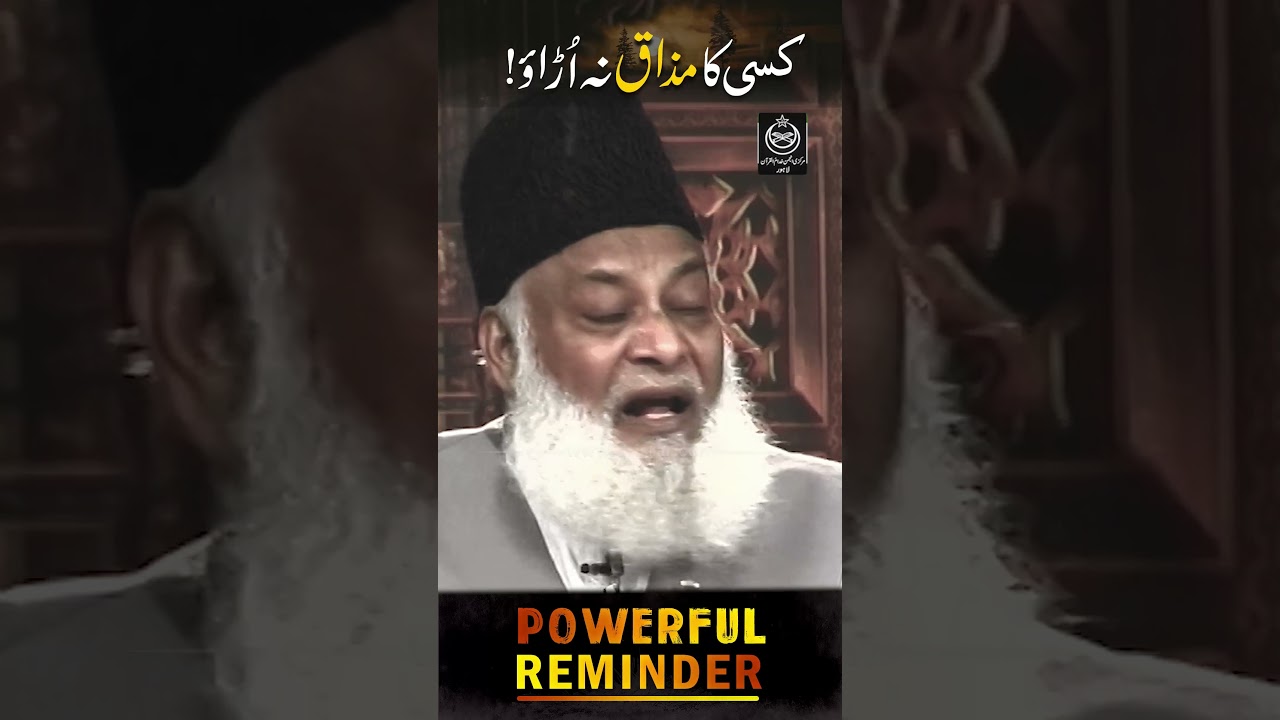
This lecture emphasizes the severe consequences of mocking others based on their physical appearance or perceived flaws. It argues that outward imperfections should not be the basis of ridicule, as true worth lies in inner piety, love for God and His Messenger, and virtuous character. Mocking a believer is presented as an act of hostility towards God Himself, citing a divine tradition warning those who antagonize God’s friends will face His wrath. The lecture stresses the importance of respecting all believers and avoiding actions that cause them emotional pain.

49
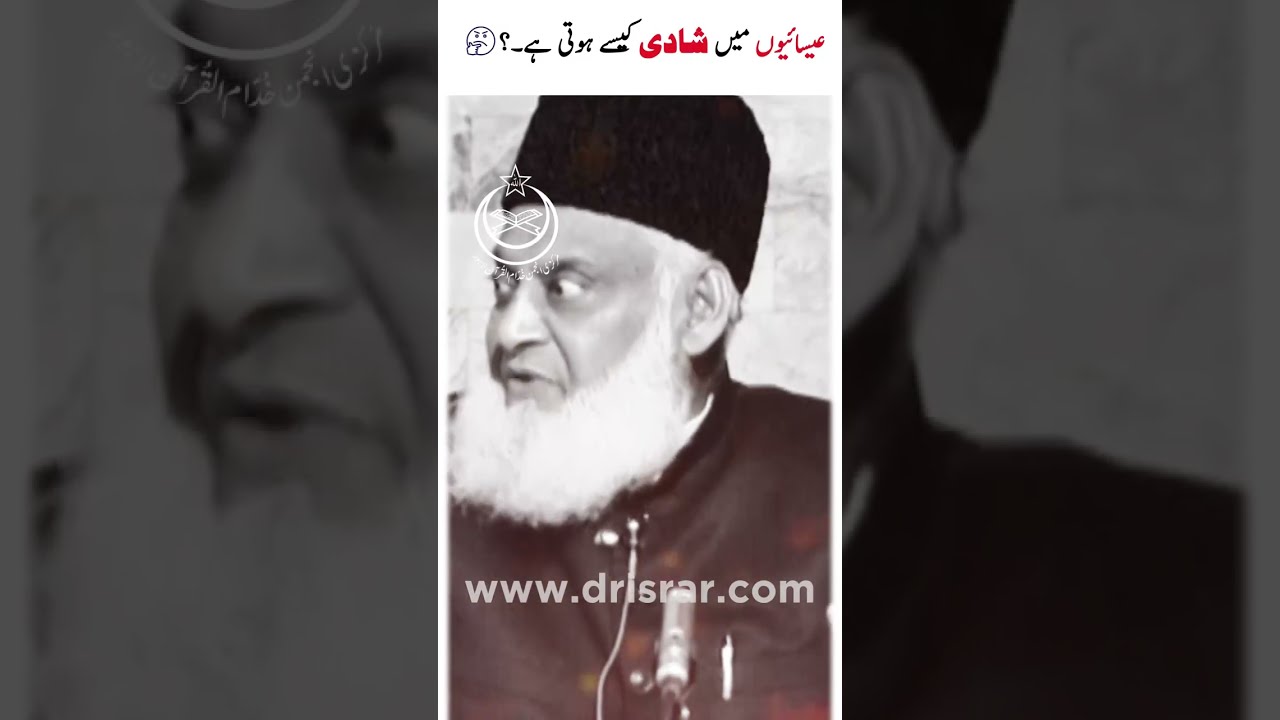
Dr. Israr Ahmad discusses the differences between Christian and Islamic marriage ceremonies. He highlights that in Christian weddings, the bride and groom stand face-to-face before the priest, openly professing their acceptance of each other. This contrasts with the Islamic practice where the bride and groom often remain somewhat secluded during the Nikah. He observes the respect afforded to the church and the priest within the Christian tradition, and contrasts this with the often-devalued position of the Imam or Nikah officiant in some Muslim communities. The lecture emphasizes the importance of dignity and reverence in religious practices.
66

Many people follow religious scholars, and had these scholars guided the nation correctly, the current system would not have persisted. These scholars wasted their influence by participating in political games, shifting alliances and constantly changing sides. This pursuit consumed valuable time that could have benefited the nation. Furthermore, even sincere scholars, when demanding change, have focused on Islamic law, not a complete Islamic system.
57
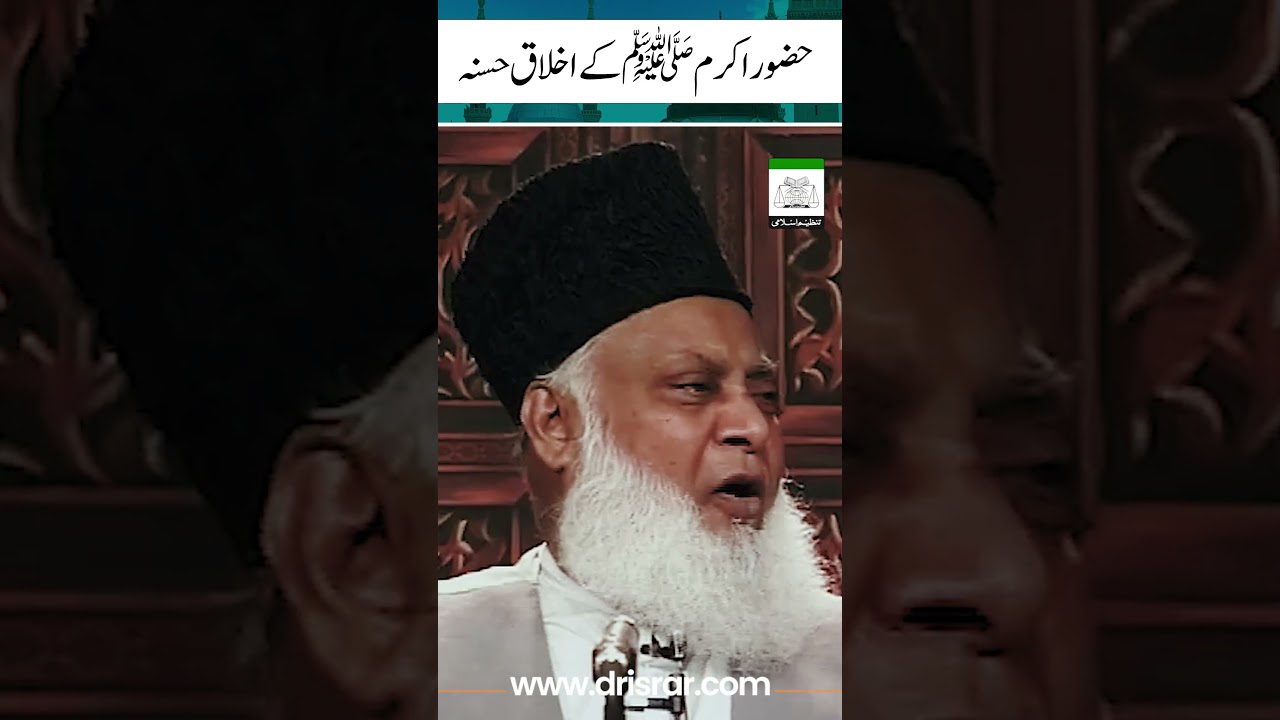
Dr. Israr Ahmad discusses the Prophet Muhammad’s (peace be upon him) remarkable humility and integration with his companions. He emphasizes the Prophet’s deliberate choice to present himself as an ordinary human being, eschewing any display of special status or privilege. The Prophet actively discouraged people from standing upon his arrival and mingled freely with his followers, sitting among them without distinction. This demonstrated a profound commitment to equality and accessibility, fostering a sense of unity and brotherhood among the early Muslim community. The speaker highlights that the Prophet’s approach was a conscious effort to remove barriers between himself and his companions, encouraging genuine connection and spiritual growth.
40
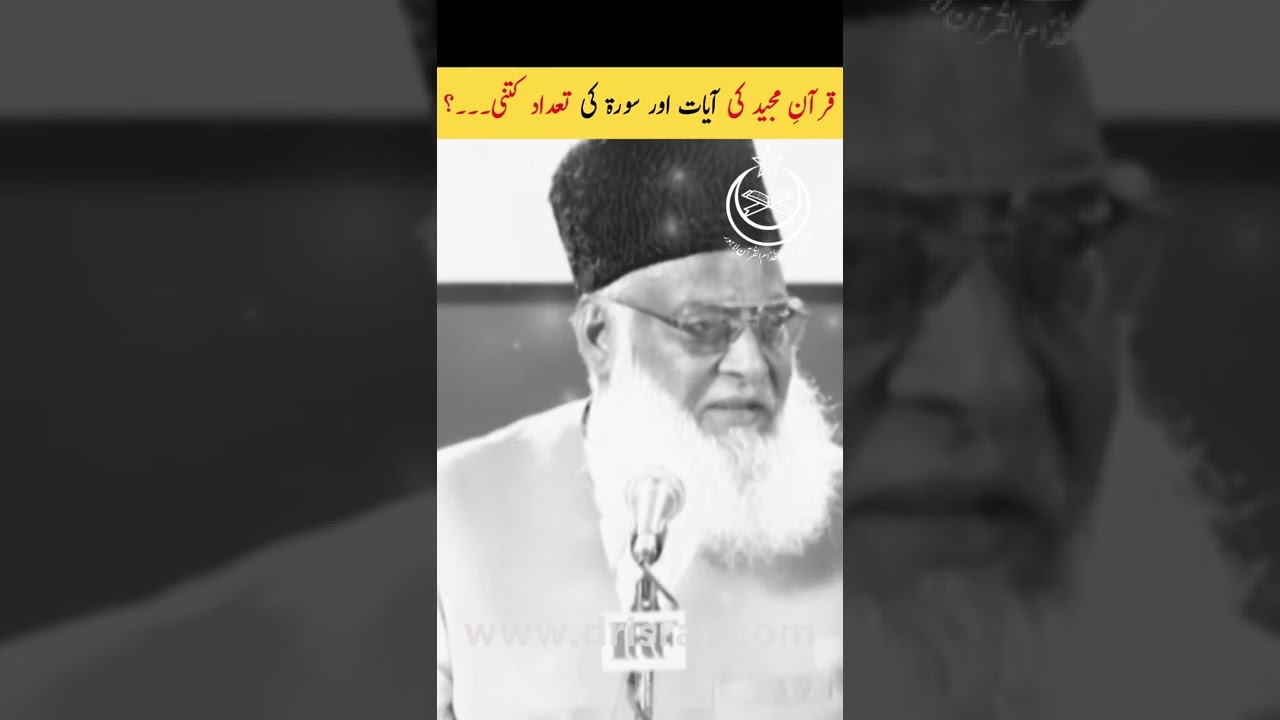
The number of verses in the Quran is a subject of some debate, estimated to be around 6,200, with variations stemming from whether or not to include the opening 'Bismillah' verse before each chapter (Surah), except for Surah At-Taubah. Including it would add 113 verses to the total. The number of Surahs, however, is definitively 114. Translating the concept of 'Surah' into English presents a challenge, and retaining the original term will likely foster wider understanding and acceptance. The lecture explains these nuances of Quranic structure.
61
Many misconceptions exist regarding remembrance of Allah. A primary error is conflating *zikr* itself with the *means* of remembrance. *Zikr* is the presence of Allah in the heart – maintaining awareness, love, and connection with Him. Reciting phrases like “Subhan Allah” is a *means* to *zikr*, but not *zikr* itself. If one’s mind is preoccupied with worldly problems while reciting, the *means* is employed, but the true *zikr* – the presence of Allah in the heart – is not achieved. Similarly, prayer is a *means* to *zikr*; the ultimate goal is the presence of Allah within the heart.
91
