Korte broek

Islam’s core principle is the absolute oneness of God (Tauheed). All forms of goodness, righteousness, and guidance stem from this central belief, representing branches, leaves, and blossoms of a blessed tree. Conversely, evil, sin, and error—whether in belief, thought, or action—are rooted in *shirk*—associating partners with God—and represent the branches of a poisonous tree. Every negative element, in any form, ultimately connects back to this fundamental deviation from pure monotheism.

36

This lecture details the fundamental tenets of faith in Islam. It covers belief in Allah, the prophets, the final prophet Muhammad (peace be upon him), revealed scriptures including the Quran, the Day of Judgment, accountability, life after death, Paradise, and Hell. The discussion highlights the extensive treatment of these topics within the Quran, particularly in its earlier Meccan verses.
62

Islamic principles dictate that the financial responsibility for a wedding lies with the groom’s family, not the bride’s. Marriage is a necessity for both men and women, completing each other’s lives. The mahr, or dower, is paid by the groom to the bride, symbolizing his commitment and responsibility. It is not a price for the bride, nor a purchase, but a token of commitment and a recognition of her value. Mahr can be determined in various forms, including goods, services, or the commitment to teach the bride Quran. It represents the man's capability to fulfill his obligations and the woman’s acceptance of this commitment.
84

True justice originates from God. The inherent system He established is fundamentally just. As loyal servants, it is our responsibility to uphold and implement this divine system. This requires a firm and unwavering stance for justice, utilizing all available resources and strength. This is not merely a response to societal turmoil, but a demand of our devotion to God. It necessitates standing as witnesses to His faith, embodying justice and fairness in all actions, and actively championing equitable principles.
49

This lecture discusses the dual approach of encouragement and warning found within Islamic teachings, specifically referencing Surah Al-Asr. It emphasizes that effective guidance requires both positive reinforcement—recognizing potential and offering hope—and constructive criticism, alerting individuals to the consequences of negative actions. The speaker highlights that humans are susceptible to ruin unless they fulfill four conditions: faith, righteous deeds, upholding truth, and encouraging it in others. The balance of *tabshir* (giving good news) and *anzar* (warning) is essential for personal and collective development, reflecting the comprehensive nature of the Quranic message.
64
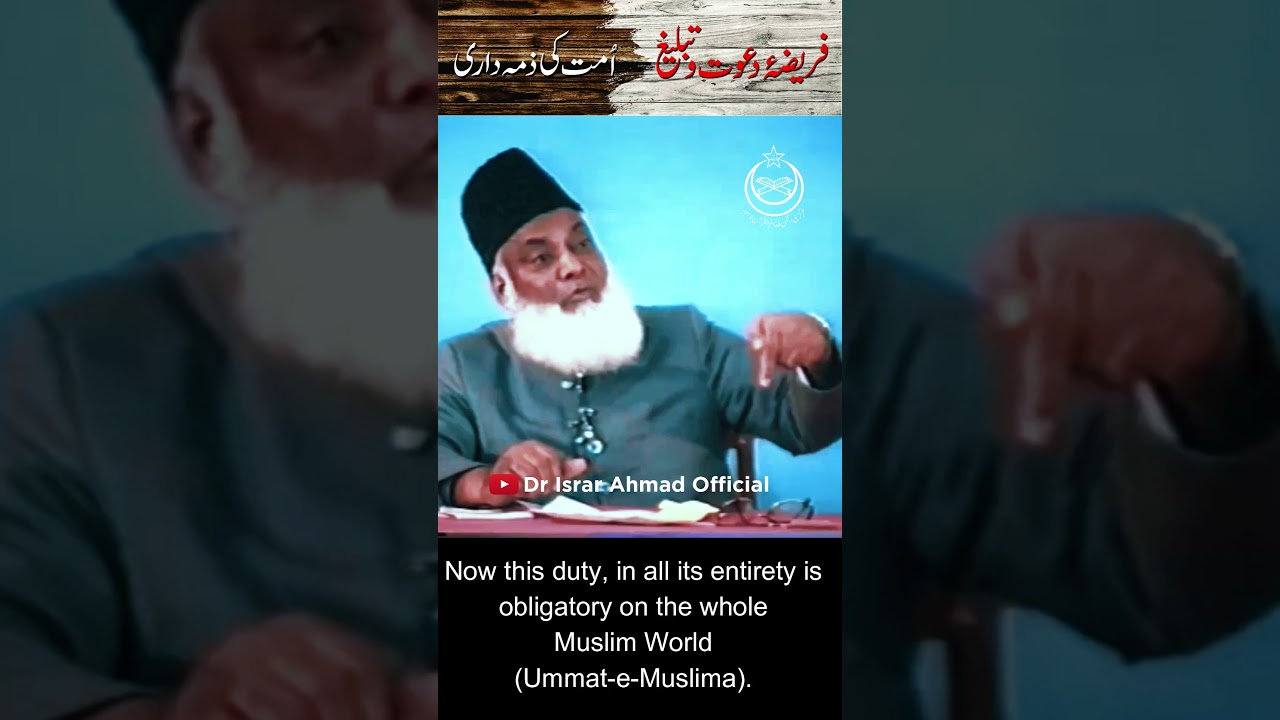
This lecture emphasizes that propagating the message of Islam is no longer the sole responsibility of prophets, but a collective obligation incumbent upon the entire Muslim community. It argues that Muslims must actively convey the faith through their actions and outreach, becoming living examples of its principles. Failure to do so will result in a negative testimony on the Day of Judgment, with the community being held accountable for not upholding the legacy of the Prophet. The speaker stresses that establishing a clear argument for faith before all of humanity is a fundamental duty, requiring dedication of resources and abilities to effectively spread the message of Islam.
205
