Kratke hlače
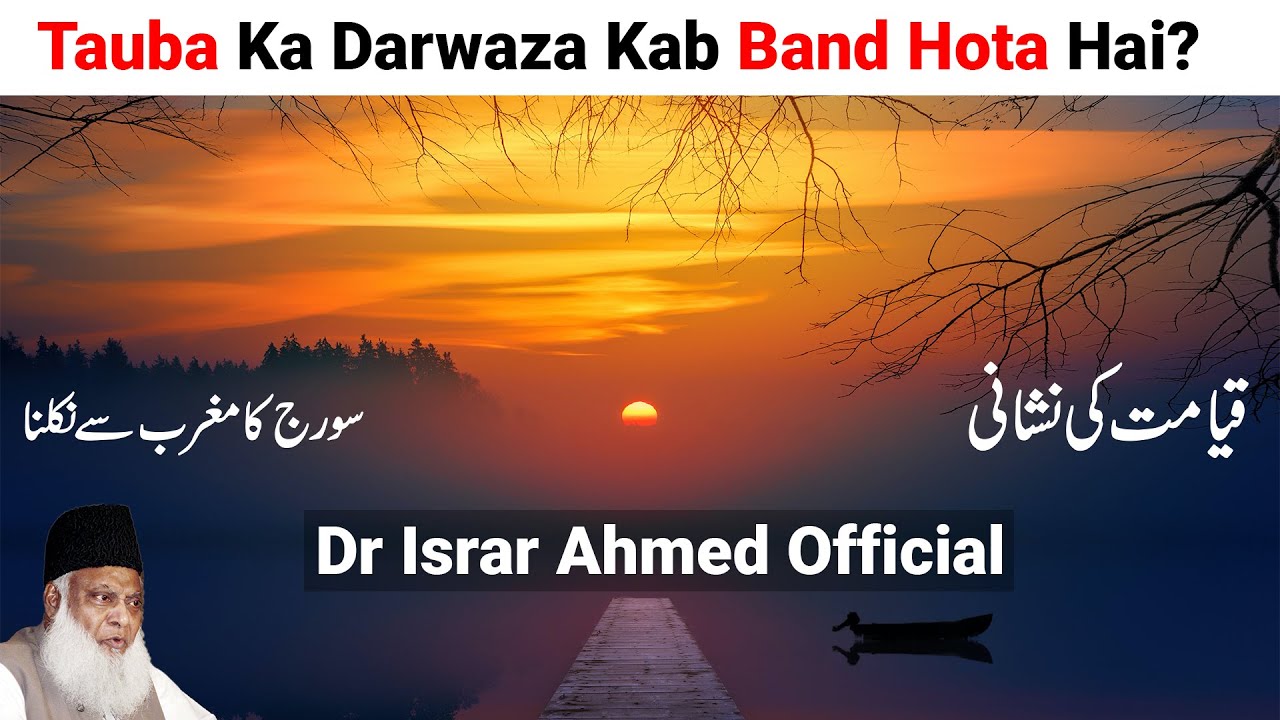
The door of repentance remains open for a considerable time, allowing individuals years to seek forgiveness. This opportunity continues until the setting of the sun from the west—a major sign of the approaching Day of Judgement. The Quran states that Allah will accept the repentance of those who turn to Him before this sign appears. Once the sun begins to rise from the west, the door of repentance will be closed, and any subsequent repentance will not be accepted. This emphasizes the urgency of seeking forgiveness while time remains.

60

This lecture details the severity of sin in Islam, focusing on the disparity between the prohibition of pork and alcohol versus the prohibition of interest (riba). Dr. Israr Ahmad argues that the consequences of dealing with interest are far more devastating than those associated with consuming pork or alcohol. He asserts that the Quranic verses reveal a declaration of war against those who persist in dealing with interest, a level of severity not applied to the other two prohibitions. The lecture emphasizes that the gravity of the sin of riba is seventy times greater than that of pork or alcohol consumption.
53
This lecture discusses the concept of personal allegiance (bayat) within a communal framework. It argues that a strong and cohesive group requires confidence in its leader, beyond mere adherence to a constitution or procedure. The speaker contends that while not forbidden, personal allegiance is less preferable to a system based on mutual trust and demonstrated leadership. He cites historical precedent and Quranic/hadith support for this position, contrasting it with a practice that emerged more recently. The core argument centers on the importance of genuine confidence in leadership for a functional and effective collective.
46

True goodness originates from faith, manifesting as sincere intention and the pursuit of Allah’s pleasure. This involves acting with love for God and ensuring actions are righteous and beneficial. The most prominent expression of goodness is selfless service to humanity, driven by compassion. This includes prioritizing support for family, orphans, the poor, travelers, those in need, and freeing the oppressed. Good deeds are not merely for worldly reward, but for eternal recompense.
56

Dr. Israr Ahmad discusses a common misconception regarding fasting during travel. He clarifies that rigidly adhering to a fast while severely weakened or during hardship is not a virtuous act but a form of self-inflicted extremism. The lecture highlights an incident during a military expedition where those observing fasts collapsed from exhaustion while others efficiently established camp. He explains that such rigid adherence stems from a flawed understanding of piety and can lead to harmful, self-destructive behavior. The key message is that religious observance should not cause undue hardship or compromise one’s ability to fulfill responsibilities, and that flexibility is essential when circumstances demand it.
82

This lecture emphasizes the constant remembrance of Allah in all aspects of life. It highlights the importance of incorporating supplications (du'a) into daily routines – upon entering and exiting homes, markets, and even restrooms – without disrupting one's activities. The core message is maintaining a continuous connection with Allah through these acts of devotion. The speaker further emphasizes the significance of reciting the Quran and offering prayers as the greatest forms of remembrance. This constant connection, the lecture argues, is the essence of a believer’s life.
58
