Celana pendek
Dr. Israr Ahmad discusses the reasons behind the lack of fervor within the Muslim community, connecting it to a lack of understanding of the prophetic revolution. He argues that the current state of disillusionment and self-destructive behaviors – exemplified by acts of desperation and misguided aggression – stem from a loss of direction and a failure to comprehend the principles of the Prophet Muhammad’s revolutionary message. He emphasizes that without grasping the essence of this revolution, individuals will remain lost and misdirected.

375
Dr. Israr Ahmad discusses the historical significance of Prophet Muhammad (peace be upon him). He references Dr. Michael Hart’s book, *The 100*, which ranks Prophet Muhammad as the most influential figure in human history. The lecture highlights the revolutionary impact of the Prophet’s life and teachings, establishing him as a pivotal figure who reshaped the course of history. Dr. Hart’s research involved selecting one hundred of the most influential individuals throughout history and ranking them based on their impact, ultimately placing the Prophet Muhammad at the top.
41
The Prophet Muhammad (peace be upon him) defined true impoverishment not as a lack of wealth, but as a lack of spiritual and moral capital. On the Day of Judgement, individuals may arrive bearing the outward signs of piety – prayers, fasts, pilgrimage, and charity – only to find their rewards diminished due to past injustices. Those harmed by their wrongful actions – through slander, false accusations, or violations of rights – will present their claims, and the offender's good deeds will be allocated to compensate the victims. This lecture highlights the critical importance of earning wealth and performing religious obligations through lawful means, emphasizing that true prosperity lies in righteous conduct and the preservation of others’ rights.
54

Dr. Israr Ahmad explains that indirect interest (andariki sood) permeates modern life, extending beyond direct loans to encompass nearly all commodities due to interest-based funding at various stages of production. He argues that even consuming basic necessities like wheat involves participating in a system fueled by interest. The only atonement for this unavoidable involvement is a dedicated effort to transform the existing system into one that eradicates interest completely. He stresses that escaping the pervasive influence of indirect interest is impossible without systemic change.
77
This lecture clarifies the Islamic concepts of *israf* (wastefulness) and *tabzir* (extravagance). *Israf* is exceeding necessity when fulfilling a need, while *tabzir* is spending wealth unnecessarily for show and ostentation. The Quran condemns *tabzir* more severely than *israf*, equating those who practice it with the brothers of Satan. The speaker emphasizes the importance of moderation and fulfilling needs without excess, contrasting essential spending with wasteful displays of wealth. This discussion highlights the spiritual consequences of extravagance and promotes a mindful approach to resource utilization.
57
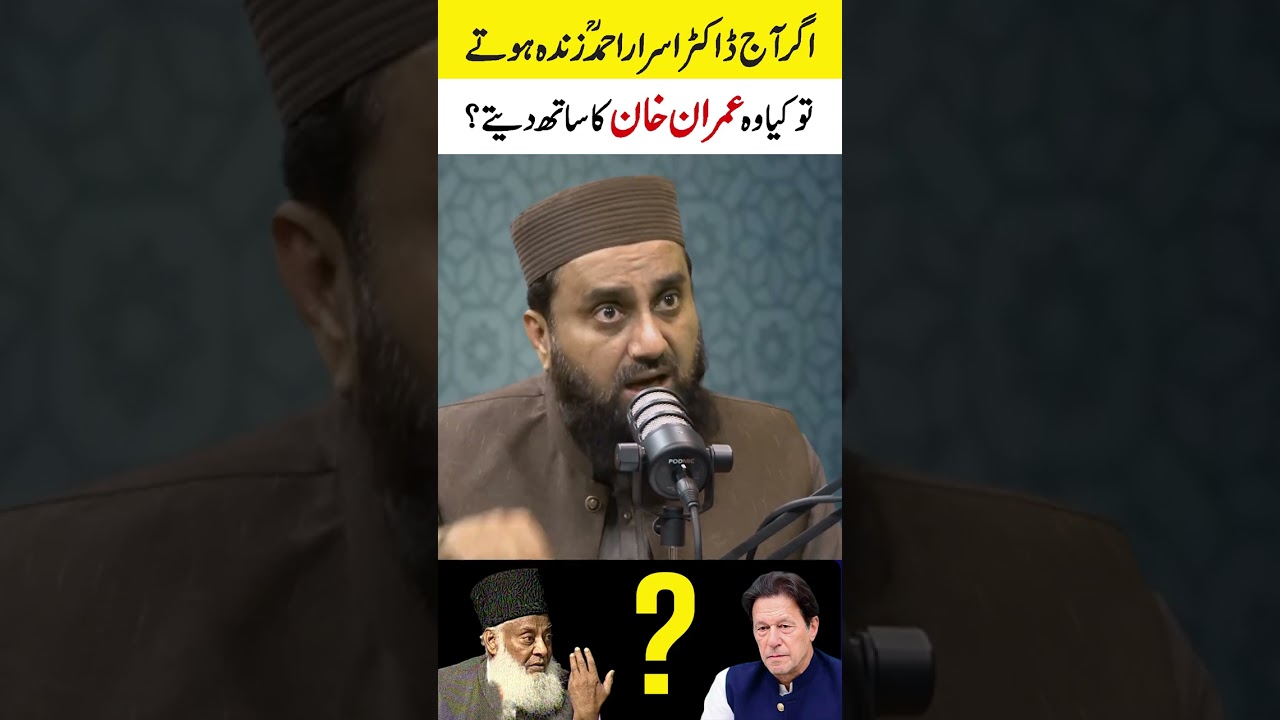
Dr. Israr Ahmad discusses the concept of a 'State of Medina' and its moral foundations, criticizing the hypocrisy of those who invoke its principles while failing to embody its ethical standards. He emphasizes the importance of upholding justice, promoting good, and preventing evil, and warns against inconsistency between professed ideals and actual conduct. He stresses the need for genuine piety and righteousness in all aspects of life, particularly within political spheres. He further clarifies that offering constructive advice to those in power is a continuous responsibility, driven by a desire for societal betterment.
63
