শর্টস

This lecture explores the concept of attaining spiritual proximity to God through the practice of *nawafil* (voluntary prayers). It details how consistent devotion can lead to a state where the devotee experiences God’s presence in their senses—seeing with God’s sight, hearing with God’s hearing, acting with God’s hands, and walking with God’s feet. This concept, supported by a *hadith qudsi*, signifies a profound level of spiritual union and is acknowledged even by those who may not traditionally align with Sufi interpretations. The discussion emphasizes the transformative power of sincere worship and its capacity to elevate one's spiritual experience.

76
This lecture clarifies that fulfilling obligatory prayers is the minimum requirement for prayer. While fulfilling obligations is essential, incorporating voluntary prayers (sunnah and nafl) adds depth to one's spiritual practice. The speaker categorizes these voluntary acts based on their emphasis by the Prophet Muhammad, differentiating between those regularly practiced (sunnah mu’akkadah), those practiced occasionally (sunnah ghair mu’akkadah), and other optional prayers (nawafil). It’s recommended to participate in these supplementary prayers to the extent possible, aligning with the guidance of the Prophet and within the bounds of one’s time.
171
The text defines Qiyam ul Layl, or the night prayer, according to the Quran, specifically referencing Surah Al-Muzzammil. It clarifies that Qiyam doesn’t necessitate praying the entire night but can be fulfilled by praying for at least one-third of the night. The Quran acknowledges that the Prophet Muhammad and a group of his followers observed this practice, praying for varying durations – one-third, half, or two-thirds of the night. The verse highlights Allah's awareness of the Prophet’s devotion and the dedication of those who join him in this nightly worship. The minimum duration for fulfilling Qiyam, according to the interpretation, is one-third of the night.
167
This lecture explores the unique relationship between Prophet Ibrahim (Abraham) and God, highlighting his status as a close friend (Khalil) of God as mentioned in the Quran. It details how God chose Ibrahim as an Imam (leader) for humanity and traces the lineage of prophets through his descendants, ultimately leading to Prophet Muhammad (peace be upon him). The lecture emphasizes the continuous chain of prophets spanning 1400 years, from Moses and Aaron through Jesus and John, culminating in the prophethood of Muhammad (peace be upon him). It underlines Ibrahim's pivotal role in the history of divine guidance.
72
This lecture explores the multifaceted greatness of Prophet Muhammad (peace be upon him). It distinguishes between his status as a prophet and his humanity, noting that understanding the full extent of his greatness is beyond human comprehension. The lecture emphasizes that only a prophet can truly appreciate the stature of another prophet, highlighting the unique qualities inherent in Prophethood. It explains that assessing the Prophet's significance requires a perspective beyond that of a mere physician or scholar, acknowledging his exceptional position in both spiritual and worldly affairs.
57
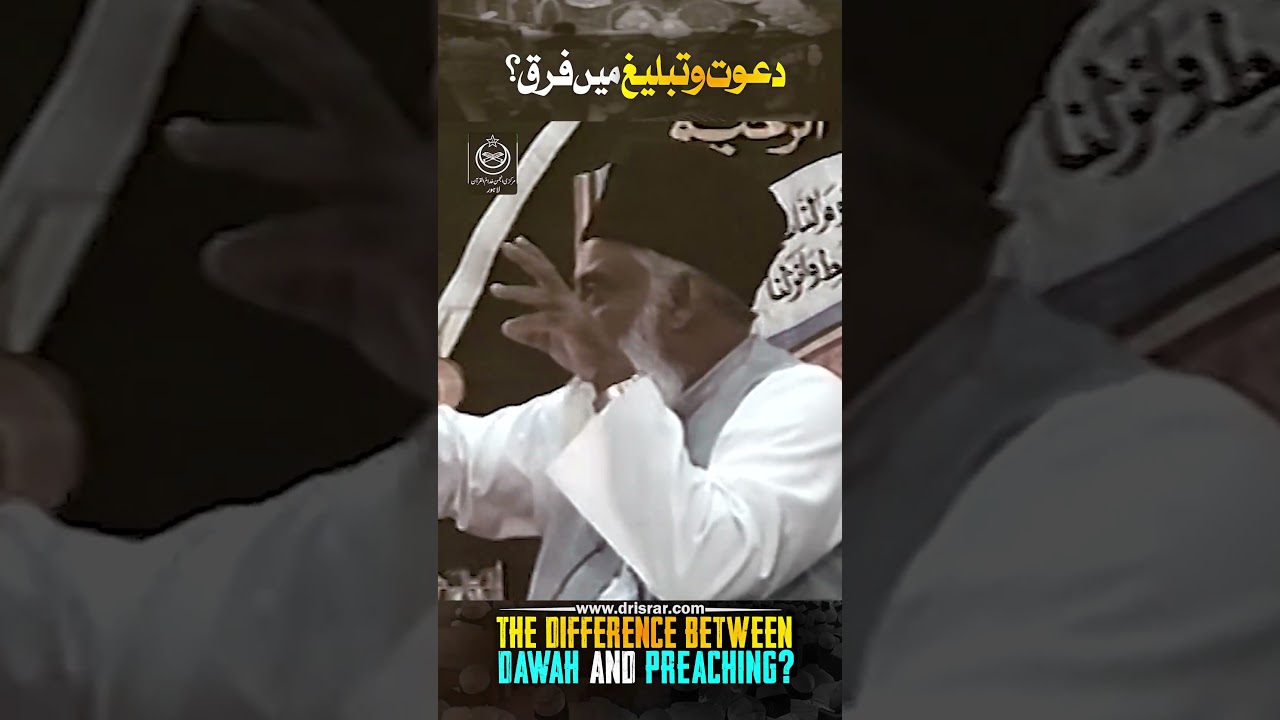
This lecture explores the dual nature of *dawat* (invitation) and *tabligh* (propagation). It clarifies that both involve conveying a message and guiding someone toward a particular path. *Dawat* focuses on reaching out and delivering the message, while *tabligh* emphasizes bringing someone along that path, accepting the invitation. The lecture highlights that these are not separate actions, but two sides of the same effort—communicating a message and encouraging acceptance. The speaker emphasizes the importance of conveying the message and guiding others towards righteousness.
62
