Corti

This lecture explores the distinction between inherited faith and consciously accepted belief. The speaker argues many identify as Muslim due to birth rather than a personal, conscious decision and realization of faith. True Islam, it is asserted, requires *yaqeen* – a deep, experiential certainty – not merely adherence to dogma or inherited creed. This conviction, akin to the spiritual realization described by Allama Iqbal, is essential for meaningful practice and spiritual growth. Without this inner certainty, religious observance remains superficial.

54

This lecture explores the concept of choosing a difficult, less-traveled path in life as opposed to a broad, popular one. It emphasizes that while the narrow path may be challenging, it ultimately leads to spaciousness and fulfillment. The speaker warns against following the majority who often lead to hardship and emphasizes the importance of choosing a path aligned with spiritual growth and lasting peace. It highlights that true progress lies in embracing difficulty and choosing the less-conventional route.
40
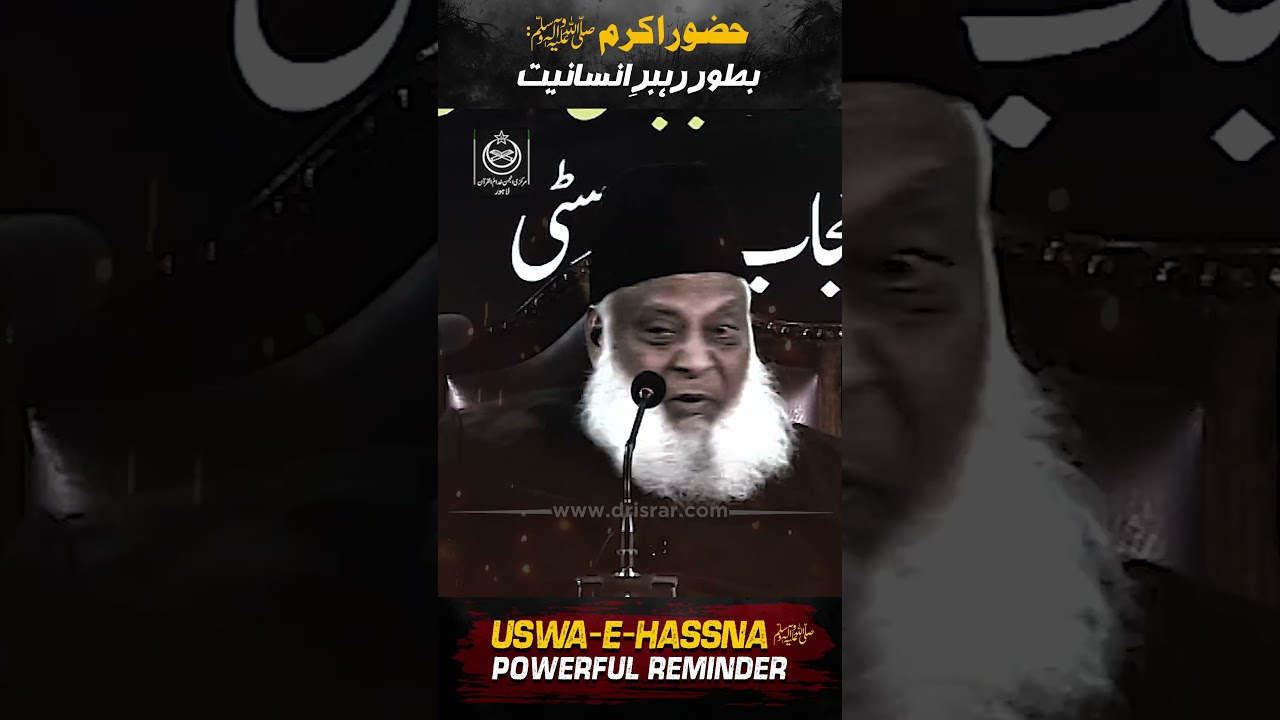
Dr. Israr Ahmad discusses the comprehensive nature of Prophet Muhammad’s personality, highlighting his multifaceted roles as a ruler, leader, judge, husband, father, and spiritual guide. He contrasts this with the limitations of modern religious leaders who often struggle to fulfill even basic duties like leading five daily prayers consistently. The lecture emphasizes that the Prophet Muhammad embodied all these roles flawlessly, serving as a complete example for believers. The speaker points out a disconnect in modern religious practice, where individuals dedicated to self-purification often avoid leading congregational prayers.
49

Umar bin Abd Wud, a renowned Arab warrior and skilled horseman, challenged the Muslims during a siege. He fearlessly crossed the trench surrounding Medina, seeking a worthy opponent. Hazrat Ali (RA) stepped forward, offering Umar bin Abd Wud three opportunities to make a request before engaging in combat. Umar initially demanded the acceptance of Islam, then asked for safe passage, both of which Ali refused. Finally, Umar challenged Ali to a duel. Ali accepted, ultimately defeating and killing Umar bin Abd Wud, demonstrating courage and faith.
61

Taqwa, often translated as piety or God-consciousness, is fundamentally about safeguarding oneself from disobedience to God. It encompasses avoiding prohibited acts, adhering to divine commands, and shielding oneself from God’s wrath and the consequences of wrongdoing in this life and the hereafter. This involves a consistent, lifelong effort to protect oneself from anything that displeases God, fostering a constant awareness of divine judgment. It's a proactive approach to avoiding sin and seeking God's favor.
37
This lecture discusses the common human tendency to idealize those we love and demonize those we dislike. It emphasizes the importance of overlooking the flaws of elders out of respect, even when disagreeing with their views. The speaker shares a personal example regarding Allama Iqbal, acknowledging his respect while maintaining independent thought. The lecture cautions against the habit of criticizing those with whom one has fallen out, urging viewers to avoid blind condemnation and prioritize constructive engagement. It promotes a balanced approach of respecting elders while also maintaining intellectual honesty.
52
