Kratke hlače
Human life is a constant series of choices. At every moment, individuals face a crossroads, deciding between worldly gain and divine guidance. This perpetual decision-making process defines our values and priorities. Each step involves prioritizing some things over others, a continuous evaluation of what we hold most dear. The choice between immediate profit and long-term spiritual well-being, between embracing corruption or adhering to ethical principles, shapes our destiny. This lecture explores the fundamental nature of these choices and their impact on our lives.

57
The Quran is unique among scriptures in its completely preserved text. Unlike other religious texts, the Quran's original form has been consistently maintained and memorized by generations of Muslims worldwide. This preservation isn't limited to written copies; a vast community of *huffaz* (memorizers) actively maintain the text through oral tradition, with even young children capable of correcting scholars. This consistent, multi-generational safeguarding represents a fundamental aspect of the Quran's significance, acknowledged even by those who do not believe in its divine origin. The Quran's textual integrity stands as an unparalleled phenomenon among religious books.
61
This lecture addresses the common misconception that individuals can directly improve the circumstances of others. It clarifies that provision and hardship are ultimately determined by God's will and wisdom. The speaker emphasizes that humans should focus on their own efforts and trust in God's plan, recognizing that He expands or restricts sustenance according to His knowledge and judgment. God is fully aware of the needs of His servants and acts in their best interest.
45
This lecture explores the life of Syeda Fatima, the beloved daughter of the Prophet Muhammad (peace be upon him). It details her hardships, including physical strain from household chores and the challenges faced by early Muslims. The discussion emphasizes her devotion, piety, and the sacrifices she made for her father and the nascent Muslim community. It also addresses a poignant moment where she questions the disparity in worldly possessions, highlighting her spiritual focus despite material needs. The lecture concludes with a reflection on the immense love and respect the Prophet held for his daughter and the practice of reciting specific praises after each prayer.
51
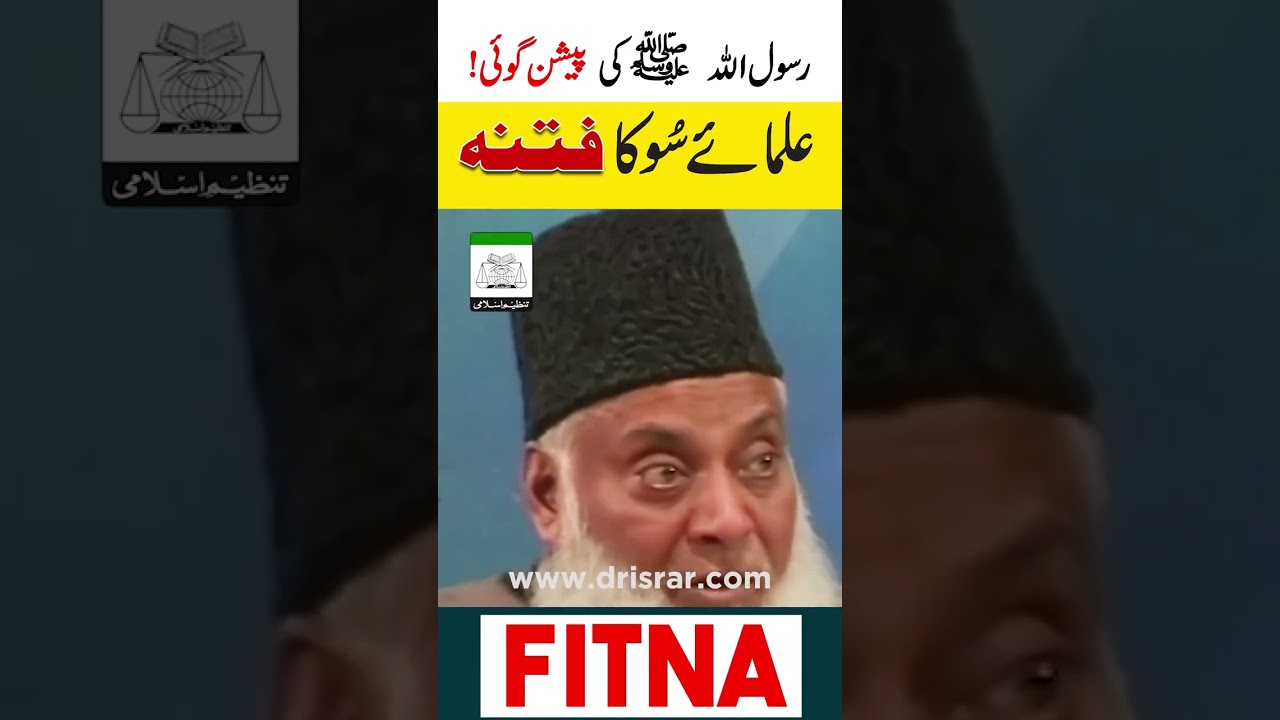
Dr. Israr Ahmad warns of a time when the Muslim community will be left with only the name of Islam, and the Quran will be reduced to its calligraphy and letters. He emphasizes a divine guarantee for the preservation of the Uthmani script. He predicts a proliferation of mosques that are devoid of guidance, and describes scholars who will be the worst of people, fostering discord and conflict. These scholars will be the source and destination of fitna (discord), promoting sectarianism and exacerbating differences among Muslims. He observes that a vast majority of contemporary religious leaders exhibit these characteristics.
84
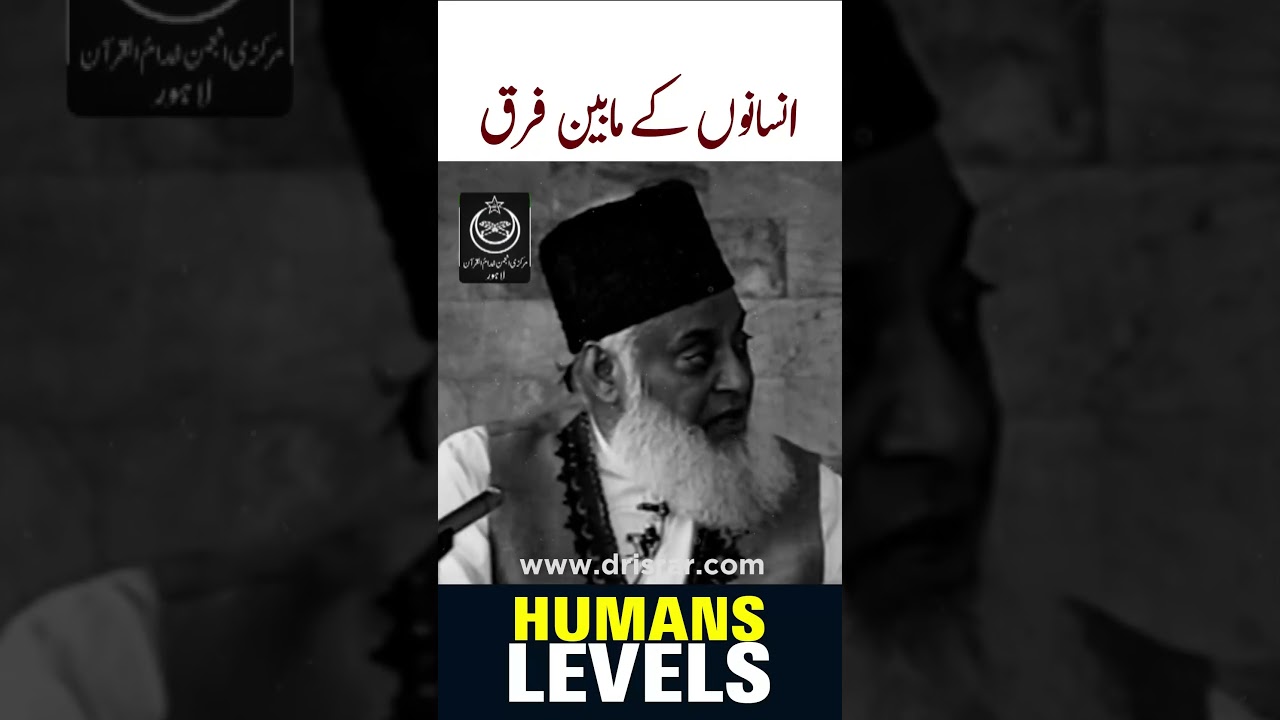
This lecture addresses systemic oppression, exploitation, and discrimination within society. It highlights the inherent inequality where some are born into privilege and others into disadvantage, regardless of their character or merit. The speaker emphasizes that this disparity stems from those who hoard power and resources, silencing the voices of the marginalized. The lecture asserts that ending all forms of exploitation and injustice is a fundamental duty of a believer, advocating for a society built on equity and the freedom of expression.
53
